Is Singapore still South-east Asia’s headquarters haven?
Business hubs are flocking to the city-state, as lower-value activities move offshore in the region
Annabeth Leow
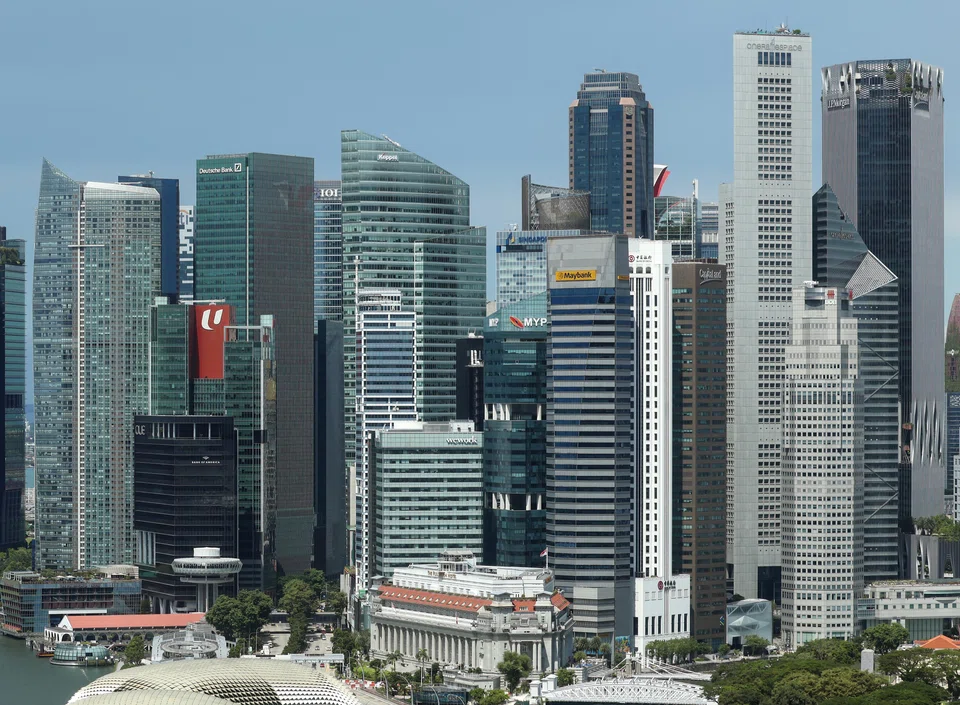
[SINGAPORE] Despite several high-profile corporate exits from Singapore in 2026, watchers say the Republic is still an attractive destination for multinational business hubs.
Other South-east Asian countries may be competing more intensely for foreign investment – yet, regional headquarters are taking on greater prominence in Singapore’s economy, as a more diversified operating model emerges for global companies expanding in Asean.
Business activities related to headquarters and professional services made up 62.5 per cent of total business expenditure (TBE) commitments in Singapore in 2025, data from the Economic Development Board (EDB) showed.
The share has risen significantly from 27.2 per cent in 2021. In the same period, general manufacturing’s share of annual TBE shrank to 0.1 per cent, from 2.1 per cent before.
Time for a getaway?
To be sure, fast-fashion retailer H&M made headlines in May for moving its regional headquarters from Singapore to the Malaysian capital of Kuala Lumpur.
Meanwhile, beverage giant Yeo Hiap Seng kept its headquarters, cross-border logistics, and smaller-scale production facilities in northern Singapore, but laid off 25 plant employees in March, to consolidate manufacturing in the Malaysian states of Johor and Selangor.

QAF’s bread-making unit Gardenia Singapore relocated bakery operations from Singapore to Malaysia in mid-2026, while Heineken’s large-scale production has also shifted from Asia Pacific Breweries in Singapore to breweries in Malaysia and Vietnam.
Still, economy watchers downplayed the prospect of a mass exodus out of Singapore.
“Singapore continues to attract investments from a diverse mix of companies across sectors and geographies, including global (multinational corporations), mid-sized enterprises and high-growth companies,” an EDB spokesperson said, adding that these investment activities span headquarters, advanced manufacturing and R&D.
SEE ALSO





Dr Tan See Leng, who was minister for trade and industry (energy and industry) at the time, told Parliament in August that “businesses continually review and optimise their operations in response to changing market conditions”.
“They may choose to relocate or restructure according to cost considerations, technological disruptions or shifting supply chains,” he said, responding to a question on whether there had been a trend of business relocations and restructurings in the first quarter of 2026.
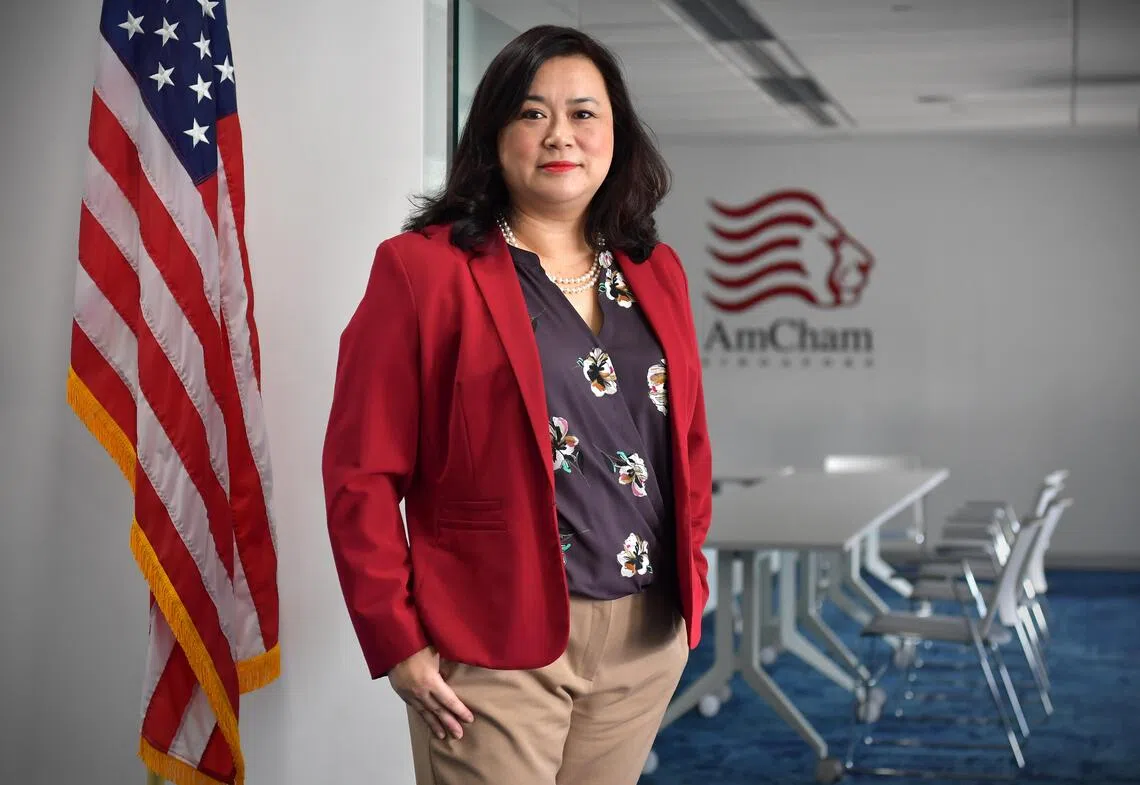
Companies may elect to offshore certain support roles in cheaper cost centres, American Chamber of Commerce in Singapore (AmCham) CEO Dr Lei Hsien-Hsien told The Business Times.
However, any companies opting to withdraw their headquarters from Singapore over cost pressures are likely pulling back on an international footprint altogether.
“There are multinationals that we know of where most of the regional layer is just gone,” said Dr Lei. “The global situation has made some companies think about restructuring in a very extreme way. So, it’s not just Asia or Singapore that would be experiencing a decrease.”
Still, Singapore housed roughly 1,030 multinational corporation headquarters in 2024, going by the most recent figures from the Ministry of Energy, Trade and Industry in April.
And the companies that are making a home for themselves in Singapore are increasingly varied, spanning a range of industries, countries of origin and business sizes.
For instance, Taiwanese semiconductor testing provider King Yuan Electronics opened its first overseas testing facility in Singapore in May as part of a S$100 million investment.
Taiwan became Singapore’s top trade partner in 2025, and DBS analysts have predicted that Taiwanese foreign direct investment into Singapore could approach US$6 billion in 2026.
Regional competition
Maisie Chong, head of trade and working capital for Asean and South Asia at Standard Chartered, told BT that markets such as Vietnam, Indonesia and Thailand are increasingly attracting manufacturing, sales and operational functions.
She added that the Malaysian capital of Kuala Lumpur is riding targeted tax incentives, competitive operating costs and a strong English-language business environment to burnish its value proposition for functions such as shared services, back-office and mid-tier functions.
The Malaysian Investment Development Authority has reported US$31.1 billion in approved foreign investments in the first half of 2026 – up by 22.3 per cent on the same period the year before – with more than two-thirds of the investment value in the services sector.
In AmCham’s latest Asean Business Outlook Survey in September, 55 per cent of respondents named Singapore as an important market for revenue – nearly flat on 2022 – but the share of those describing the rest of Asean as that jumped from 46 to 68 per cent.
Whether these efforts will land many big fish remains to be seen, however.
Dr Lei mused: “People will tell me that definitely Bangkok, for example, has been recruiting them aggressively – but nobody has told me they’ve made the move, because it’s a big one.”
Singapore continues to be “the high-value headquarters node” for companies in South-east Asia, with the broader region “the cost-competitive production base”, AmCham has said.
Standard Chartered’s Chong said that “we are seeing the emergence of a more integrated hub-and-spoke model” in increasingly interconnected Asean markets, “rather than a zero-sum competition” for foreign investment among individual economies.
Meanwhile, Martin Siah, Singapore country executive and South-east head of global corporate and investment banking for Bank of America (BOA), cited the development of a “dual-hub approach”, in which the various Asean economies “are capturing different parts of the investment value chain”.
DBS economists Chua Han Teng and Radhika Rao added that, even as Singapore’s South-east Asian neighbours increasingly compete for manufacturing and corporate investments, “we see these countries playing a complementary role, rather than (posing) material risk to Singapore’s status”.
Holding on to talent
Chua and Rao cited Singapore’s business ecosystems, access to capital and financial markets, institutional capabilities, regulatory predictability, strong connectivity and the availability of regional management talent as distinct advantages.
Even if other roles are moved out, “high value-added functionalities, treasury-related roles and senior decision-making departments are expected to continue preferring Singapore”.
Dr Lei cited the example of S Pass holders, who are subject to quotas under Singapore’s foreign workforce policy.
Businesses faced with a crunch “might as well then move out to the likes of Kuala Lumpur and, to some extent for the IT support, out to India”, she said – even as staff in higher-value business functions would typically remain in Singapore.
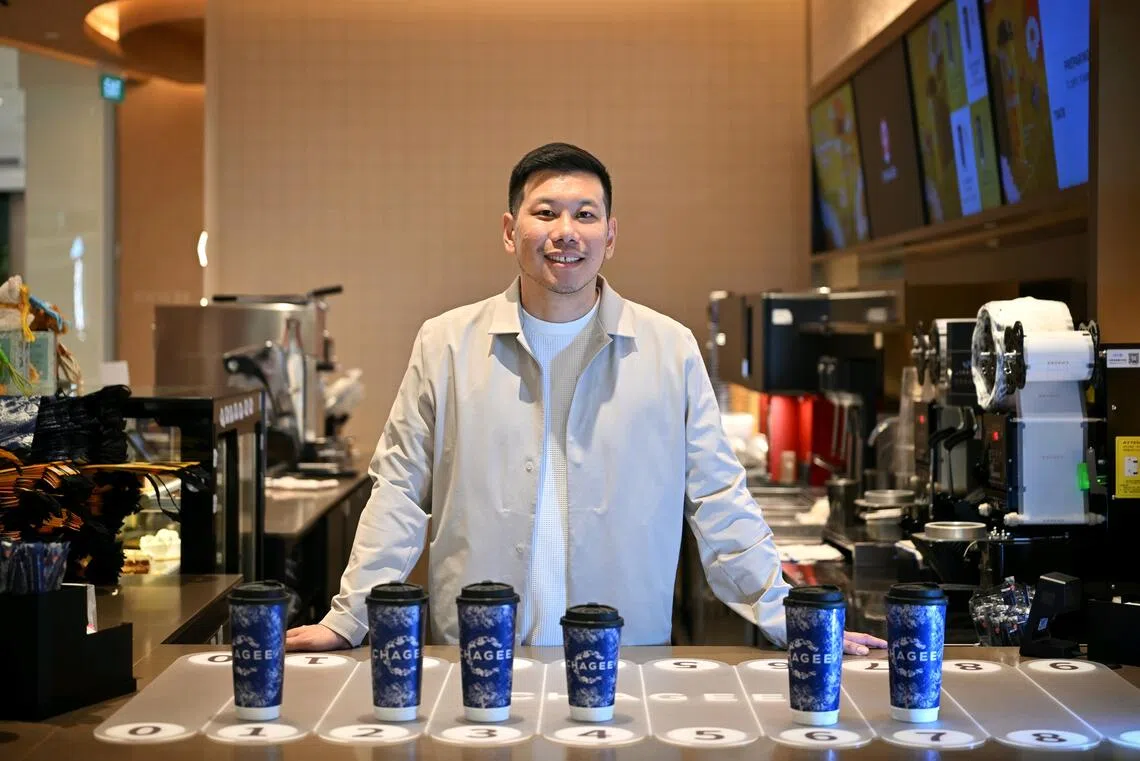
Eugene Lee, Asia-Pacific chief marketing officer for Chinese beverage chain Chagee, told BT that, in fact, Singapore’s “very, very rich” talent pool means that “at that higher level, it’s easier to bring these people in”, whether the role is filled by locals or expats.
He noted that key business functions such as finance, supply chain and marketing are located here.
Gabriel Lim, director for government relations and partnerships development at cybersecurity multinational Acronis, cited “strong government support, as well as strong government focus on talent and workforce development” as key factors for its business here.
Acronis, which was founded in Singapore in 2003, is now based in Switzerland. However, since 2015, it has also had an “international headquarters” in Singapore, where a R&D team of about 90 is responsible for much of the decision-making in certain core capabilities – such as the “cyberplatform” solution that integrates the company’s service offerings.
BOA’s Siah said: “Singapore remains the preferred location for regional leadership, treasury and innovation functions.”
And, despite Singapore’s reputation as expensive, cost does not deter specialised operators.
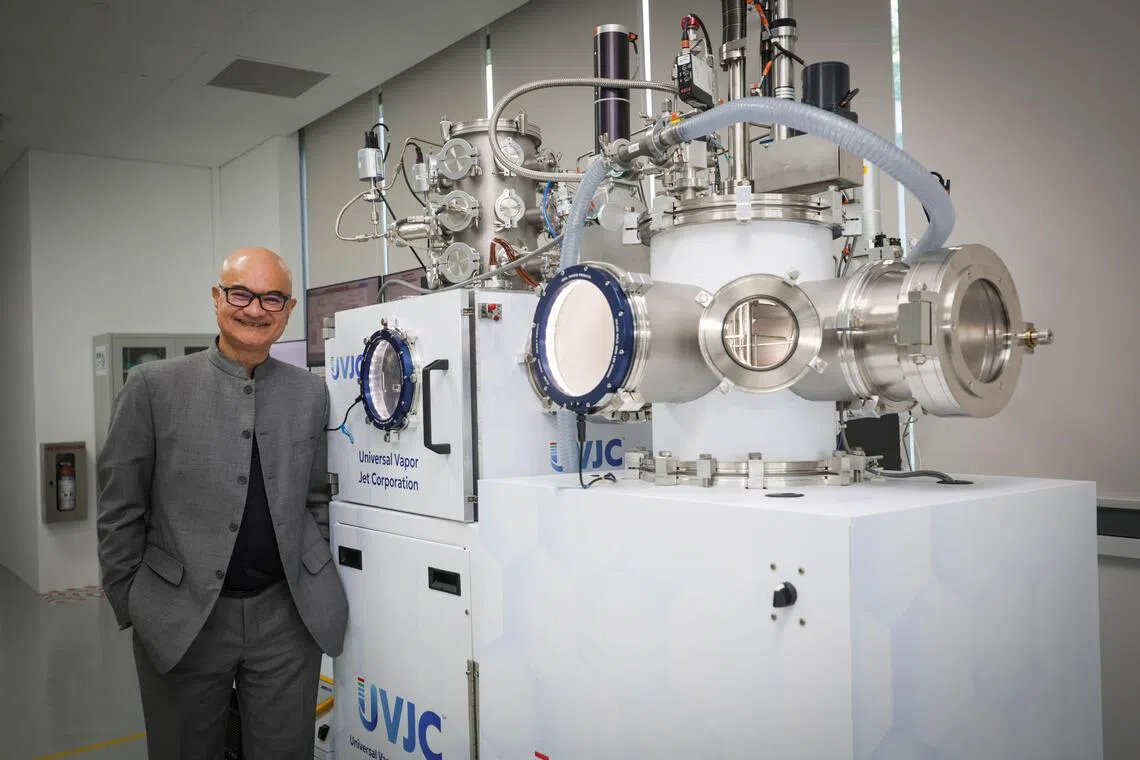
Chandran Nair, CEO of precision manufacturer Universal Vapor Jet (UVJC), noted that “Singapore is not the cheapest location”.
Still, UVJC – a wholly owned unit of Nasdaq-listed organic light emitting diode giant Universal Display – picked Singapore for the site of its 8,000 square foot global headquarters and R&D centre, which opened in 2025.
“For deep technology, what counts is the total cost and time to bring a product to market, and on that measure Singapore compares very well,” he added.
Why Singapore?
Citing “a phenomenal set of circumstances”, Ned Koh, co-founder of New York-based artificial intelligence startup Aaru, told BT that “really great infrastructure, excellent access to talent”, “amazing partnerships”, and “incredible interest and willingness to collaborate” were reasons behind his team’s decision to open their second office in Singapore in October.
At the same time, AmCham’s Dr Lei has seen more US-founded AI startups enter since the Covid-19 pandemic – a trend she also attributes in part to “the changing market in the US, where certain sectors are… not finding the kind of support that Singapore is able to offer competitively”.
Rules on data governance also factor into tech companies’ planned headquarters, said Varun Arora, South-east Asia managing partner at consultancy Kearney. “Where information is stored, who can access it and how it is protected all matter, and Singapore’s data-protection framework and regulatory credibility strengthen its appeal.”
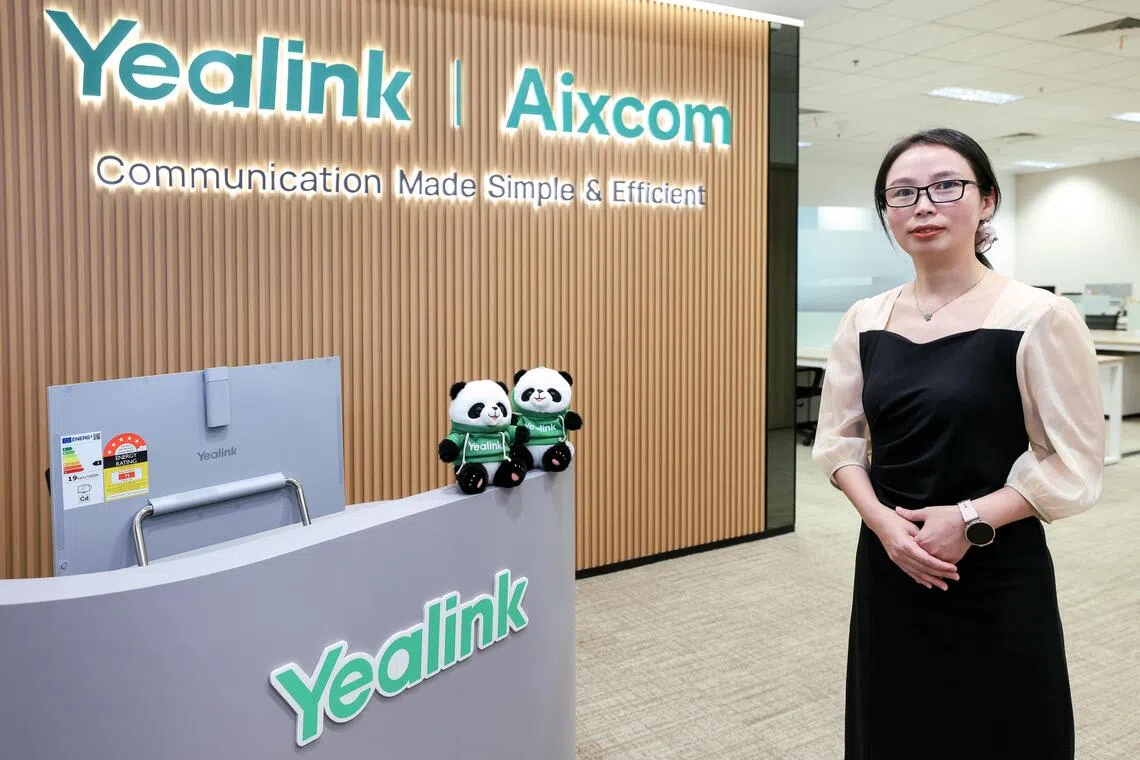
Indeed, communications company Yealink’s Asia-Pacific sales director Rachael Huang said Singapore was picked to host the data centre for its enterprise cloud-management service because of its strict data-protection regime.
“All the countries, all the customers, they are… very concerned about data security,” she told BT. “Singapore has industry recognition (as being) very good on data protection.”
Companies have also found that a Singapore base can act as a one-stop shop housing critical business functions, with access to an R&D ecosystem, suppliers and key customers.
From its regional hub in Singapore, UVJC can engage customers in Asia in the semiconductor, life-sciences and clean-energy industries, for instance.
“Developing a new manufacturing technology means that tool design, process development and customer validation must iterate quickly and in close contact,” Nair observed.
On top of that, Singapore is still an important consumer play, despite its small size.
“At the end of the day, the dollar is strong,” said Lee of Chagee, adding that the exchange rate means that the city-state contributes strongly to the company’s Asia-Pacific bottom line.
While other regional markets may have much larger populations, “we’re confident that, at least over the next three to five years, Singapore will remain a pivotal part of our business”.
Panda-monium
A growing diversity of Chinese companies in various sectors is setting up shop in Singapore
Martin Siah, Singapore country executive and South-east head of global corporate and investment banking for Bank of America (BOA), said the landscape is “increasingly diverse” and reinforces Singapore’s position as “South-east Asia’s leading headquarters hub”.
Maisie Chong, head of trade and working capital for Asean and South Asia at Standard Chartered, observed that US and European multinationals’ regional headquarters are still “key anchors” that contribute substantial investment into Singapore.
But the bank has observed “continued diversification” in the companies setting up shop here, she added: “Chinese firms, from household names to mid-marketing emerging Chinese firms, are becoming increasingly prominent among new regional headquarters entrants.”
BOA’s Siah added: “For Chinese companies pursuing international expansion, many are considering Singapore as the platform from which to manage growth across Asean, and to connect with global capital, talent and customers.”
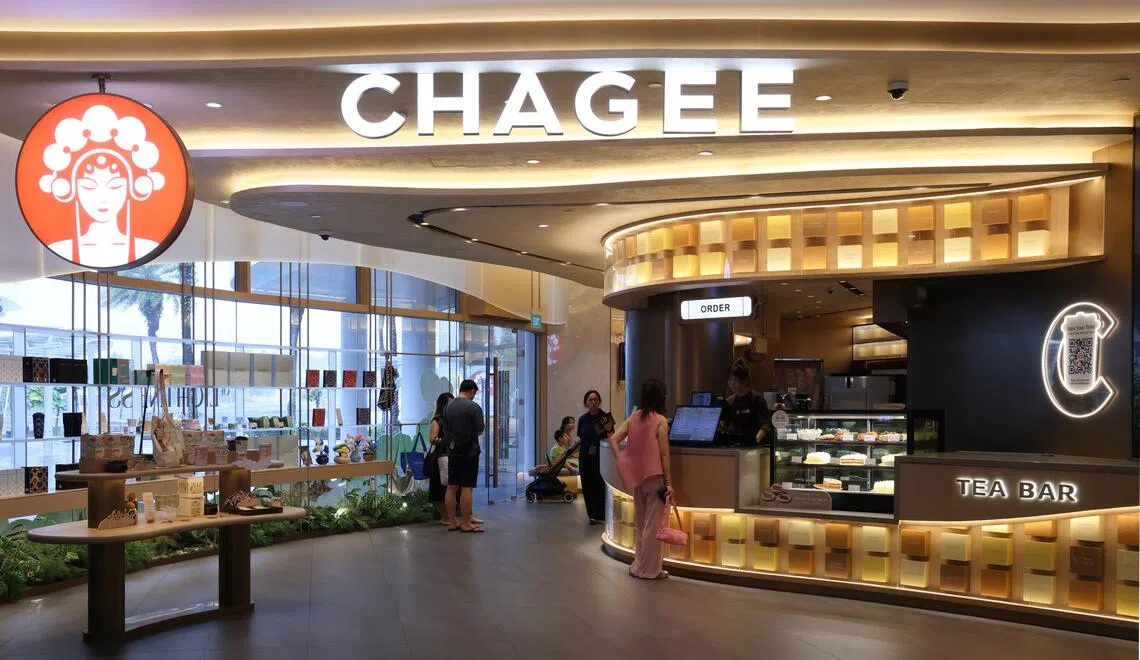
Eugene Lee, Asia-Pacific chief marketing officer for Chagee, noted that the beverage chain intends to keep building up the number of markets run from its Singapore base. This has expanded from South-east Asia alone when the office was opened in 2024, to the rest of the Asia-Pacific from 2025 on, and eventually the Middle East, Europe and Latin America.
Given Singapore’s connectivity and geographical proximity to Chagee’s parent headquarters in Shanghai, the city-state “will be a huge support hub as we do through our expansion globally”, he said. “Ultimately, the goal is for this office to be Chagee International.”
Rachael Huang, Asia-Pacific sales director for video-conferencing and communications provider Yealink, named Singapore’s multiculturalism, efficiency and mature business ecosystem as factors behind the Shenzhen-listed company’s strategic decision to open an office in the city-state’s tech-focused one-north precinct in mid-2026.
“Singapore is a gateway to global (markets) – not only to South-east Asia, but (also) to the US, to European countries,” she told BT, adding that the operational headquarters in Singapore will support functions such as sales, service and supply chain management.
DBS economists Chua Han Teng and Radhika Rao told BT that, as the Chinese economy matures, companies “will continue to look beyond their home market” to strengthen supply chain resilience, optimise operating costs and capture growth opportunities in South-east Asia – “with Singapore in a strong position to facilitate these growing investment flows”.
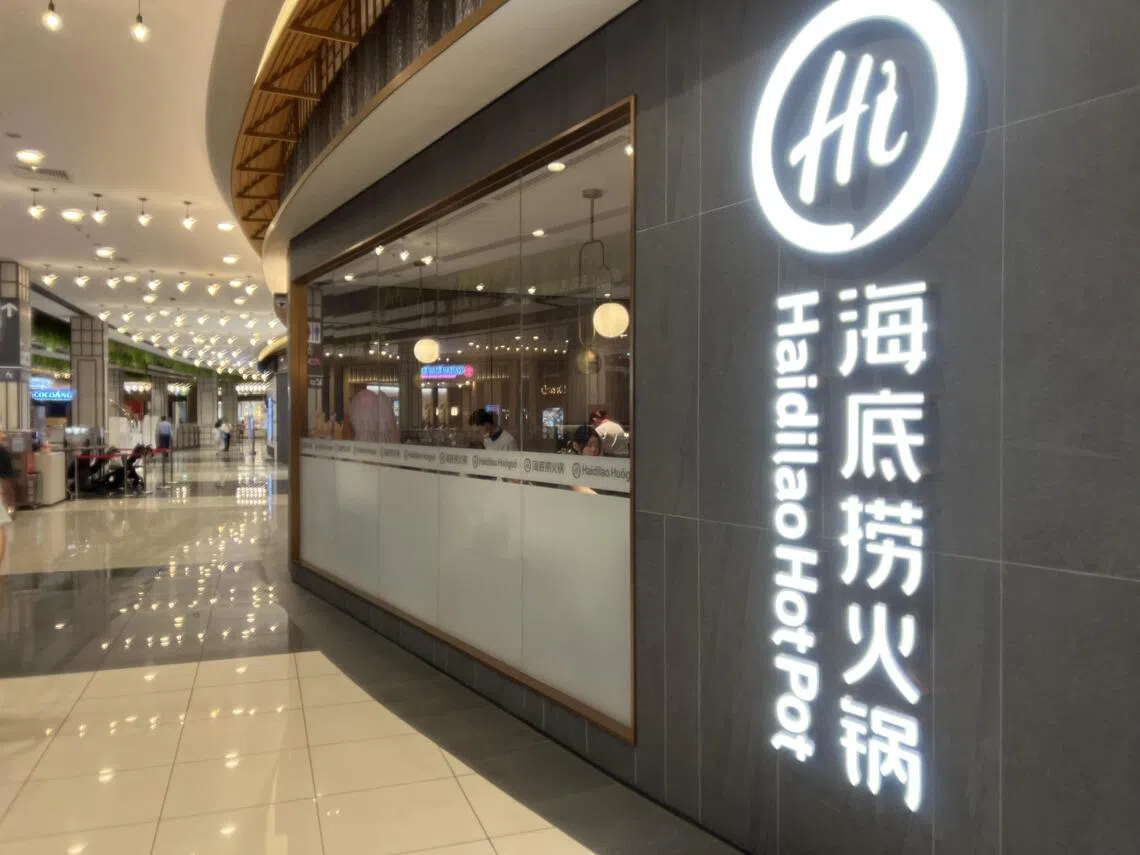
Varun Arora, South-east Asia managing partner at consultancy Kearney, said Singapore-based Chinese players have taken several approaches.
The parent company may remain in China, with the Singapore entity serving international customers. This is sometimes carved out into a standalone operation – such as Haidilao’s Singapore-based Super Hi arm, which is listed in Hong Kong and on the Nasdaq.
Singapore may act as a regional launch pad out of China, as with cafe chain Luckin Coffee, which picked the city-state for its first overseas stores, or companies could shift their business headquarters, lock, stock and barrel, like fast fashion e-commerce player Shein.
“The right model depends on the markets companies want to enter and what customers, investors and regulators in those markets expect,” Arora said.
“For Singapore, the real opportunity is to become the place where these companies make decisions, build capabilities and lead their global expansion.”
Decoding Asia newsletter: your guide to navigating Asia in a new global order. Sign up here to get Decoding Asia newsletter. Delivered to your inbox. Free.
Share with us your feedback on BT's products and services