Singapore’s food supply unaffected by haze; no additional financial support planned for hawkers: Grace Fu
Employers of platform delivery workers and outdoor service workers should exercise flexibility in haze conditions, says MOM

[SINGAPORE] The Republic’s food supply has not been affected by the recent transboundary haze, although hawker centres and markets have experienced a decline in customer footfall, Minister for Sustainability and the Environment Grace Fu said on Tuesday (Nov 3).
Speaking in Parliament, Fu said the country’s diversified food import sources – which span more than 180 countries and regions – have helped the city-state reduce concentration risks while enabling businesses to switch to alternative sources when needed.
However, wholesalers have indicated prolonged haze can affect vegetable growth, though local farmers have observed minimal overall impact, she noted. She added the Singapore Food Agency will continue to monitor the situation and will introduce measures if necessary.
No additional support for hawkers
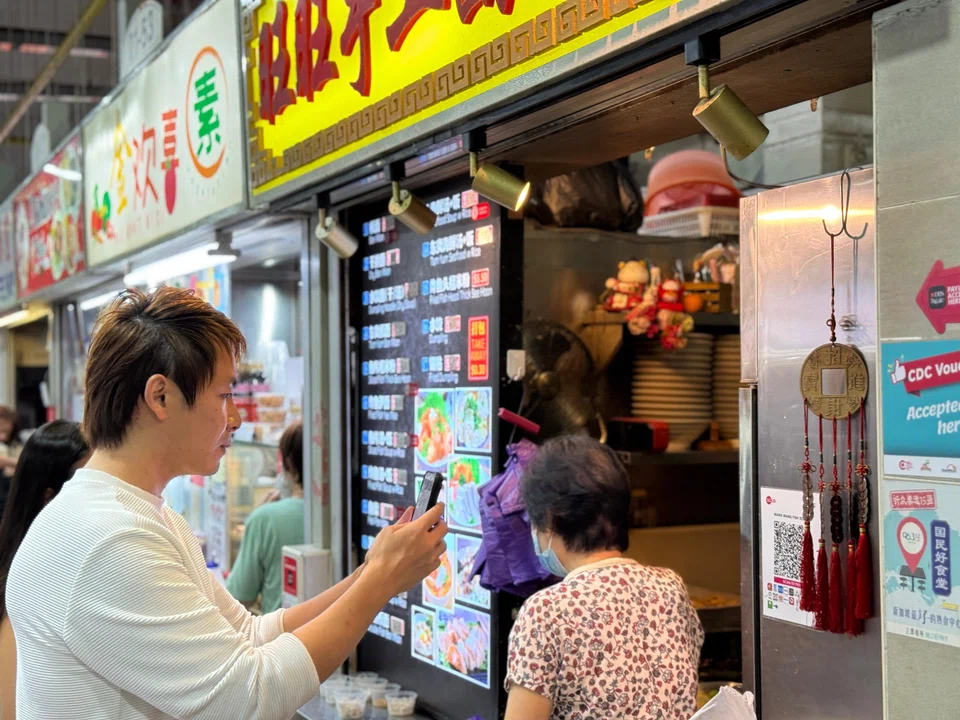
Meanwhile, the minister said that some hawker centres and markets have experienced a drop in footfall, though the extent of this decline varies across centres.
Still, she added that such a reduction in footfall is often accompanied by an increase in takeaway orders.
The government has no plans at present to introduce additional haze-specific financial assistance for hawkers, said Fu.

She pointed to existing support measures aimed at helping stallholders cope with operating cost pressures arising from the Middle East situation.
These include distributions of S$200 a month for eligible cooked food stalls, and S$100 a month for market slab or lock-up stalls, which can be used to offset monthly rental payments.
Platform delivery workers
Separately, Minister of State for Manpower Foo Cexiang reiterated the Ministry of Manpower’s (MOM) call for both platform delivery workers and platform operators to take measures to mitigate the impact of haze on workers’ health and earnings.


Foo said platform operators should not use incentive scheme penalties, reduced job allocations or pay deductions to penalise platform workers who take longer to complete jobs under haze conditions.
Platform operators are expected to take the haze into account when managing their workers, so the workers can take reasonable precautions to protect their health, he told the House.
“If we ask a rider to slow down, take a break, or avoid prolonged outdoor activity for his or her health, the platform systems and incentives should not push him or her into the opposite direction,” he said.
Workers who believe they have been penalised should first raise the issue with the platform operator in question, while workplace safety and health concerns should be reported to MOM, he added.
Haze and heat stress for outdoor workers
Meanwhile, employers of outdoor workers should exercise flexibility when haze and heat stress affect contractors’ ability to fulfil their obligations.
These include outsourced cleaning and other outdoor service sectors, said Minister of State for Manpower Dinesh Vasu Dash in his response to parliamentary questions.
“We recognise that these measures including work schedule adjustments and the adoption of protective measures may increase service providers’ operating costs, and may result in difficulties in meeting contractual requirements,” he said.
Citing the tripartite advisory on best sourcing practices, he added that service buyers should allow reasonable changes to bid prices, should unforeseen circumstances lead to higher operating costs for providers.
Other parliamentary questions focused on whether the National Environment Agency will introduce air-quality forecasts across different time horizons, and inquired about the availability of free masks for Singaporeans.
Fu noted in her response that the current 24-hour Pollutant Standard Index forecast and hourly PM2.5 readings have been sufficient, as having too many indicators could complicate the government’s public messaging.
She added that the government had expanded eligibility of free N95 masks to include Singaporeans aged 60 and above in October. About 30 per cent of eligible Singaporeans have already collected their masks, she disclosed.
As haze does not involve the risk of people-to-people transmission, Fu said Singaporeans are not all required to wear masks immediately. However, she added that the government is reviewing the scale and eligibility of mask distribution “as conditions evolve”, and is prepared to expand support if needed.
Decoding Asia newsletter: your guide to navigating Asia in a new global order. Sign up here to get Decoding Asia newsletter. Delivered to your inbox. Free.
Copyright SPH Media. All rights reserved.