

Singapore’s private-sector leaders back ESR strategy, highlighting global expansion and AI
Industry participants say the review clarifies the Republic’s growth direction
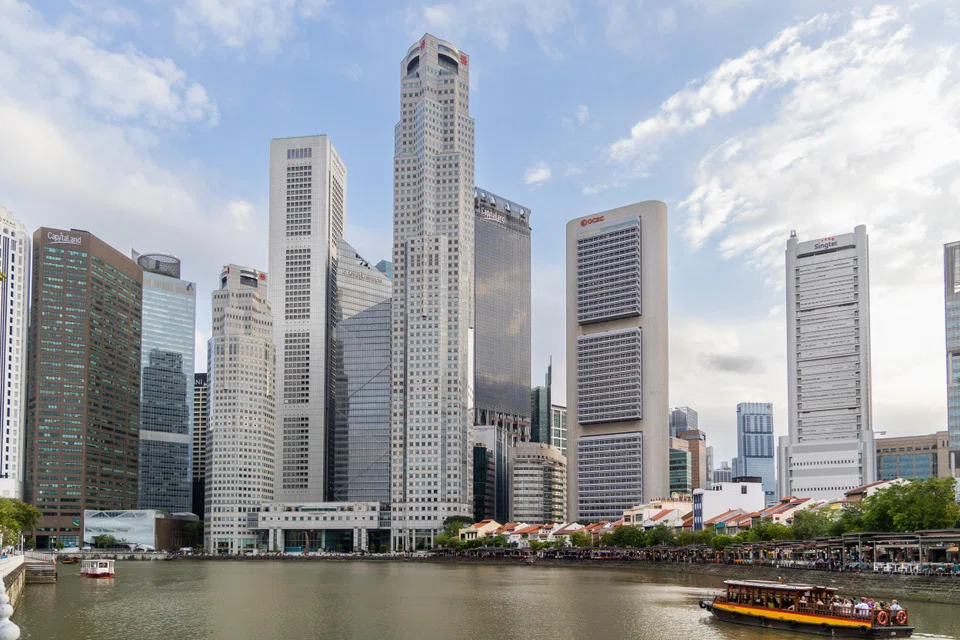
[SINGAPORE] Private-sector leaders who participated in some of the Economic Strategy Review (ESR) committees have welcomed the process as a genuine partnership with the government, saying it has clarified Singapore’s economic direction amid global uncertainty.
Their comments come after the five ESR committees released a midterm update on Friday (Jan 30), setting out seven recommendations ranging from strengthening Singapore’s global competitiveness to supporting firms’ internationalisation and positioning the Republic as a leader in artificial intelligence (AI).
The committees, each co-chaired by two political officeholders and comprising representatives from the private sector, unions and other stakeholders, have been consulting businesses and workers since the ESR was launched in August 2025.
Each committee examines one of five areas: strengthening Singapore’s global competitiveness; leveraging technology and innovation; nurturing entrepreneurship; enhancing human capital; and managing the impact of economic restructuring.
Going beyond borders
ST Engineering president and chief executive officer Vincent Chong said the ESR provided “a valuable platform for meaningful dialogue” that enabled industry leaders to discuss sectoral challenges candidly and identify actionable outcomes. This view was echoed by participants in other ESR committees.
Chong, who sits on the committee for global competitiveness, said the recommendation to step up support for internationalisation would help more Singapore firms scale beyond the domestic market.
“Singapore’s future growth opportunities increasingly lie beyond our shores,” he said, adding that the government plays a pivotal role in supporting firms’ internationalisation by strengthening connectivity and trade partnerships that facilitate access to global markets and value chains.
Chong said support from agencies such as the Economic Development Board and Enterprise Singapore has helped companies including ST Engineering to identify overseas opportunities, build market access and secure partnerships in new markets, bolstering their ability to compete for complex, high-value projects abroad.
Agreeing, Marcus Tan, co-founder of home-grown e-commerce firm Carousell and a member of the ESR committee for entrepreneurship, said the company’s growth into one of South-east Asia’s fastest-growing marketplaces illustrates how Singapore’s ecosystem support can help local firms “build resilient, high-value business models” capable of competing globally.
“Golden opportunity”
Beyond internationalisation, industry leaders also highlighted shifts in global supply chains and advances in AI as key strategic levers for Singapore.
Lim Hock Heng, former vice-president and site director for British drugmaker GSK, said the reconfiguration of global supply chains has introduced a “golden opportunity as well as associated challenges”, with Singapore well placed to serve as a trusted partner as companies seek reliability in a less predictable world.
“Singapore can be more than just a regional hub,” he said. “We have the chance to become the global benchmark for advanced manufacturing and modern services, a place where the future of industry takes shape.”
Brian Tan, regional president for South-east Asia at semiconductor firm Applied Materials, added that the ESR’s call to pursue global leadership in advanced manufacturing and modern services is timely.
“In this fragmented world, we must double down on our status as a trusted hub to capture new trade flows, especially from a growing Asia,” he said.
Both Lim and Applied Materials’ Tan sit on the committee for global competitiveness.
On AI, Vaishali Rastogi, global leader of the technology, media and telecommunications practice at Boston Consulting Group, said Singapore is well positioned to lead in AI adoption.
The country can do so by enabling companies to raise productivity, develop new products and services, and anchor intellectual property locally, even as they scale overseas.
Trust remains a critical differentiator, she added, noting that Singapore’s regulatory environment allows it to set governance standards that other markets can reference.
The Republic’s role as a testing ground further strengthens its appeal as an AI hub, Vaishali said, as companies are able to trial solutions while drawing on its infrastructure and talent base to establish and scale AI operations.
Emily Tan, CEO and country director at Thales in Singapore, pointed to AI’s potential to deliver economy-wide productivity gains, particularly for a resource-constrained country such as Singapore.
By automating routine and time-consuming tasks, AI could help firms lift output while relying on fewer resources, said Tan, who is part of the committee for technology and innovation with Vaishali.
She added that such gains could have a “monumental effect” on Singapore’s long-term economic growth.
Decoding Asia newsletter: your guide to navigating Asia in a new global order. Sign up here to get Decoding Asia newsletter. Delivered to your inbox. Free.
Copyright SPH Media. All rights reserved.
TRENDING NOW
DBS remains analysts’ pick ahead of Q3 earnings after Singapore banks’ share slump
Singapore identifies 7 firms responsible for haze fires, notices issued urging action: Grace Fu

Good Class Bungalow market activity picks up pace on ‘realistic’ pricing

High Court rules against Julius Baer’s Singapore trust arm in US$50 million family trust dispute

