

Small nuclear reactors: Big potential for Singapore, but with caveats
Fuel supply, costs and geopolitics among the challenges that warrant close evaluation

MINI nuclear reactors, also known as small modular reactors (SMRs), could unlock clean energy in Singapore. But there are several challenges that policymakers will need to navigate: from costs and supply-chain complexities to geopolitics.
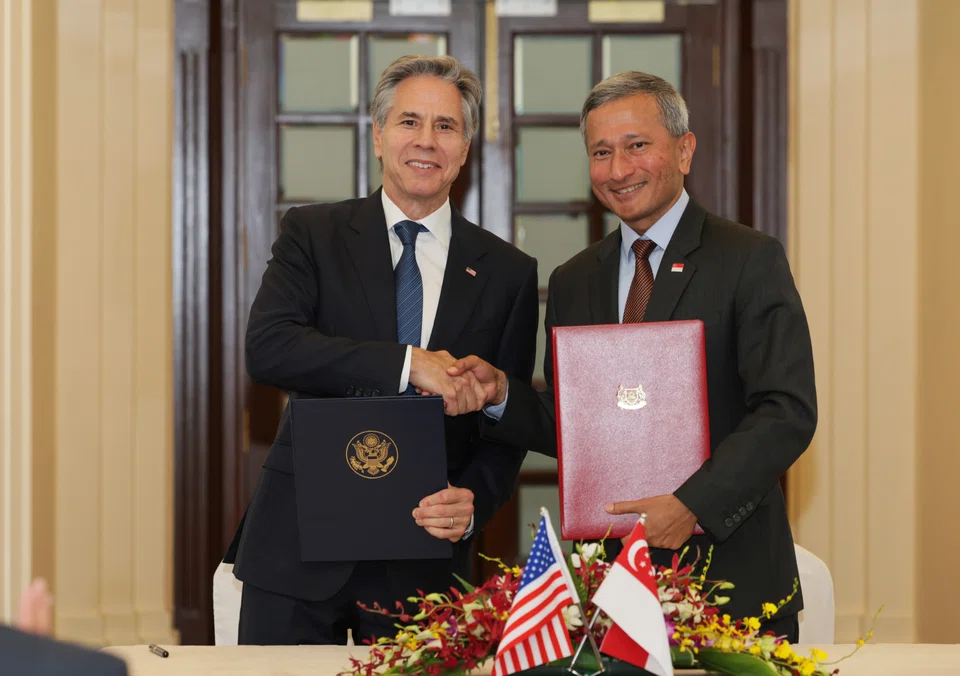
On Jul 31, Singapore inked a 30-year deal with the US to study SMRs and other advanced nuclear-power technologies. The deal, called a “123 Agreement”, gives Singapore access to technical information that is under US export control.
The timing of the deal comes as hype builds around SMRs and their potential to spark a nuclear-energy renaissance.
Like their traditional counterparts, SMRs are powered by nuclear fission, or the splitting of the radioactive element uranium. They have a power capacity of up to 300 megawatts, about a third that of conventional nuclear power reactors.
The key difference is that SMRs are compact and can be assembled in factories. Some SMRs are touted to measure less than 5 m in diameter and 10 m in height – which could be suitable for land-constrained Singapore.
These size and upgraded safety features of these reactors “make them a very different prospect from previous generations of nuclear technology”, said Dr David Broadstock, energy transition lead at the Sustainable and Green Finance Institute (SGFIN) under the National University of Singapore.
The excitement over SMRs could mark a turnaround for an industry haunted by accidents such as the 2011 Fukushima nuclear disaster.
New, clear challenges
That said, SMRs throw up new challenges that policymakers will need to navigate.
Fuel supply is one aspect. Nine out of 10 advanced reactor designs funded by the US government will require a fuel called high assay low enriched uranium (Haleu) in the next decade, said the International Atomic Energy Agency.
Haleu has uranium levels of up to 20 per cent, higher than the 5 per cent used in conventional nuclear power plant fuel.
However, commercial production of Haleu is currently dominated by Russia. Some industry players fear that a shortage of the fuel could delay the deployment of certain SMR designs.
The US is beefing up its domestic Haleu production capabilities, with President Joe Biden’s Inflation Reduction Act investing US$700 million for a Haleu availability programme.
Dr Victor Nian, chief executive of the Centre for Strategic Energy and Resources, believes that countries can address the Haleu supply challenge via bilateral arrangements with alternative suppliers of the fuel.
While prices could be uncertain, “nuclear electricity production cost is much less sensitive to the fuel prices as seen in the case of fossil fuels”, he added.
Beyond fuel supply, SMRs also face questions around costs and trade-offs. Some critics argue that SMRs’ development costs are steep and could draw investments away from other sources of clean energy.
One industry player, US-based NuScale Power, last year had to cancel its SMR project in Utah amid rising costs and concerns about consumers’ willingness to pay.
While NuScale initially estimated the power from the project would be priced at US$58 per megawatt hour, it later raised the target price to US$89 per MWh.
As more SMR projects surface, policymakers will have to assess whether these projects are financially sustainable. Aspects such as vendor selection, financing structures, off-take agreements and radioactive waste management are important, said Dr Nian.
Understanding the geopolitics of SMRs will also be crucial. The outcome of the upcoming US election and its future direction on climate policy will be key to watch – for instance, whether efforts to increase Haleu supply continue under a Trump presidency.
A positive step
With the slew of challenges surrounding SMRs, it is positive that Singapore is not jumping on board the hype train, but taking a cautious, science-based approach to studying the technology.
Dr Broadstock noted that the Energy Market Authority “remains unflinching with regard to its position on nuclear – that it is neither ruled in nor ruled out at this stage”.
Meanwhile, Singapore’s neighbours are arguably well-ahead in studying nuclear energy. Earlier signatories of the 123 Agreement include Indonesia, the Philippines and Vietnam.
The 123 deal will “ensure that Singapore can talk with these countries regarding the specifics of the advanced nuclear solutions they may be considering,” said Dr Broadstock.
The deal could also help Singapore attract foreign direct investments in advanced nuclear-energy capabilities, said Dr Nian.
Such investments include nuclear-grade industrial equipment, and AI and 3D printing technologies relevant to nuclear power. More global nuclear energy companies may also consider setting up offices and research outposts in the Republic.
“But stronger support and policy signals are needed before Singapore can become attractive for foreign nuclear power companies to consider moving into Singapore,” said Dr Nian.
By strengthening access to world-class expertise, Singapore can make the best possible call on whether to go nuclear.
As Dr Broadstock puts it: “Nuclear may or may not prove to be a well-suited solution for Singapore, but either way, we have to ensure that is a fully informed decision today.”
TRENDING NOW
Singapore identifies 7 firms responsible for haze fires, notices issued urging action: Grace Fu

Could stablecoins be the future of money?

Singapore should prepare for prolonged haze until November, says Grace Fu
High Court rules against Julius Baer’s Singapore trust arm in US$50 million family trust dispute

