

Talks with US may result in 10-20% tariffs; trade-offs expected: Gan Kim Yong
S$9.4b exports at stake; Singapore will engage Washington to explain CPF and other policies

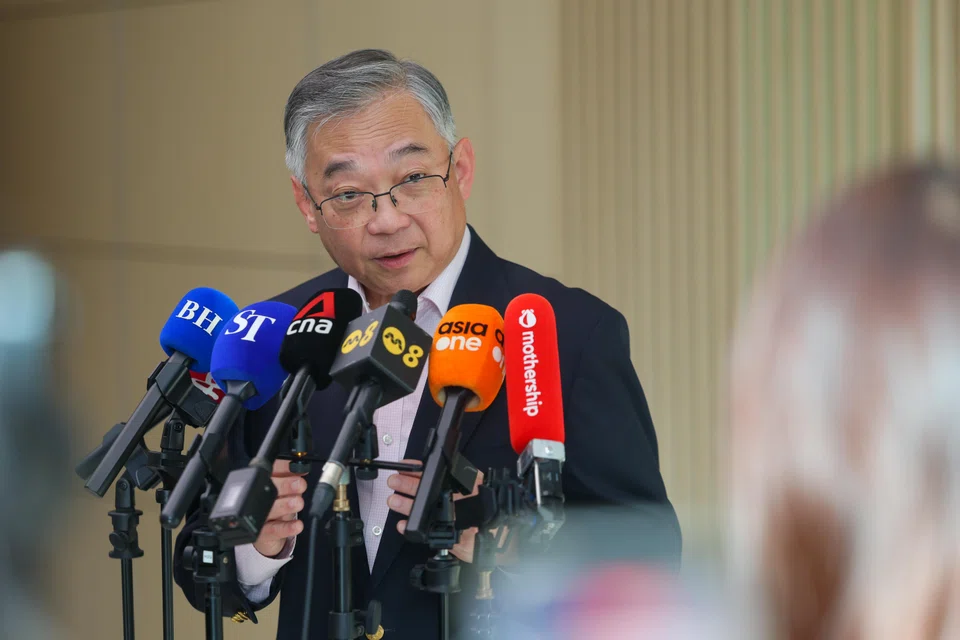
[SINGAPORE] Singapore has yet to begin negotiations on a new trade deal with the US, but will work with Washington to secure lower tariffs while helping affected businesses manage the impact of higher duties, Deputy Prime Minister Gan Kim Yong said on Thursday (Nov 26).
“The tariff is a surprise to us, and it’s not something that we expect from a major trading partner,” he noted.
Gan, who is also minister for energy, trade and industry (trade), was speaking to the media following a proposal by the US Trade Representative’s (USTR) office on Wednesday to impose tariffs of up to 20 per cent on Singapore and other trading partners, following a Section 301 probe into “unfair trading practices”.
Singapore will engage the US to understand the American government’s concerns, and establish whether such concerns can be addressed. “If we are able to do so, we hope we look forward to lower tariffs,” Gan added.
Need for “give and take”
Tariffs imposed on Singapore under Section 301 of the US Trade Act, which is intended to address practices that Washington deems unfair to US commerce, now stand at 12.5 per cent, and the proposed new tariff would potentially raise the rate by 7.5 percentage points.
This rate could be lowered to 10 per cent if the city-state reaches an agreement on reciprocal trade with the US, or concludes other negotiations related to the latest findings.

Gan noted that negotiations with the US may result in a tariff rate “somewhere in between” 10 and 20 per cent, adding that the Republic must be willing to accept certain trade-offs in the negotiations. “There will be a give and take; there will be compromises.”
Besides securing a lower tariff rate, he pointed out that the Singapore government’s current priority is to help domestic companies manage the impact of tariffs.
The new tariffs will raise the effective tariff rate on Singapore goods from 7.8 to 10.3 per cent, which could affect about S$9.4 billion dollars of Singapore exports to the US, he noted. He added the government is working with the Singapore Economic Resilience Task Force – which was set up in April 2025, in part to help navigate the immediate uncertainties caused by US tariffs – to reach out to affected companies in order to manage this impact.
Claims of excess capacity
The USTR report cited several Singapore government policies that it claims create, sustain or contribute to “structural excess capacity and production”, which it said warrants the imposition of tariffs.
Alleging that the city-state produces more goods than it would under ordinary market conditions, the report identified Singapore’s “industrial planning apparatus” as a main underlying intervention leading to structural overcapacity.
It cited Singapore’s Manufacturing 2030 vision and Research, Innovation and Enterprise (RIE) 2030 plan as the main policies indicative of such intervention.
Other policies cited by the report include Singapore’s compulsory savings schemes under the Central Provident Fund system, which require residents to contribute up to 20 per cent of their wages towards savings accounts.
“These contribution levels are far beyond those of the US and many developed economies,” said the USTR. It argued that CPF contribution requirements suppress consumption levels and feed Singapore’s “large, persistent current account surplus”.
When asked, Gan told the press that he was “surprised” by the USTR’s comments on the CPF scheme, and noted that the scheme is both unique to Singapore and critical to its needs, particularly in ensuring Singaporeans are self-reliant in their retirement.
“It’s not a scheme to suppress domestic consumption,” he explained. “We will explain our position to them, and we hope that they will understand what CPF is about.”
Gan noted that the bilateral relationship between Singapore and the US remains multifaceted, extending beyond economics into other aspects. “We hope to continue to strengthen our bilateral relationship, and we look forward to looking for a way to resolve differences,” he added.
Decoding Asia newsletter: your guide to navigating Asia in a new global order. Sign up here to get Decoding Asia newsletter. Delivered to your inbox. Free.
Copyright SPH Media. All rights reserved.
TRENDING NOW

From everyday payments to cross-border connectivity: How DBS is shaping the next wave of digital payments with PayLah!

Nvidia halts chip shipments to 4 countries in South-east Asia, including Singapore: FT
MAS green-lights retail investor access to wider range of complex funds, but excludes private-market funds for now
Yangzijiang Maritime eyes 2027-2028 profit surge on newbuild deliveries

