EMA looking to build new power plant on Jurong Island
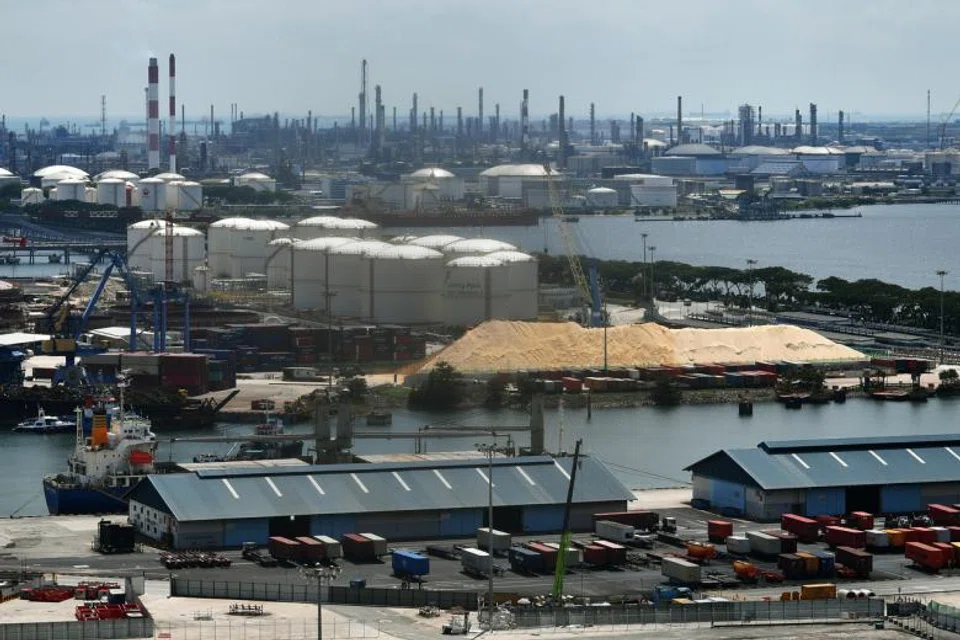
A NEW thermal power station could be built on Jurong Island over the next few years.
The Energy Market Authority (EMA) has launched a tender to engage consultancy services to conduct feasibility studies for power plant development at identified sites on the industrial island, The Business Times has learnt from documents on government portal GeBiz.
Two plots of land of approximately 12.5 hectares have been identified for the potential new power plant, the documents indicated.
The documents called for a “conceptual design” for two H-class combined-cycle gas turbines (CCGTs).
The design calls for the development of one CCGT first, with the potential to add the second one later.
CCGTs are the most efficient thermal generation units available and generate almost all the electricity produced in Singapore, Second Minister for Trade and Industry Dr Tan See Leng said in a speech last month.
Tender documents showed that the seawater intake and outfall structures for cooling water systems are located approximately 1 km away from one site, and 1.5 km away from the other.
With power system peak demand projected to grow at a compounded annual rate of 4 per cent to 6 per cent based on EMA’s latest electricity demand forecast, the statutory board had called for the tender to ensure that Singapore continues to have suitable land for power plants, an EMA spokesperson said.
She added that a formal request for proposal for the new plant is expected to be called by July 2023.
“EMA’s preference remains for the new capacity to be built by the private sector,” she said.
Authorities will step in to build the power-generating unit if there is no private-sector interest or if the project proposals submitted are deemed unsuitable for tenders.
Plans had been previously floated to increase Singapore’s energy supply in the coming years.
Earlier this year, EMA indicated that it intends to launch a request for proposals from the private sector to “build, own and operate” new power-generation capacity in the second half of 2023.
The statutory board said then that it foresaw a need for additional power generation capacity by 2028.
It said peak power system demand was expected to grow over the years, with demand reaching between 10.1 GW and 11.7 GW by 2028 – thereby necessitating additional generation capacity.
It added that this was largely due to growth in electricity-intensive sectors, such as semiconductor and data centres.
“New thermal generation units… will still be needed to meet growing electricity demand and maintain a secure and reliable power system in the near and medium term,” EMA said then.
There are currently 25 CCGTs operated by seven generation licensees in Singapore.
Keppel Infrastructure announced last August that it was going to develop a 600 MW CCGT power plant on Jurong Island. The Keppel Sakra Cogen Plant is expected to be completed in H1 2026, the company said then.
The new power plant that EMA is looking to build will have to adhere to a more stringent emission intensity limit that came into effect for new and repowered fossil-fuel generation units applying for a licence from Jan 9 this year.
New power plants must also be able to operate on blended fuels which contain at least 30 per cent hydrogen by volume, and be designed in such a way that they can be retrofitted to be fuelled entirely by hydrogen gas in the future.
The new rules came months after the government released Singapore’s National Hydrogen Strategy in October last year – in which it said CCGTs able to run fully on hydrogen are expected to become available around 2030.
While hydrogen does not release any greenhouse gases when combusted, almost all the hydrogen produced today is itself produced from fossil fuels.
However, Deloitte said in a report released last week that it expects green hydrogen – hydrogen produced through low-emission methods such as the electrolysis of water using renewable energy – to account for 85 per cent of the hydrogen market by 2050.