

NDR 2026: Singapore won’t block tech for being disruptive, but will support affected workers
PM Wong adds that the Republic has stayed relevant by adapting to major technological shifts
Annabeth Leow
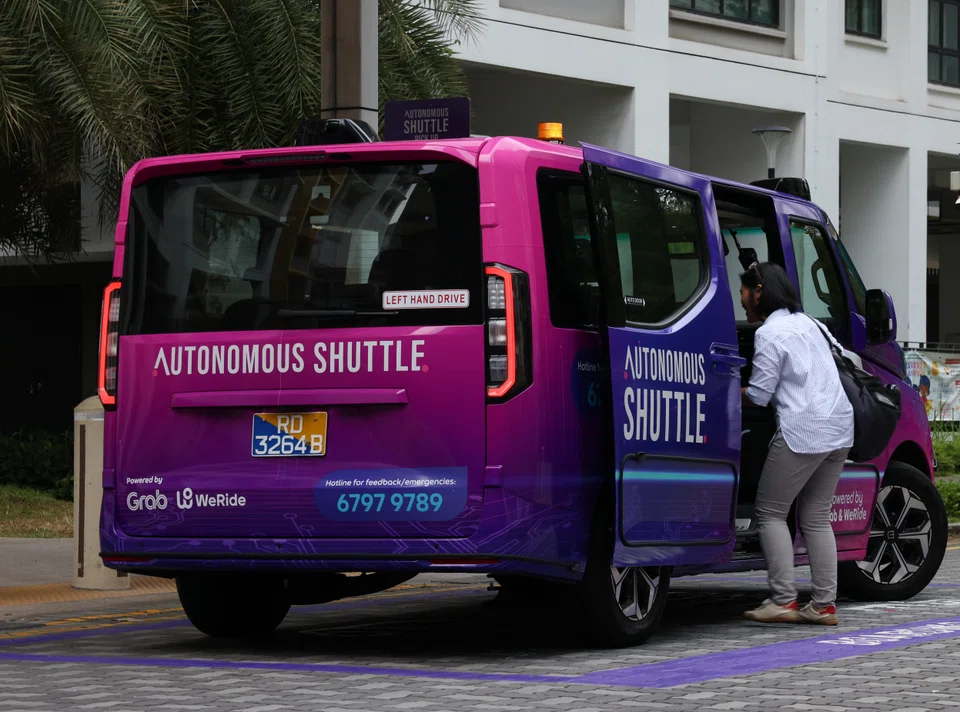
[SINGAPORE] Policymakers will not restrict tech adoption on the basis that it is disruptive, but will manage the impact on workers, Prime Minister Lawrence Wong said on Sunday (Aug 23).
“We do not hold back new technologies simply because they are disruptive. But neither do we leave affected workers to fend for themselves,” he said, while vowing to “ensure that every worker shares in the fruits of Singapore’s progress”.
That’s as the Republic intends to expand the commercial use of autonomous vehicles (AVs), which are now being deployed in driverless shuttle trials in Punggol.
“Once the technology is proven, we intend to scale it up, because we need new solutions to meet our growing transport needs,” said PM Wong, pointing to manpower constraints such as the ageing taxi workforce and difficulty in recruiting bus drivers.
Still, he added that the scale-up of AVs will be progressive, since AVs pose a major concern for the livelihoods of taxi and private-hire drivers.
Pledging to help workers in the transition, he said: “We will not let adoption run ahead of our ability to retrain and support affected drivers, and help them move into new jobs.”
PM Wong noted that Singapore has stayed relevant by adapting to major technological shifts, such as industrialisation, the introduction of computers, and the rise of the Internet.
“Each time, we mastered new technologies, attracted leading companies here, built up our own capabilities, and equipped Singaporeans with new skills. And that’s how we’ve created better jobs and new opportunities for our people,” he explained.
For instance, Singapore did not seek to block the entry of ride-hailing apps into the local market in 2013. Instead, rules were enacted to ensure fair competition and support drivers.
SEE ALSO



The taxi industry has adapted, with commuters and drivers alike enjoying benefits, and Singapore is drawing on this experience in the move towards AVs, according to PM Wong.
AI boost for SMEs
Separately, he observed that faster-than-expected advances in artificial intelligence technology can make a big difference for small and medium-sized enterprises (SMEs), which are now able to access capabilities that had been the exclusive domain of bigger companies.
PM Wong – who called AI “a defining technology of our time” in his last National Day Rally – flagged the rapid development since then of AI agents that can carry out automated tasks.
These agents are able to handle routine work such as marketing and operations, leaving small business owners with more time to focus on expansion plans and family life.
“That’s the power of AI – it can enable SMEs to think bigger, move faster, and achieve more with fewer resources,” PM Wong added.
Decoding Asia newsletter: your guide to navigating Asia in a new global order. Sign up here to get Decoding Asia newsletter. Delivered to your inbox. Free.
Share with us your feedback on BT's products and services






