Operators of essential bus services to get temporary government support to cope with higher fuel costs
The three ministries - MOE, MSF, and MOH - say this support will be for services rendered from April to June 2026
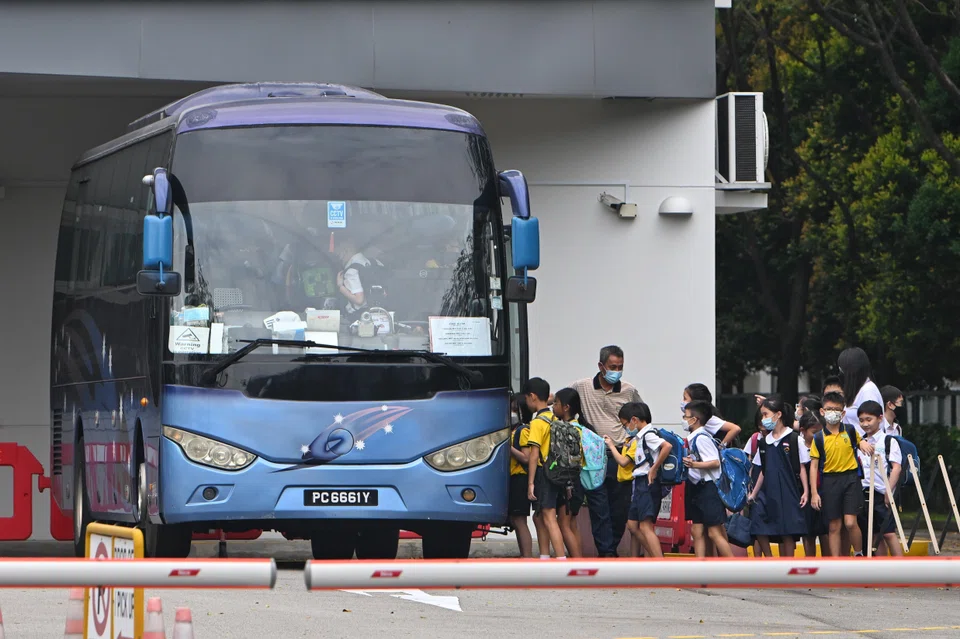
[SINGAPORE] Those who operate essential bus services – including school buses – will get temporary government funding to offset higher operating costs from elevated fuel prices.
This will cover 13 per cent of transport fare revenue, said the Ministry of Education (MOE), the Ministry of Social and Family Development (MSF), and the Ministry of Health (MOH) in a joint statement on Thursday (Apr 9).
The support will go to government-contracted or subsidised operators running regular transport services to primary schools, as well as special education (SPED) schools, disability services, and patients receiving long-term care and community dialysis services.
The three ministries said this support will be for services rendered from April to June 2026.
“With the support, operators should keep fares stable during this period,” they said.
They added that this move will help providers continue operating without disruption in the near term, given cost pressures from the Middle East conflict.
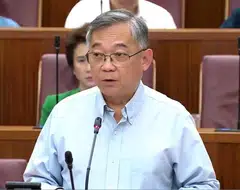
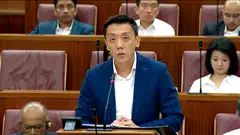
Speaking in Parliament on Apr 7, Acting Minister for Transport Jeffrey Siow said that with petrol and diesel prices already rising sharply, “the government is not waiting to act”.
Siow, who is also Senior Minister of State for Finance, announced that the Government will provide temporary assistance to co-fund cost increases for certain essential bus services so they can continue operating without disruption, but did not give details then.
In their Apr 9 statement, the ministries noted that transport fares may have to rise if fuel prices remain elevated.
SEE ALSO


Students, seniors, patients and persons with disabilities can tap existing subsidies if they are not able to afford transport, the ministries said.
For the school bus sector, MOE will provide support to operators providing school bus services for primary schools and SPED schools. The support will apply to student transport services.
This will also give parents and caregivers more time to adjust transport arrangements, ahead of possible fare increases if fuel prices do not improve, the ministries said.
Students on MOE’s Financial Assistance Scheme (FAS) will continue to receive support. Since January 2026, MOE FAS students have received school bus subsidies covering 70 per cent of monthly fares, up from 65 per cent.
Students who require additional support or do not qualify may approach their schools for school-based assistance, the ministries said.
SPED students will continue to receive financial assistance to offset school bus fares if they are eligible for MSF’s Enabling Transport Subsidy (ETS).
Those who require additional assistance or do not qualify for the ETS may also approach their schools, the ministries said.
MSF will provide support to social service agencies (SSAs) – such as day activity centres and sheltered workshops – that provide MSF-funded disability services and use the ETS for client transport. These SSAs will be required to disburse the grant to their contracted transport operators.
Eligible clients of these disability services will continue to receive the ETS, which will be enhanced from July 2026 to extend subsidies to more persons with disabilities. SG Enable will contact affected SSAs with operational details.
As for MOH, it will provide support to long-term care and community dialysis service providers offering regular transport services for seniors and patients. These include MOH-funded senior care centres, medical escort and transport operators, day hospices, and community dialysis centres.
“Seniors and patients can be assured that the cost of care will continue to remain affordable,” the ministries said. As announced at Budget 2025, subsidies for long-term care services, including transport, will be enhanced from July 2026.
MOH and the Agency for Integrated Care will provide more details to service providers by end-April 2026. THE STRAITS TIMES
Decoding Asia newsletter: your guide to navigating Asia in a new global order. Sign up here to get Decoding Asia newsletter. Delivered to your inbox. Free.
Share with us your feedback on BT's products and services