

Political salary framework to keep calibre, commitment, clean-wage principles: Chan Chun Sing
The current framework was established in 2012 and has not been updated since

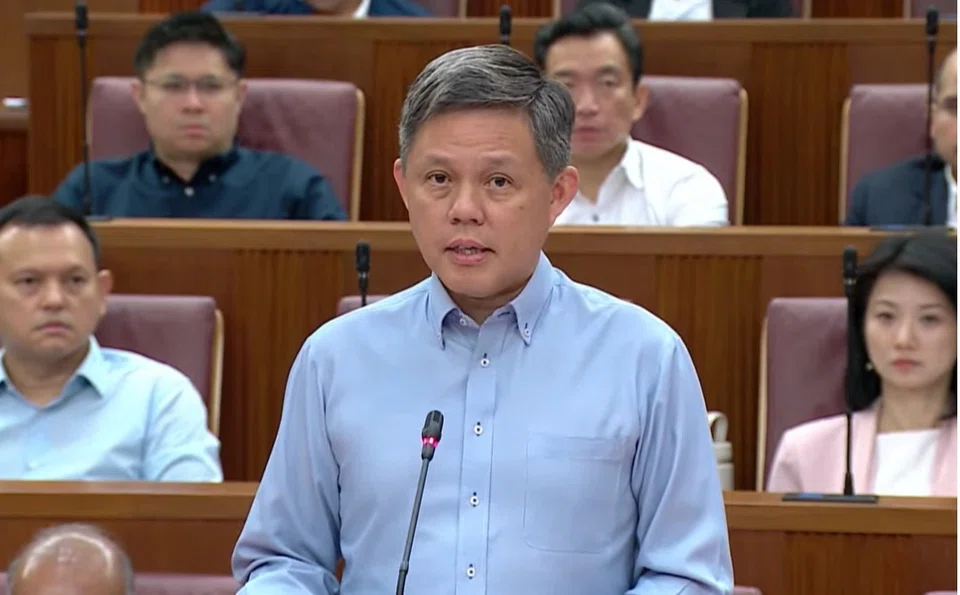
[SINGAPORE] Political salaries will continue to rest on three core principles – calibre, commitment and a “clean wage” – while also being “clearly inked” to both individual and collective performance, said Coordinating Minister for Public Services Chan Chun Sing in Parliament on Tuesday (Sep 8).
These principles are part of a framework that is “fair to widen the pool of Singaporeans who can realistically consider serving, while preserving the ethos of political service”, said Chan as he set out the government’s response to a review of political salaries.
The current framework was established in 2012 and has not been updated since, after the government held back planned reviews in 2017 and 2023 due to “prevailing economic circumstances”, noted Chan. This has resulted in a freeze of political salaries for 15 years, noted Chan.
A fresh committee, chaired by Singapore LNG Corporation chairman Gan Seow Kee and comprising seven other members from the private and people sectors, was convened by Prime Minister Lawrence Wong last December to review the framework.
The committee engaged Mercer, a global human resources consultancy, for technical input on pay practices and benchmarks.
Chan said the review was needed as the current framework risked “losing its relevance” the longer it went unchanged, weakening the government’s ability to build “a strong, diverse team of leaders that Singapore needs”.
“This review is fundamentally about giving ourselves a better chance to build a first-rate team to serve Singapore and Singaporeans,” said the minister.
“We need to ensure that the salary framework stays updated so that capable and committed people from different backgrounds and at different stages of life can step forward to serve, not just the financially independent ones or those who have made exceptional lifestyle choices,” he added.
This includes younger Singaporeans in their 30s and 40s who may still be building their careers, raising families and taking on major financial commitments.
SEE ALSO
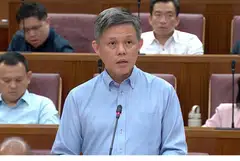

“We want such people to be able to enter public office in their prime, with the energy and runway to build up the experience, judgment to make tough decisions, and to bond and build up the trust with Singaporeans to take Singapore forward,” said Chan.
It also includes individuals who are more established in their careers, especially in the private sector, noted Chan, noting that some chief executives of major Singapore companies earn S$6 million or S$7 million a year or more.
“We are not trying to match that, nor should we,” he said. “But we cannot pretend that such opportunity costs do not exist.”
Principles reaffirmed
Thus, the political salaries framework rests on three core principles that were first established by the 2012 committee and reaffirmed in this subsequent review.
The government agrees with the committee’s assessment that these principles remain “sound and necessary” so that it can “build up a strong, sustained political core”.
The first, calibre, means that the salary framework should take reference from market benchmarks so that individuals of the right calibre are “not deterred” from stepping forward to lead the country.
The second, commitment, means the framework should include a meaningful discount to market benchmarks to reflect the ethos of political service.
The third principle states that salaries should be paid as a “clean wage” with no hidden perks, to maintain transparency and public trust.
Beyond these three principles, the government also affirmed that salaries should be more clearly linked to performance, based on outcomes that matter to Singaporeans and reflect the country’s socioeconomic progress, said Chan.
Decoding Asia newsletter: your guide to navigating Asia in a new global order. Sign up here to get Decoding Asia newsletter. Delivered to your inbox. Free.
Copyright SPH Media. All rights reserved.






