

Popiah King’s new Tee Yih Jia factory has one of Asia’s largest, fully automated warehouses
The S$500 million facility has a solar panel system that generates enough power for about 315 four-room HDB flats for a year

[SINGAPORE] Would a sheet of spring-roll pastry that sells for as little as S$0.035, along with other modestly priced food products with meagre margins, be worth investing half a billion dollars in?
Sam Goi, owner and executive chairman of the world’s leading spring-roll pastry maker Tee Yih Jia Food Manufacturing, certainly thinks so.
He put S$500 million into a new factory to level up his privately held home-grown enterprise – as he has done before in the last five decades – once again leveraging state-of-the-art technology to reimagine food manufacturing.
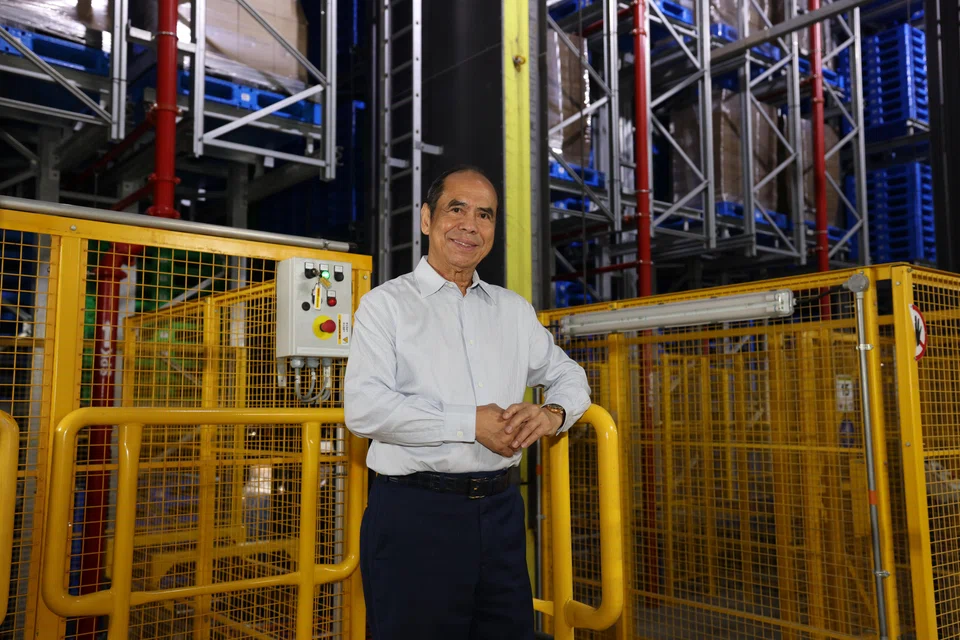
During an exclusive interview with The Business Times, Goi – ranked 25th on Forbes’ 2025 Singapore’s 50 Richest list – gave a tour of the nine-storey factory with a gross floor area of about 1.1 million square feet.
Tee Yih Jia Food Hub, the company’s fifth and latest factory in Singapore, is on Senoko Road, within walking distance of the company’s older S$100 million plant, which will continue to play a key role in the company’s manufacturing and future expansion plans.
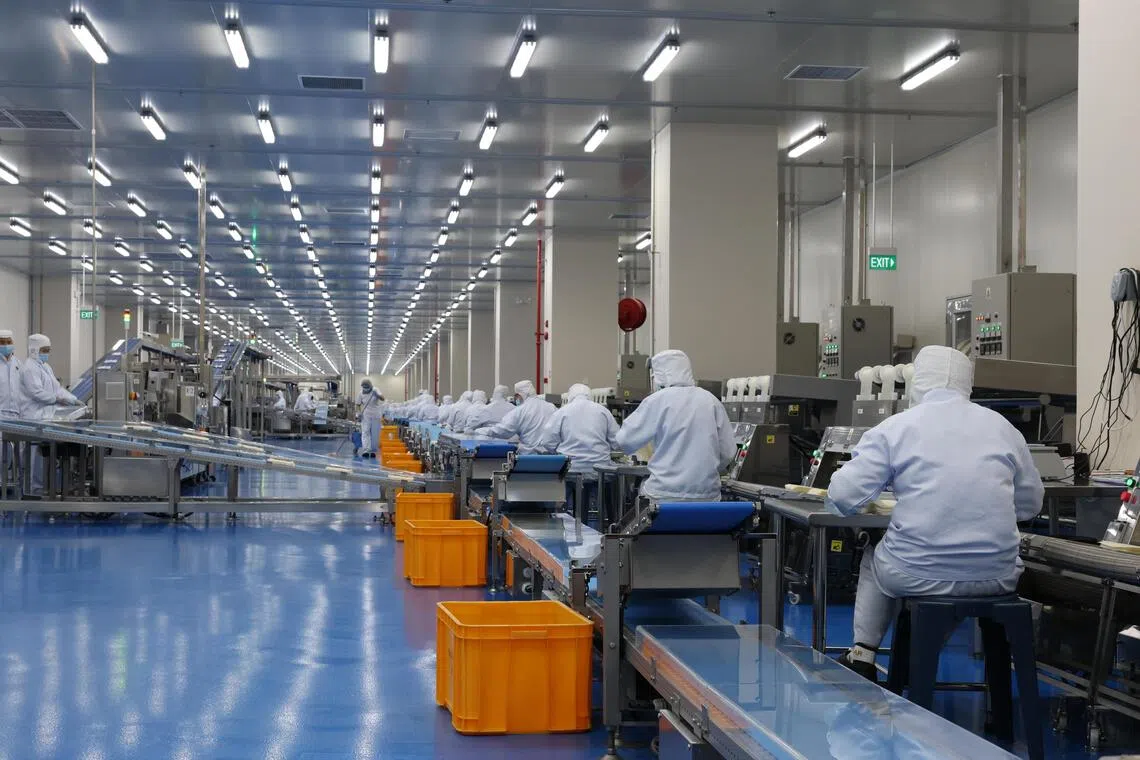
The new facility is three times larger, and employs extensive use of automation and digitalisation to lift productivity and efficiency.
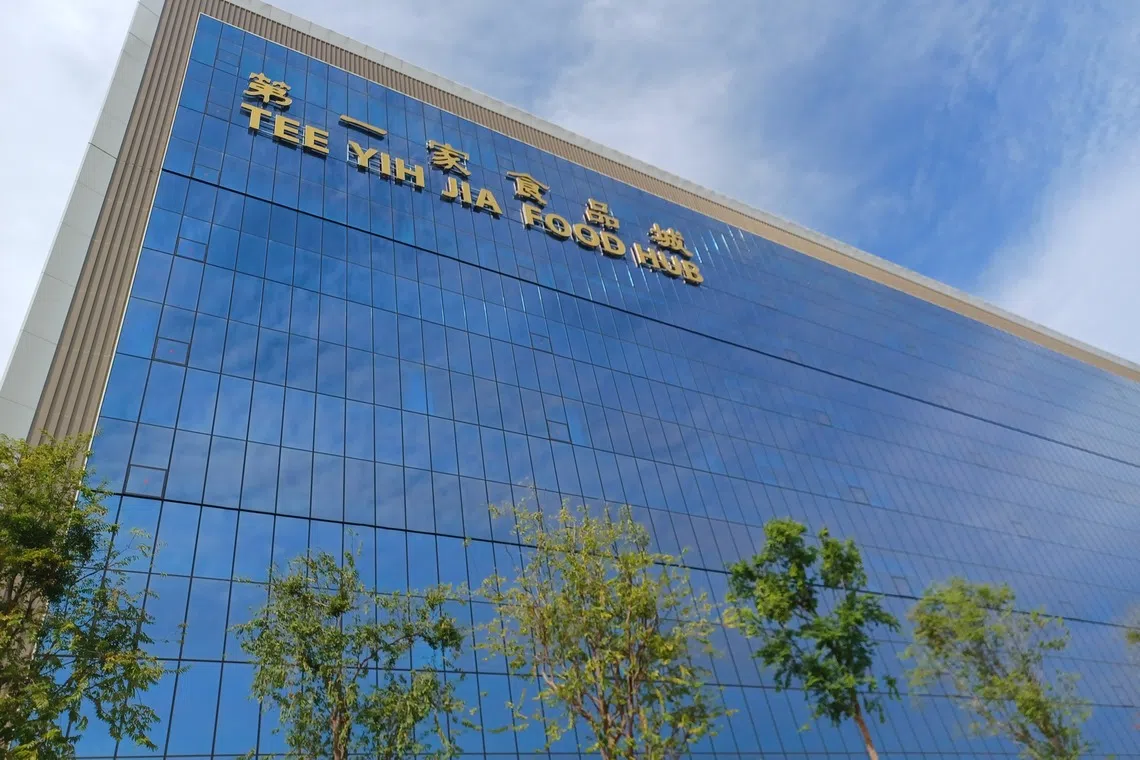
Goi said that the use of automation ensures consistent high quality and hygiene levels.
Quality has been the recipe for Tee Yih Jia’s market-leading position in spring-roll pastry and other food products amid intense global competition, especially from China, where production costs are much lower.
Automation also drastically cuts manpower needs by 80 to 90 per cent – a boon in labour-starved Singapore.
When asked why he chose to increase his production footprint in Singapore, where costs are much higher than in neighbouring countries and labour shortage is a perennial problem, the 76-year-old said: “Because I am Singaporean.”
The self-made billionaire was born in Fujian province in south-eastern China and came to the city-state at the age of six.
“I have been able to develop my company to what it is today. I’m grateful to Singapore for giving me the platform,” said the entrepreneur known as “Popiah King” for Tee Yih Jia’s global pole position in spring-roll pastry production.
Goi said that he has no plans to sell Tee Yih Jia, which Singapore’s late founding prime minister Lee Kuan Yew in 2011 said would be swallowed up by the likes of food-and-beverage giant PepsiCo if it became too successful.
Goi declined to share current earnings, revenue and production output, partly to avoid being seen as bragging.
The media has reported Tee Yih Jia’s rising top line in the past, with the last reported figure being over S$1 billion in 2016.
Explaining his reasons for not selling, he said: “This is not a matter of money. I put in a lot of effort to build it up... Furthermore, there aren’t many Singaporean brands that are globally known.”
He also has no plans to list the company because being privately held accords it more autonomy. This is the reason that Goi, the controlling shareholder of consumer essentials provider PSC Corporation and Tat Seng Packaging Group, wanted to privatise the two companies.
Singapore aside, Tee Yih Jia has production facilities abroad, including Malaysia, China and the United States.
Had Goi opted to expand in Malaysia, for instance, a single-storey factory would have been all that was needed because he would have been able to buy a bigger plot of freehold land. Also, materials, labour and power costs there are a fraction of Singapore’s.
The factory built with Goi’s engineering lens
Tee Yih Jia Food Hub has eight production floors, each with a 100,000 square foot floor plate to support optimal production flow. It is expected, with the integration of automation, innovation and artificial intelligence, to more than treble the production capacity of the older factory over time.
Some of the automated production systems are the brainchild of Goi, who put his electrical and mechanical engineering training to practice. He gave the engineers the concept, and they came up with the systems. He conceded, though, there was trial and error in the process before the fine-tuned systems would work optimally.
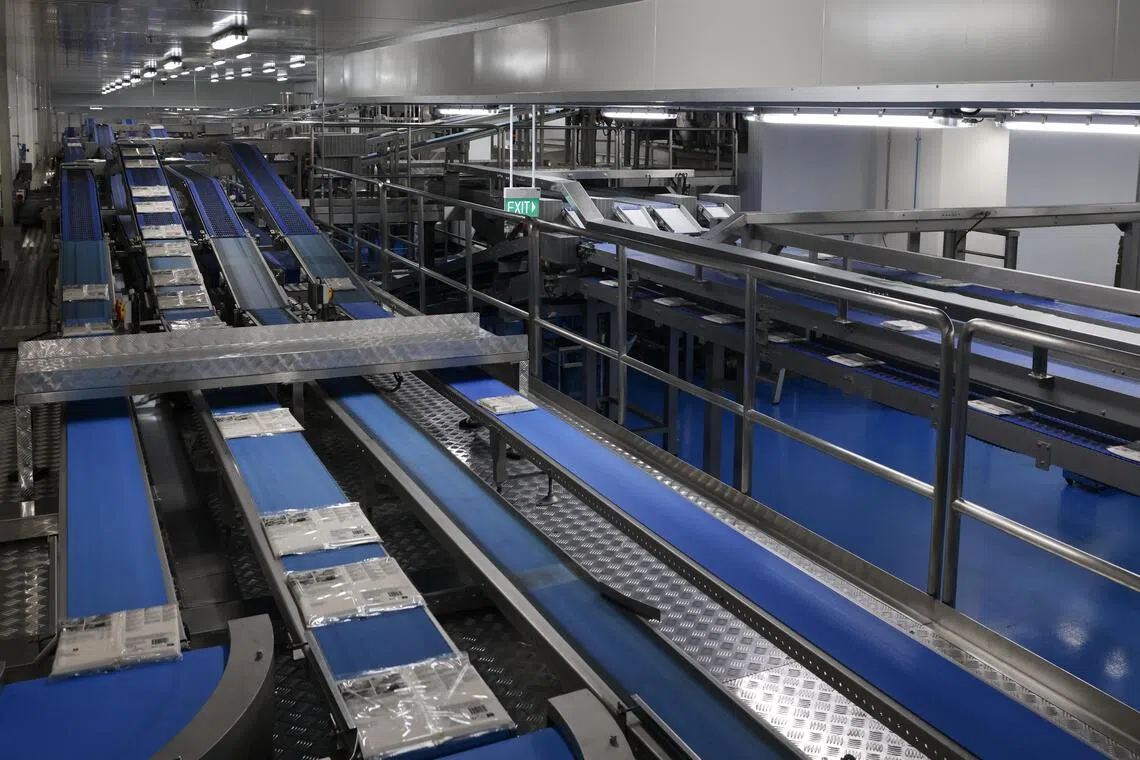
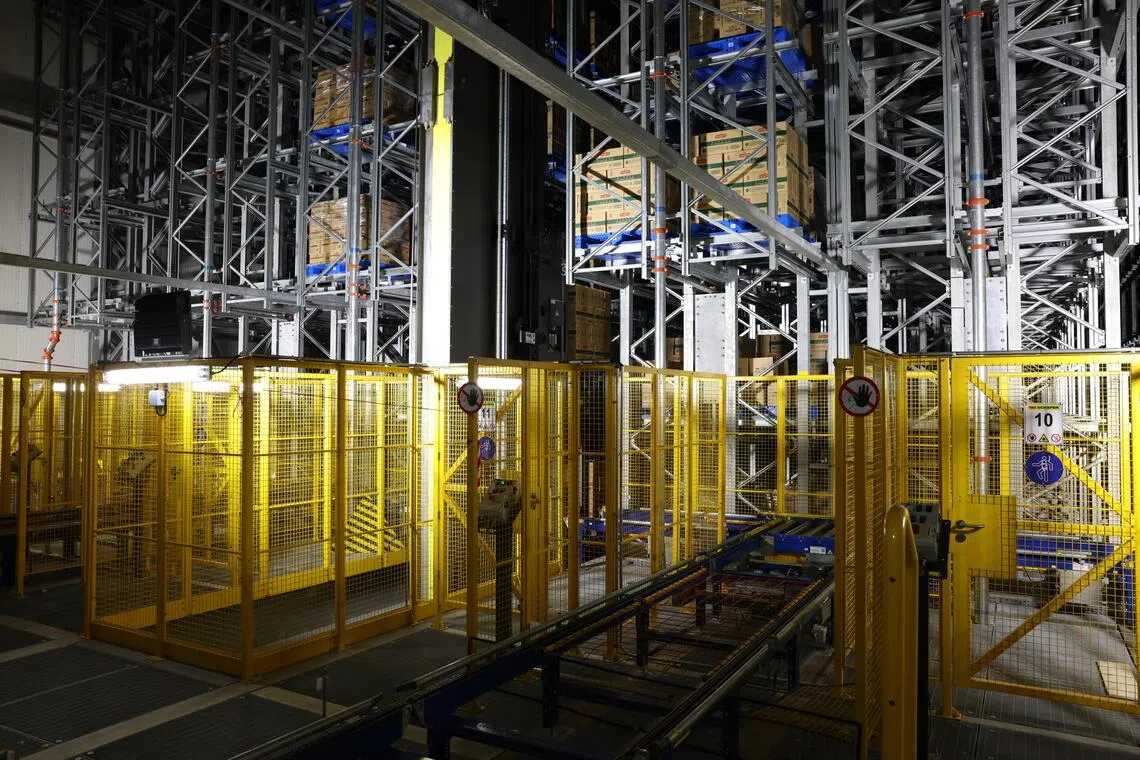
The factory features fully automated warehouses that could rival Danish integrated logistics heavyweight Maersk’s latest and largest distribution centre in the Asia-Pacific, which opened in early November.
The warehouses feature a fully automated storage and retrieval system (ASRS) with 100,000 pallet positions, making them one of the largest in the Asia-Pacific.
ASRS is a computer-controlled inventory management system that automates the storage and retrieval of unit loads for picking, packing and shipping.
The new factory is also equipped with an integrated solar-panel system, which generates 1.4 gigawatt-hour per year – equivalent to the annual electricity consumption of about 315 four-room HDB flats. This is one of the enhancements that is absent at the old factory.
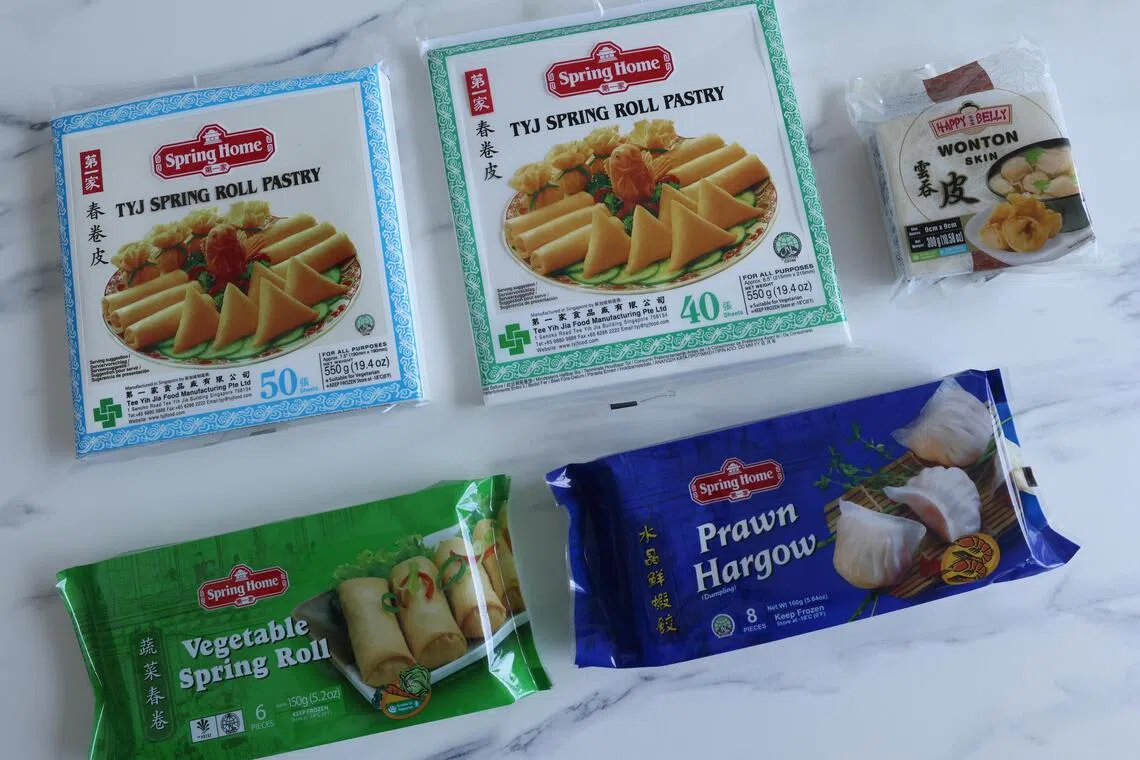
Tee Yih Jia’s flagship spring-roll pastry, frozen roti prata, gyoza and wonton skins, Japanese ramen, plant-based products and ready meals are churned out with clockwork precision at this factory. More than 90 per cent of the output is exported.
Its customer base includes food manufacturers, food establishments, retailers, and hotels and caterers in over 80 countries.
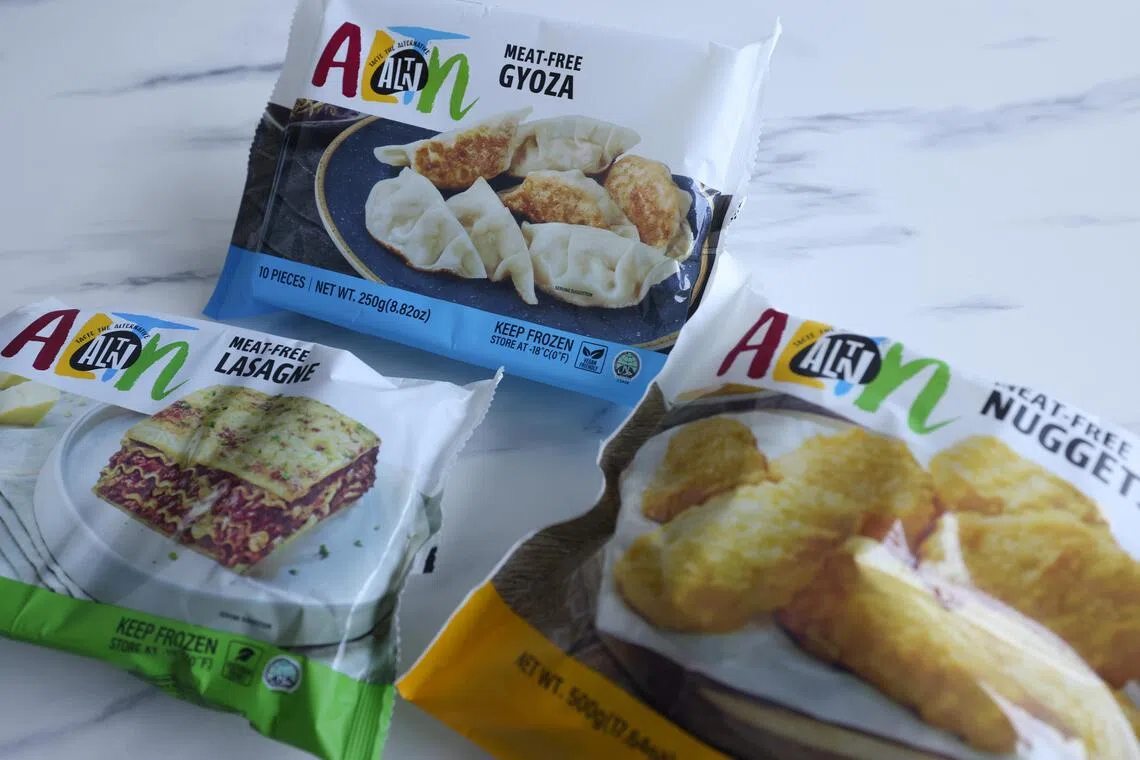
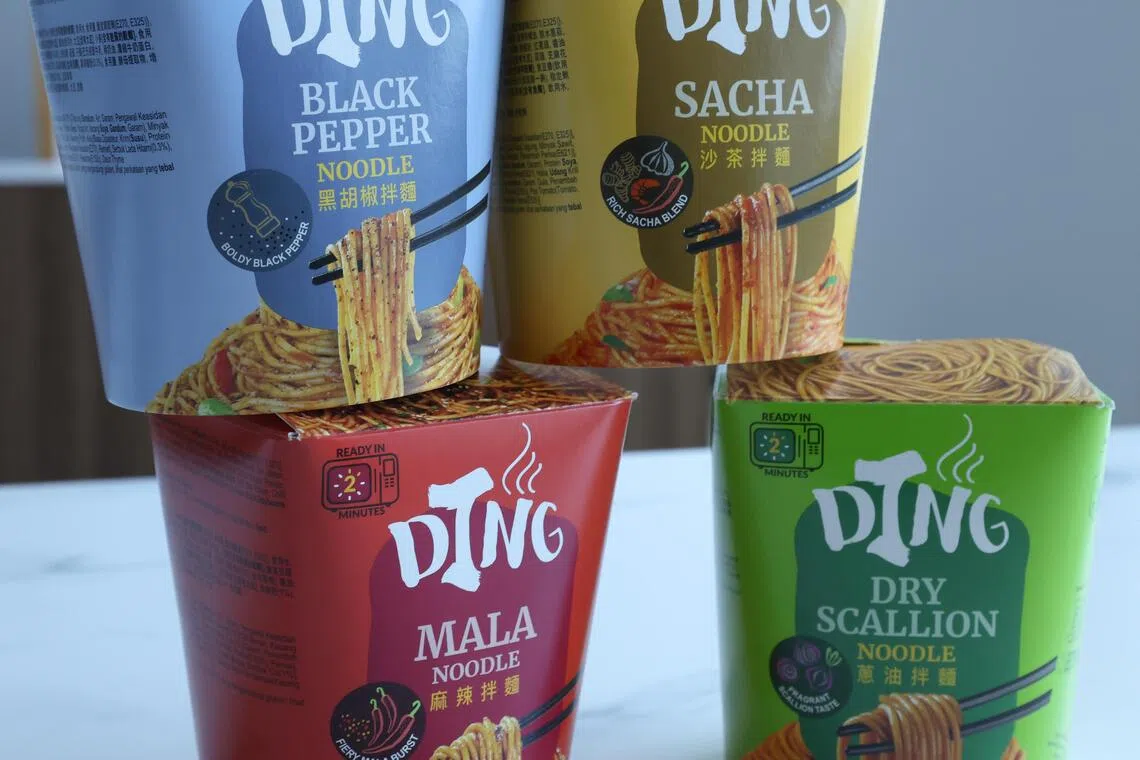
The company also offers food contract manufacturing, which takes up about 10 per cent of the new factory’s total capacity.
Tee Yih Jia Food Hub, which has parts of the building space tenanted out, is designed to develop a vibrant ecosystem of food manufacturers, food-tech startups, as well as food and beverage (F&B) partners supporting both local and export needs, said Goi.
The vision and optimal utilisation are expected to come to fruition in 2028.
Limits to automation
Tee Yih Jia is a poster child for embracing technology. While it may have automated its operations as far as possible, there is a limit to it, said Goi, who won the Businessman of the Year award in 2013 at the Singapore Business Awards jointly organised by BT and logistics giant DHL.
The company, which operates another old factory in Burn Road in the Tai Seng area, has more than 500 employees on its Singapore payroll.
It requires 200 more workers in production, logistics, facilities and maintenance, research and development, as well as information technology to support operations in the new factory.
But workers are hard to come by, particularly in manufacturing, because the jobs entail night shifts, which Singaporeans generally shun.
This has hamstrung the expansion of Tee Yih Jia in the Republic, even as Goi plans to widen the range of ready meals and healthy food products to capture increasing demand.
“Many of my workers are in their 50s or 60s. I don’t know how to deal with this when they retire,” he added.
He noted that Singapore has been tightening the inflow of foreign workers, and that not many Singaporeans are willing to take up jobs in sectors such as manufacturing, F&B, security and other services. “If we continue like this, we may end up being just a financial hub. What will happen to our other industries?” he asked rhetorically.
The government might want to consider allowing more foreign workers in these sectors that offer jobs the locals do not want, he suggested.
TRENDING NOW

Once staunchly pro-China, Malaysian Chinese businesses are now distancing themselves from Beijing

Looking beyond looming CEO succession, should UOB potentially pursue a transformative merger?

Could stablecoins be the future of money?

Grab CEO’s wife Chloe Tong on life with Anthony Tan and finding her purpose

