Receipts and recollection: How STB’s multilateral partnerships boost spending and branding
The agency taps the experience economy by working with global names, local firms and destinations, and enablers

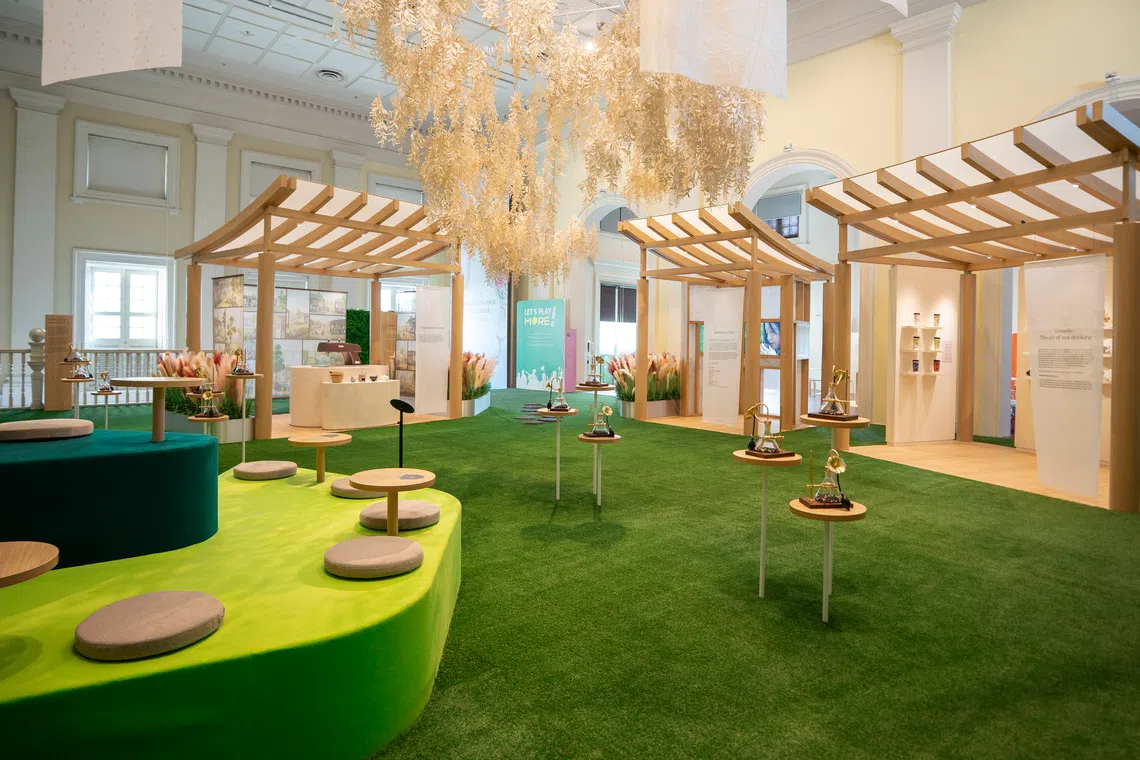
[SINGAPORE] A tourist taps their Mastercard for a direct, enhanced tax refund on their luxury purchase. Over at the Asian Civilisations Museum (ACM), a canopy of paper tea leaves hangs as a tea-making video plays.
Fireworks glitter and drones move in sequence in mid-air to form Baymax, the Disney robot character, over Marina Bay. Resorts World Sentosa (RWS) rolls out the yellow carpet for the stars of Wicked: For Good, and visitors take photos at themed installations across the island.
These are results of multilateral partnerships rolled out by the Singapore Tourism Board (STB). They tap into the “experience economy” to keep the city-state fresh and exciting to attract repeat visitors and get them to spend more.
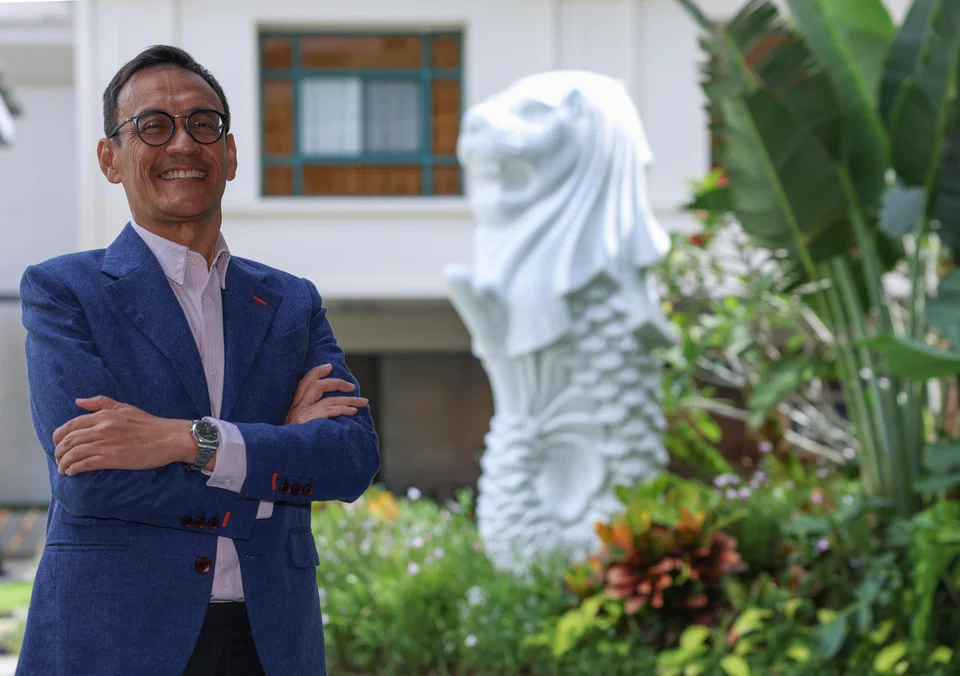
John Conceicao, STB’s executive director for marketing partnerships, planning and capability development, said that to grow tourism, visitors have to be offered experiences that make them willing to pay for a memory – or even a transformation.
Financial outcomes are key for STB, he said, but he also highlighted the importance of brand awareness in the experience economy.
STB, a statutory board under the Ministry of Trade and Industry, goes into multilateral partnerships, complex collaborations that may involve three or more players.
These include global brands – especially the trendy ones, which bring “a certain amount of cachet”; the city-state’s own brands and destinations anchor the experience locally, and financial enablers are also in the picture to aggregate and drive transactions.
Each partner in the collaboration has its own customer database, spreading the reach of an attraction without the tourism body needing to “throw money and hope to hit an audience”, said Conceicao.
While STB tries to capitalise on trends, it also recognises that these can be fleeting.

Conceicao recalled: “When we wanted to work with Pop Mart on Labubu, their response to us was: ‘Work on more characters.’ They knew that the trend would die down.”
This led to a Skullpanda showcase at the National Museum of Singapore, and the ongoing Crybaby installation at RWS’ Singapore Oceanarium, which reimagines the latter as various marine animals. Skullpanda and Crybaby are both collectible toys in the Pop Mart universe.
Conceicao also cited STB’s move to showcase smaller local brands. One example is chocolaterie Mr Bucket, which, for three months, exclusively sold its kaya toast chocolate at Changi Airport.
Another aim of these partnerships is to engender “double spend” – when visitors pay an entrance fee, then spend more, such as on exclusive merchandise to take home.
Equal skin in the game
Conceicao said that his team carries out about 14 partnerships with a mix of about 40 partners every year.
After matchmaking its partners, it usually wants them to take charge in crafting the campaigns, he said.
Some are intuitive and clear-cut, such as the one with payment services corporation Mastercard and tourism shopping tax refund company Global Blue.
The companies worked together to give tourists tax refunds directly into their Mastercard accounts in stores when they spend with qualifying merchants. This saves the visitors from having to queue at the airport for tax refunds.
With complications in the refund process cut down, these visitors are encouraged to spend more, said Rajat Maheshwari, Mastercard’s senior vice-president for strategic growth in the Asia-Pacific.
Minsook Cho, Mastercard’s country manager for Singapore, said a higher tax refund rate was offered under the collaboration.
Data was also a key resource in the partnership. By aggregating and cross-referencing data, the partners were able to create consumer profiles and better understand spending patterns, which can be used to tailor products and services, the pair said.
Other tie-ups require more imagination.
A Wicked-themed event was launched last year under a partnership among RWS, STB, the Sentosa Development Corporation and DBS.
Jenny Wang, senior vice-president for resort sales and marketing at RWS, said the campaign – which included photo spots, light shows and Asian-inspired charm bracelets – came “at a time when there was a shared appetite to experiment with new formats”. (* See amendment note)
In another tie-up, international tea brand Chagee created the multisensory tea-themed exhibition with ACM, working together on the displays. ACM also engaged local artists to contribute displays so that visitors could “experience tea with all their senses”.
Lawrence Wen, CEO of Chagee Singapore, said: “ACM was a natural fit because it is the only museum in the region with a pan-Asian scope, and tea sits at the intersection, given the many stories it tells – from maritime trade to craftsmanship to cultural exchange.”
The collaboration among Marina Bay Sands (MBS), STB and UOB led to the launch event for Disney Cruise Lines, a UOB partner.
Disney led the charge in terms of content and storyboarding for the fireworks and drone display, bringing on board its intellectual property such as the characters and music, said Irene Lin, MBS’ chief marketing officer.
Other partners spearheaded the execution, from translating the concept into reality for the drone operators, to working with the authorities to coordinate transportation and security, she said.
Regardless of the idea, co-investment or “equal skin in the game” is needed, said Conceicao.
This does not always mean the same financial investments: Smaller businesses, being unable to match bigger players’ spending power, may make instead a calculated value contribution, he said.
RWS’ Wang said: “Having equally invested partners helps create balance across competing priorities, including tourism appeal, commercial viability, and local market relevance.
“This, in turn, supports a more well-rounded and effective partnership outcome.”
Good results
In assessing the success of its partnerships, STB looks at several metrics.
It tracks the international marketing value and online engagement, but also the actual revenue and benefit for all partners.
For example, it gathers data on the number of tickets or merchandise items sold during an event. It then calculates the induced value, against the same period in the previous year, when the event or experience was not available.
In rare instances, smaller local players may struggle to keep up with the requirements of their larger counterparts. Profit-sharing disputes have arisen, Conceicao said.
But he added that “about 90 per cent of the partners are happy” with the return on investment (ROI); this is especially considering that the investment is split with others.
MBS’ Lin said the integrated resort’s goal is to be the “destination of choice”, while creating a vibrant bay area, with benefits spilling over to nearby businesses.
“While Marina Bay Sands is sort of this big building in Singapore, in the scope of the world, internationally, we’re still one place in a very small place,” she said.
This is why the ability to gauge its “brand resonance” in various markets is important. It measures the performance of its tie-ups through third-party market surveys.

For Mastercard, the Global Blue campaign delivered a double-digit uplift in spending. Such collaborations also create a halo effect, through which customers are nudged into using the same payment instrument elsewhere, said Maheshwari.
A virtuous circle is in place when customers associate benefits and good experiences with the card, in turn prompting higher demand for Mastercards from bank partners. That is the bigger goal, added Cho.
Chagee’s Wen, who wanted to make tea feel “alive and relevant” while bringing new audiences to ACM, said visitors took their time moving through the exhibition, and then took its special-edition merchandise home. The tea company read this as “depth of engagement”.
For ROI, RWS considers dimensions including destination awareness, customer engagement and commercial uplift, said Wang.
She said some of the resort’s intended outcomes for the Wicked team-up were “increased footfall, dwell time and wallet share”; some returns were tangible and measurable, and others were more strategic and longer term.
Beyond propping up the Singapore brand internationally and boosting receipts, these events enhance the destination, benefiting locals, said Conceicao.
Singaporeans make up the largest share of attendees at these events, he said. “Then, eventually, our locals become our best ambassadors to sell the destination.”
Amendment note: The story has been edited to reflect RWS’ Jenny Wang’s updated title.
Decoding Asia newsletter: your guide to navigating Asia in a new global order. Sign up here to get Decoding Asia newsletter. Delivered to your inbox. Free.
Copyright SPH Media. All rights reserved.