

Singapore announces maritime sector master plan to chart industry’s long-term progress
It will launch in 2027 with a strategy to strengthen the maritime hub, boost competitiveness and growth

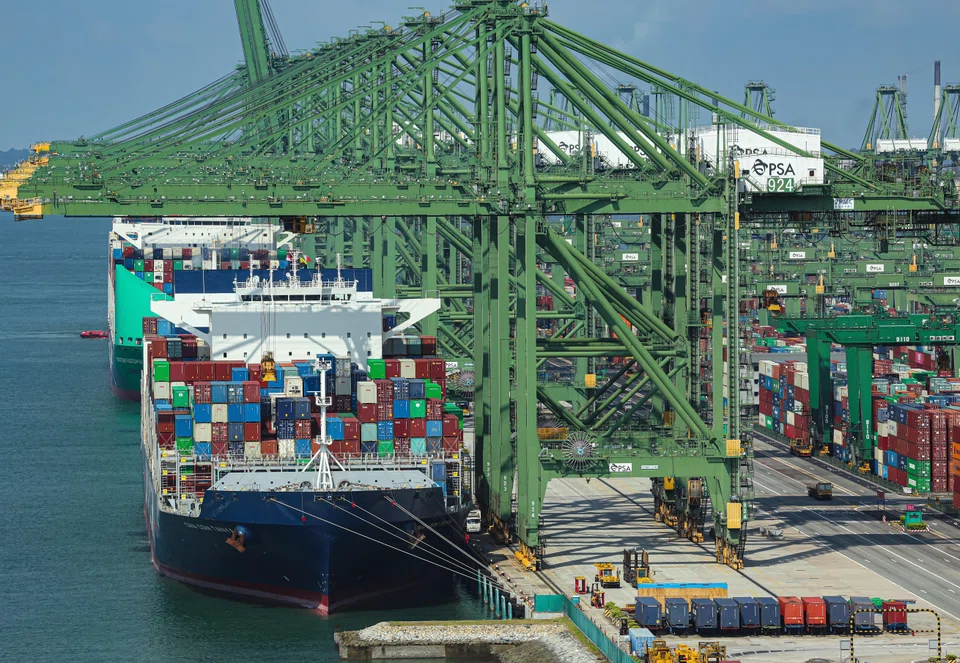
[SINGAPORE] The Republic will launch a Maritime Singapore Master Plan in 2027 that will chart the industry’s long-term development, said Senior Minister of State for Transport Murali Pillai at his ministry’s Committee of Supply debate on Wednesday (Mar 4).
It will be a future-focused industry-wide blueprint to guide the sector’s development over the next few decades, he said.
The master plan will outline ways to improve the competitiveness of Singapore’s port and its attractiveness as a global maritime centre, to establish it as a leader in maritime technology, and to prepare the industry’s workforce for the future.
The Maritime & Port Authority of Singapore (MPA) said that it will engage in consultation with industry players, businesses, stakeholders and the public in the coming months to gather feedback. An industry panel will also be convened to provide insights.
The master plan is a higher-level blueprint that will help direct the industry’s development and will build on existing sector transformation initiatives, including the Sea Transport Industry Transformation Map, announced in 2022.
Existing long-term transport plans for other sectors include the Land Transport Master Plan 2040 and Singapore Sustainable Air Hub Blueprint, which steers Singapore towards net-zero domestic aviation emissions by 2050.
Drones, AI and digital twins
Singapore is also expanding its trials of novel maritime technologies.
From the second half of 2026, MPA will be expanding its trials of sea-going drones, also known as unmanned surface vessels (USVs), which may be remotely piloted or autonomous.
The trials will focus on using USVs to improve safety and hydrography.
SEE ALSO



USVs with advanced sensors can monitor hazards and improve navigational safety and incident management. They can also help conduct surveys in areas where regular hydrographic vessels cannot operate.
These sensors will use artificial intelligence (AI) for improved performance and enable the drones to identify objects and routes, manage collision risks and navigate port waters.
Hydrography is the science of measuring and describing the physical features of bodies of water.
The tests will help develop safety standards and operational procedures for the scaling up of USV operations in the future, said MPA.
Two new pilot projects of Singapore’s maritime digital twin were also revealed.
The first is a project to improve coordination between ship suppliers and agents, beginning in the first quarter of 2026.
Another, which begins in the second quarter, focuses on coordination of resources after an incident. It will use various data streams – including drone feeds, weather information and vessel traffic data – to improve overall situational awareness and coordinate cross-agency efforts.
In March 2025, MPA launched a virtual model of the Port of Singapore, a real-time computer representation of Singapore’s maritime operations and port infrastructure. Using AI, predictive analytics and modelling, it allows for better performance in port operations and services.
Decoding Asia newsletter: your guide to navigating Asia in a new global order. Sign up here to get Decoding Asia newsletter. Delivered to your inbox. Free.
Copyright SPH Media. All rights reserved.
TRENDING NOW

DBS, OCBC, UOB rout lops billions off STI as inflation, rate concerns spook investors

Grab CEO’s wife Chloe Tong on life with Anthony Tan and finding her purpose

OCBC sheds S$8 billion in value as shares close nearly 6% down; analysts cautious on banks

Deal between tycoon friends sparks scrutiny of Philippine power sector

