Singapore authorities now reviewing telemed providers’ ads for weight-loss drugs
Lawyers say such advertisements may contravene a ban on ads for prescription medications

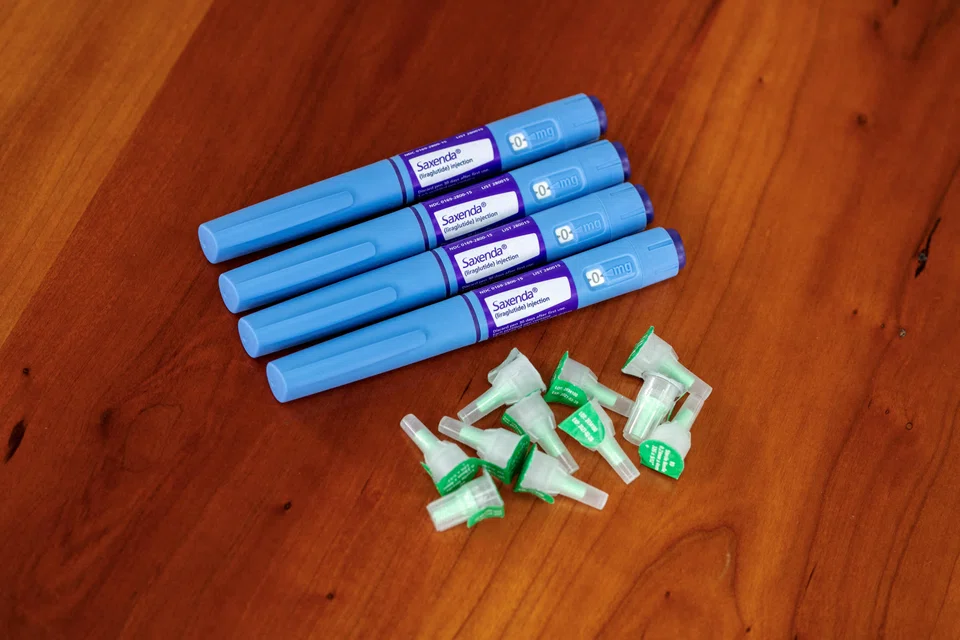
SINGAPORE’S authorities are reviewing advertisements that telemedicine providers have put up for certain weight-loss drugs, while lawyers say that the providers could be in breach of a ban on advertisements of prescription-only medicines.
The telemedicine providers have put out ads for glucagon-like peptide 1 agonists, or GLP-1s, a class of drugs that are used to treat Type 2 diabetes but have gained attention for their effectiveness in aiding weight loss.
In response to queries, the Ministry of Health and the Health Sciences Authority said that they are reviewing the ads flagged by The Business Times and will take “appropriate enforcement action if any contraventions are detected”.
In Singapore, GLP-1s such as Wegovy and Saxenda have been approved for weight-loss treatment. Patients can obtain them only through a valid prescription by a licensed medical professional.
In the past year, some telemedicine platforms – which started out specialising in drugs for reproductive health, hair loss and sexual performance – began offering these drugs as part of new weight-loss management services, and advertising them on social media platforms such as Instagram.
These ads, seen by BT, vary in their claims. Some describe outcomes, such as how much weight a patient can expect to lose.
Others highlight the ease of access to these drugs with phrases such as “no in-person visits”, “100 per cent online process” and “delivered straight to your doorstep”.
The ads seen by BT did not state the requirements for a prescription, nor did they warn of the possible side effects if such drugs are used irresponsibly.
Prescription only
In a written parliamentary reply in September, Health Minister Ong Ye Kung said GLP-1 drugs are “prescription medicines which can only be dispensed by a registered medical practitioner or a licensed retail pharmacy to a patient with a valid prescription, and are strictly prohibited from advertisements and sales on local online platforms”.
But such ads were still visible online as at Nov 13.
Advertisements of specified health products – including GLP-1s – are regulated by the Health Products (Advertisement of Specified Health Products) Regulations 2016 (HPAR), noted Benjamin Gaw, Drew & Napier’s head of healthcare and life sciences (corporate and regulatory).
Under Regulation 7 of the HPAR, advertisements for prescription-only medicines are prohibited.
More broadly, the HPAR also stipulates that advertisements of specified health products must not encourage inappropriate or excessive use; mislead on quality and efficacy; nor arouse unwanted or unrealistic expectations of the drugs’ effectiveness, among other things.
Even if enforcement action has yet to be taken against the advertisers, that does not mean that the ads are in line with regulations, said Gaw.
Ethical considerations
Such advertisements can also give the false impression that GLP-1s are lifestyle products, rather than treatments to be prescribed by a medical professional, said lawyers and industry watchers to whom BT showed the ads.
“Drugs should not be marketed this way,” said Kuah Boon Theng, managing director of Legal Clinic. “Drugs should be prescribed by doctors and not sold as lifestyle products.”
That the ads are primarily on social media platforms frequented by young people is also an indication that there is “rapidly growing interest from the younger generations looking for an easy way to lose weight”, said Patrik Grande, DKSH vice-president and head of commercial outsourcing for healthcare in the Asia-Pacific.
Young people may then potentially underestimate the impact that GLP-1s can have on the body, as well as the potential risks associated with using the drugs without medical consultation, he added.
TSMP Law joint managing partner Stefanie Yuen Thio noted that, at the very least, ads should encourage users to consult a medical professional to see if the treatment is appropriate for them.
“The ads I saw seem to be purely targeted at weight loss, rather than at treating a medical condition,” she said. “Looking at the ads, they’re promoting a lifestyle drug rather than a medicinal treatment, which is, I think, to go down a very slippery slope.”
One issue is that telemedicine can make it easier to get a prescription, since the strictness of health assessments – which might be done remotely – may vary.
Diabetes and weight management specialist clinic Novi Health, which provides telemedicine services, has seen patients who do not qualify for the drug still demand a prescription because they had previously received one from other sources.
“Patients come to us expecting that we would give it to them when they’ve managed to get it somewhere else, but when we go through (their health information) and realise it’s not appropriate… they get a bit upset,” said co-founder Sue-Anne Toh, who is also an endocrinologist.
Patients must fulfil certain criteria to be eligible for GLP-1 drugs. For instance, Saxenda is approved for individuals with a body mass index (BMI) above 30, as well as those with a BMI over 27.5 who have chronic conditions such as high blood pressure or high cholesterol.
Dangers of misuse
Dr Toh has also encountered patients who suffered side effects or developed other health issues due to improper guidance on how to use GLP-1s.
Professor Julian Savulescu, director of the Centre for Biomedical Ethics at the Yong Loo Lin School of Medicine, said that these drugs should be prescribed by a medical professional who is knowledgeable and willing to place them within a broader lifestyle management plan.
“If telemedicine provides access to such medical professionals, then there is nothing wrong with direct telemedicine marketing, from an ethical perspective,” he added. “In practice, I doubt that such support is always provided.”
One telemedicine provider which advertises weight-loss programmes is Elevate. Asked if its advertisements could be interpreted as encouraging the use of GLP-1s, founder Rio Hoe said: “We’ve never made our message aesthetic in nature. It’s always about health.”
He added that the models which Elevate uses for its ads are “not slim models” but “models whose BMI would be at the level required for this medication”.
“It was a conscious decision, because we don’t want to create an incorrect impression that this is something you use for slimming,” he noted. “We emphasise the point about metabolic health, obesity and so on.”
Elevate is “very on top of the regulations”, said Hoe. “We have to ensure that our advertisers are compliant, and we speak to the regulators often whenever there are new rules or clarifications.”
Elevate also looks at companies with a bigger track record as a guiding point on what is “the right approach”, he said.
Ora Group, which operates platforms andSons and Ova, as well as Ordinary Folk, which operates platforms Zoey and Noah, did not respond to questions on its advertisements.
Additional reporting by Renald Yeo