

Singapore to fully switch to new ERP system from Jan 1, 2027; Bill to make on-board unit compulsory
ERP 2 lets authorities add new toll points without installing large, costly physical gantries system
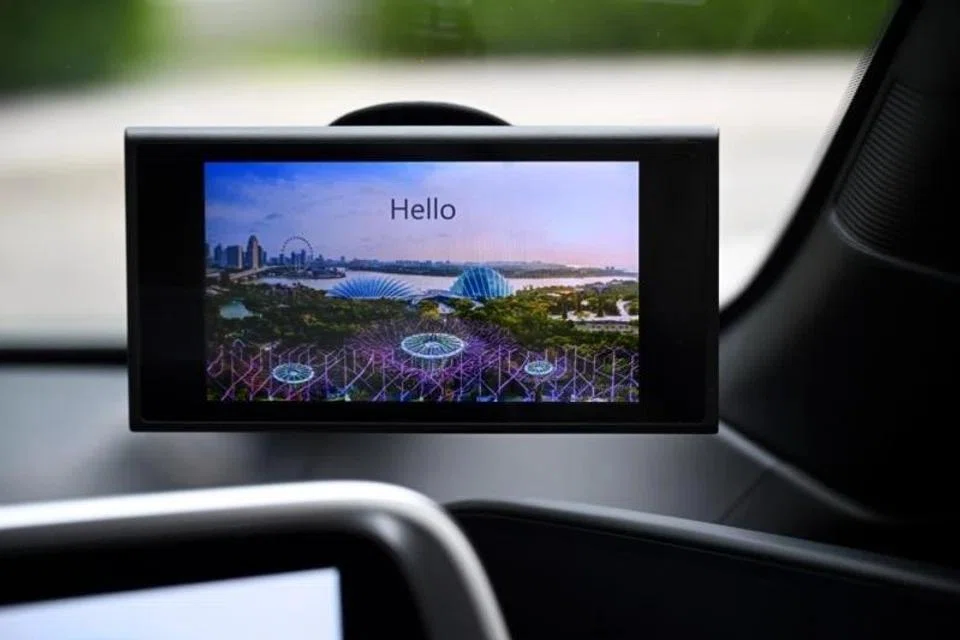
[SINGAPORE] All Singapore-registered vehicles on the roads must be fitted with an on-board unit (OBU) from Jan 1, 2027, which is when the country will fully switch to the next-generation Electronic Road Pricing (ERP) system.
Moving the Land Transport and Related Matters Bill for debate on Tuesday (Feb 3), Acting Transport Minister Jeffrey Siow said the OBU will be mandatory as the ERP 2 system uses satellite technology, rather than gantries, to determine a vehicle’s location for toll charging.
About 930,000 vehicles – 93 per cent of the total number here – have been fitted with an OBU so far.
The Land Transport Authority (LTA) said it is on track to complete the installation exercise in 2026.
Vehicle owners who have not installed an OBU will get a final reminder from LTA from Feb 15, 2026, and be given three months to do so for free. After that, installation will cost S$35 for motorcycles and S$70 for all other vehicles.
Siow said the new ERP system will be more precise in targeting road congestion compared with the ERP 1 system, which will be decommissioned. There are currently 95 ERP gantries islandwide, of which 22 are in operation.
The ERP 2 system allows the authorities to introduce new toll charging points without having to install large and expensive physical gantries, he said, adding: “We can also spread out ERP charges in smaller amounts across several locations, rather than at one location. This will be fairer.”
He reassured motorists that the government will be judicious and add new toll charging points only when needed at “persistent congestion hot spots”.
The intent is to ensure a smooth transition such that the ERP 2 experience will be as similar as possible to the existing system, Siow said, adding this means the government will not introduce distance-based charging in the immediate term.

“Distance-based charging is something that we will continue to study and explore after motorists have gotten more used to the new system and the situation is more stable,” he said.
Certain vehicles will be exempted from installing an OBU, including construction equipment like tractors and vehicles under the Restricted Use Scheme, such as airport and port vehicles.
Classic or vintage vehicles are also exempted, though their owners can opt to install a free OBU if a workshop assesses it to be technically feasible.
From Jan 1, 2027, classic or vintage vehicles without an OBU will pay a flat fee for each day that the vehicle travels on the road while ERP is in operation. The rate is S$3 for motorcycles and S$10 for all other vehicles, said LTA.
Owners of foreign-registered vehicles can opt to install an OBU. Those who forgo installation will pay a daily flat-rate ERP fee.
Malaysian taxis, however, will be required to install an OBU for tracking and enforcement of such vehicles within Singapore, Siow said.
The Bill also mandates that all OBU services be performed by authorised technicians, including installation, modification, repositioning, repair and advertising. Unauthorised services or tampering can draw fines of up to S$20,000, up to 12 months in jail, or both.
Decriminalising missed ERP payments
The proposed laws would also streamline the handling of missed ERP charges by decriminalising non-payment and treating it as an administrative matter.
Currently, unpaid ERP charges can result in court prosecution as a traffic offence if they remain unsettled.
Under the Bill, vehicle owners who do not pay within the five-day grace period after receiving LTA’s SMS notification will be unable to transact with the authority until the missed charge and a S$10 administrative fee are settled.
They will be barred from selected LTA services, including renewing road tax and transferring vehicle ownership, until payment is made.
Siow also noted that there are more than 1,000 cases of illegal vehicle modifications detected each year.
The maximum penalties for illegal vehicle modifications will be raised to deter workshops from carrying out such alterations on a large scale, he said.
Individuals convicted of this offence would face fines of up to S$20,000, up to two years’ jail, or both, with penalties doubled for repeat offenders.
Workshops can be fined up to S$40,000 for a first offence, and up to S$80,000 for subsequent offences.
Currently, those convicted of illegal vehicle modification can be fined up to S$5,000 for a first offence, jailed up to three months, or both. The penalties can be doubled for repeat offenders.
Penalties for keeping or using an unregistered or deregistered vehicle will also be increased under the Bill.
First-time offenders face fines of up to S$20,000 and/or up to two years’ jail, with penalties doubled for repeat offenders. This is up from a fine of S$2,000 and up to three months’ jail for a first offence.
Siow said the stiffer penalties are necessary given the growing trend of unregistered vehicles on the roads.
Some are used for criminal activities like drug trafficking, he said, noting that such vehicles also pose serious road safety risks as they do not have valid insurance and are not regularly inspected. They are often involved in hit-and-run accidents, he added.
The number of deregistered vehicles detected rose from 40 in 2022 and 39 in 2023 to 75 in 2024, before jumping to 245 in 2025. THE STRAITS TIMES
Decoding Asia newsletter: your guide to navigating Asia in a new global order. Sign up here to get Decoding Asia newsletter. Delivered to your inbox. Free.
Share with us your feedback on BT's products and services
TRENDING NOW

High Court rules against Julius Baer’s Singapore trust arm in US$50 million family trust dispute

MSCI proposes standalone status for Indonesia; Jakarta stocks plunge 8%

Once staunchly pro-China, Malaysian Chinese businesses are now distancing themselves from Beijing

No chicken feed: How Malayan Flour Mills built an empire from flour to fowl

