

Singapore reclaims top spot in IMD world competitiveness ranking as business efficiency improves
The last time the Republic took first place on the annual index was in 2024

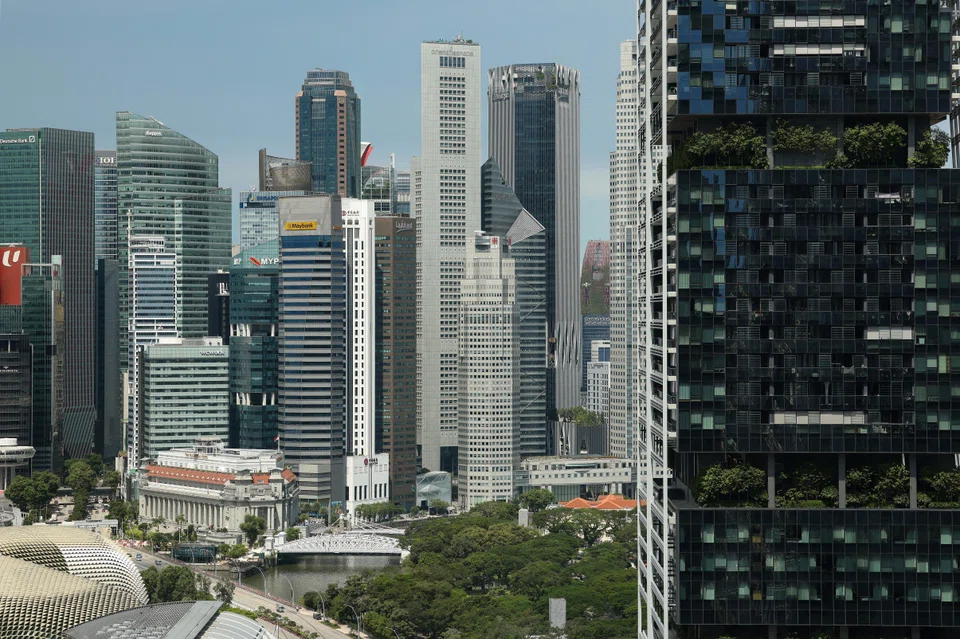
[SINGAPORE] Singapore has returned to first place in the 2026 IMD World Competitiveness Ranking, rebounding from second place in 2025, displacing Switzerland at the top of the global leader board.
The annual index of 70 economies was published on Thursday (Jun 18) by the Institute for Management Development (IMD), a Lausanne-headquartered, independent business school with hubs in Singapore, Shenzhen and Cape Town.
The ranking is based on 92 survey questions and 172 pieces of data drawn from measurements of four factors: government efficiency, infrastructure, economic performance and business efficiency.
Singapore, which last held the top spot in 2024, regained its position on the back of a seven-place jump to emerge at the top globally in business efficiency.
In the economic performance metric, it fell two positions to third place, but held steady to rank third for government efficiency; it gained one place to emerge fifth for infrastructure.
In a statement accompanying the ranking, IMD said that competitiveness is “no longer primarily a contest of cost, scale or even of innovation, but one of institutional credibility”.
“The more fragmented the world becomes, the more valuable are predictable rules, enforceable commitments and legitimate state capacity,” it added.
OCBC chief economist Selena Ling said that such geo-economic fragmentation and polarisation “play to Singapore’s strength as a neutral, pro-business, strong governance, institutional capability and safe-haven status”.
“Retaking the pole position is a testament to Singapore’s open and nimble economic model,” she told The Business Times.

“Strategy and adaptability remains an immense advantage; in fact, IMD cites Singapore’s ‘adaptive capacity to course-correct efficiently’ as an important competitive asset.”
Arturo Bris, director of the World Competitiveness Centre, said: “Nations with their own tried-and-tested, credible institutions gain the advantage in this context because – as the international system ceases to serve so many national needs – business can carry on as usual.”
IMD said that Singapore’s return to first place “highlights how quickly agile economies can regain momentum”.
Still, OCBC’s Ling noted that “the competition is also intensifying, so talent attraction, development and retention, AI adoption, innovation and R&D commercialisation remain key”.
“Some domestic challenges remain, and also cost competitiveness and the structural challenges of an ageing population,” she added.
“In this aspect, the implementation of the Economic Strategy Review’s final recommendations could play a role in helping Singapore compete and stay ahead.”
In the overall rankings, Hong Kong rose one spot to second place, with government efficiency remaining its “defining competitive strength”.
Switzerland, which fell two places, experienced a sharp drop in economic performance, driven by a severe deterioration in direct investment flows.
Taiwan advanced two places to fourth on the back of strong gross domestic product and export growth, while the United Arab Emirates held its position at fifth.
“For the European economies in this year’s top 10, the main narrative is one of gradual slippage,” said IMD.
“Denmark and Sweden fell further down a ranking they once led, weighed down by high fiscal burdens, rising costs and weaker labour markets, even as their institutional strengths have remained intact.”
The US entered the top 10 from 13th place previously, driven by a rebound in “executive sentiment”.
Still, IMD warned that “business confidence may be improving faster than the underlying fiscal and trade fundamentals, raising questions about whether the recovery can be sustained”.
Decoding Asia newsletter: your guide to navigating Asia in a new global order. Sign up here to get Decoding Asia newsletter. Delivered to your inbox. Free.
Copyright SPH Media. All rights reserved.
TRENDING NOW

GCash parent Mynt rises in market debut after South-east Asia’s top 2026 IPO

In the age of AI, what is a university education for?

Singapore to use ‘every legal and regulatory lever’ against companies linked to haze: Shanmugam

‘IPOs are not the only vehicle’: KKR heads for record exits even as firms stay private for longer

