

Singapore semicon firms not yet feeling the pinch from Iran energy crisis: industry body
But a prolonged crisis could eventually squeeze manufacturing margins

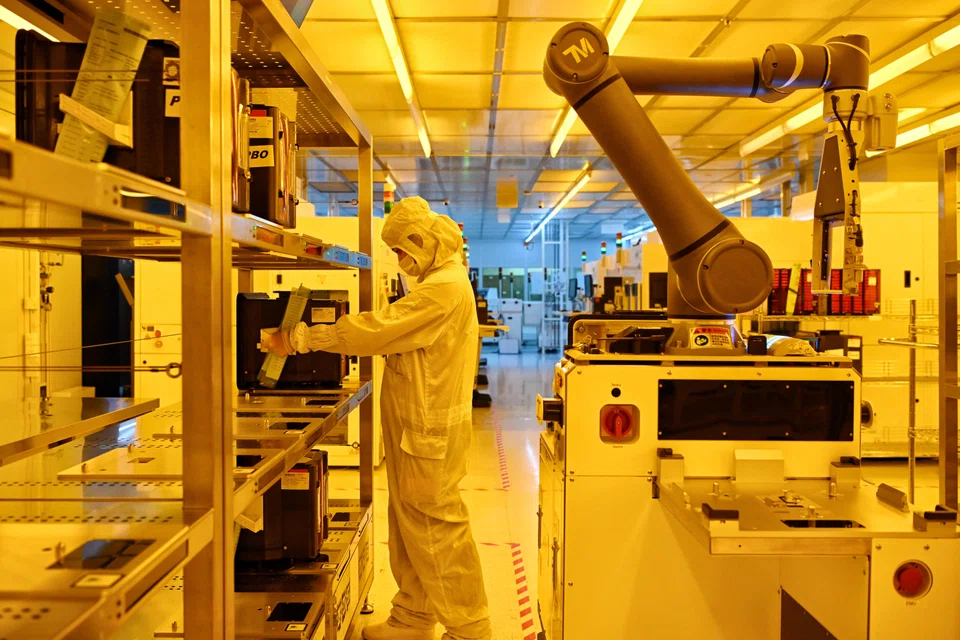
[SINGAPORE] Local semiconductor companies are not yet sounding the alarm over rising energy costs from the ongoing tensions in the Middle East, though a prolonged conflict could eventually squeeze manufacturing margins, said Ang Wee Seng, executive director of the Singapore Semiconductor Industry Association.
“Short term, I don’t think there’s immediately a red light that companies are worried about, but if it is prolonged, naturally it will be a concern in terms of cost pressures for the manufacturing side,” he told the media at the sidelines of the association’s annual Business Connect industry event.
More broadly, Ang said Singapore firms have grown to be more resilient after learning lessons from the Covid-19 pandemic. “Our companies have built resiliency into the supply chain. More than ever, they understand the need to diversify.”
Despite the ongoing uncertainties from the Iran war, he remains optimistic about the semiconductor sector’s outlook. While cost pressures would inadvertently filter through to consumers and dampen chip demand, the rapid advancement of artificial intelligence and its adoption in manufacturing would provide a boost.
Asked about China’s expanding wafer fabrication capacity, and whether it will cause an oversupply which will affect Singapore, he replied that additional output would be needed to meet surging global demand, as semiconductor sales are on track to hit US$1 trillion by 2030.
Therefore, it is unlikely that this will create an oversupply, he said. That said, there will be specific product segments where oversupply is a greater concern.

The executive director also flagged advanced packaging, which integrates multiple chips onto a single package rather than pushing to ever-smaller process nodes, as a critical area where Singapore is well positioned.
“Singapore is leading the way in this space,” he said, pointing to work by the Agency for Science, Technology and Research’s Institute of Microelectronics, and the presence of advanced packaging companies such as Stats ChipPAC and UTAC in Singapore.
Decoding Asia newsletter: your guide to navigating Asia in a new global order. Sign up here to get Decoding Asia newsletter. Delivered to your inbox. Free.
Copyright SPH Media. All rights reserved.
TRENDING NOW
World’s largest offshore wind platform by Seatrium consortium on track to be completed by 2028

Is stamp collecting enjoying an analogue revival or are its best days over?

GovTech retrenches another 38 staff in second round of layoffs

MBS adjusted property Ebitda falls 20.6% in Q3 with fewer high-roller visits, weaker hold

