

Singapore’s 2023 greenhouse gas emissions fall 5.3% as industrial output declines
Industry and power sectors remain the largest contributors to the nation’s carbon footprint
 Add BT as a preferred source
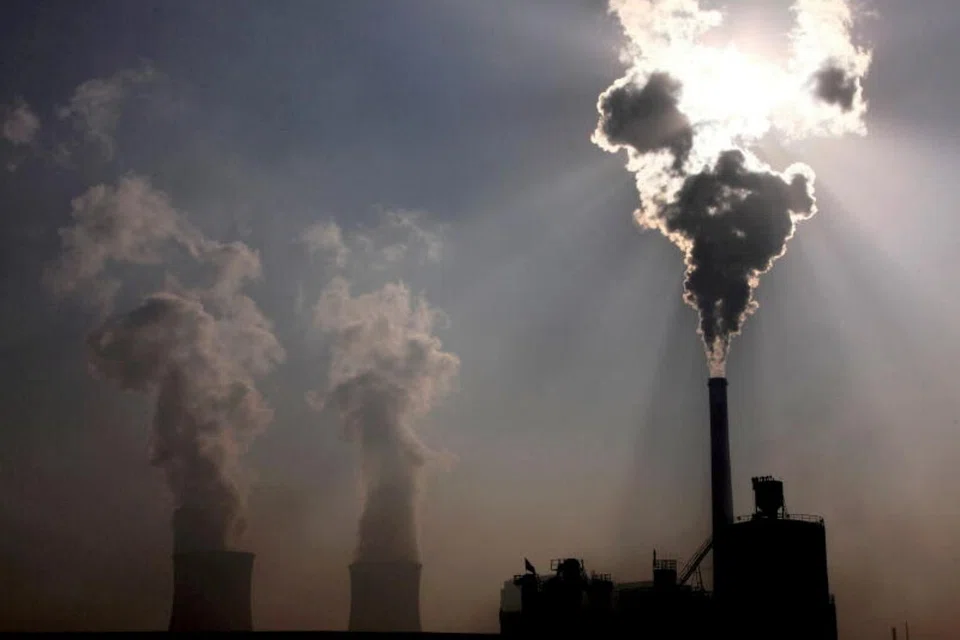
[SINGAPORE] The National Climate Change Secretariat (NCCS) on Friday (Dec 19) released data on Singapore’s 2023 greenhouse gas emissions, revealing a 5.3 per cent decrease from the levels recorded in 2022.
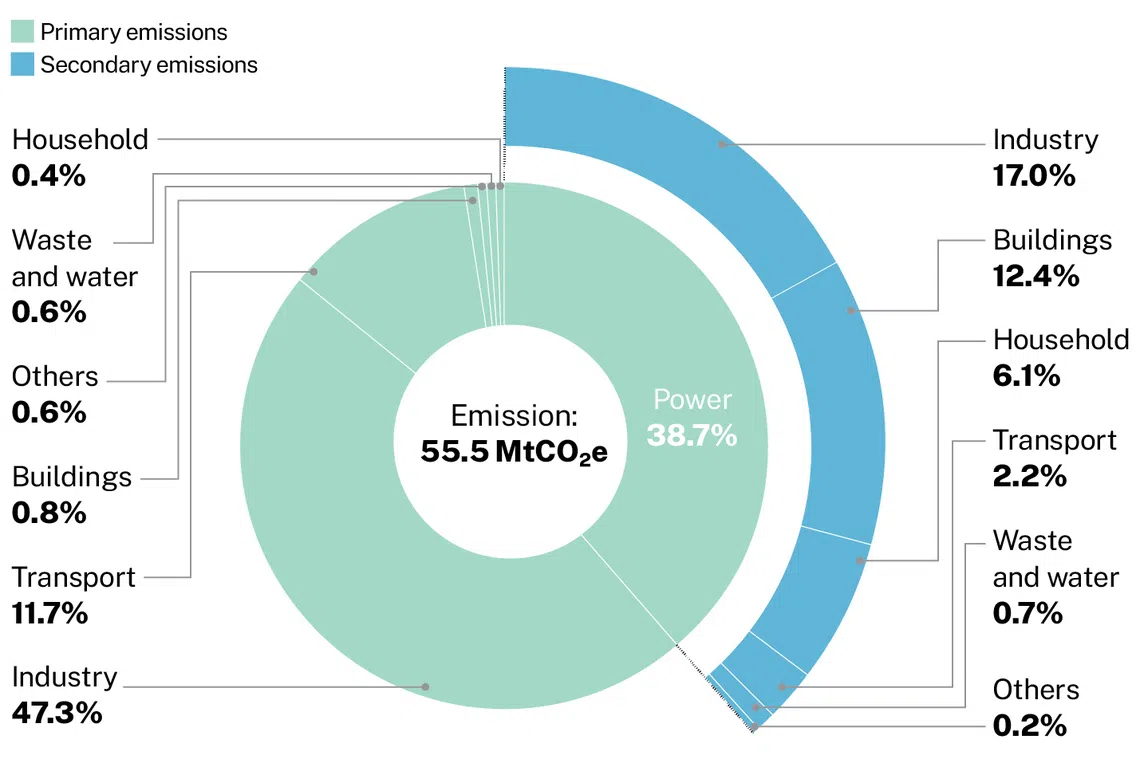
The total headline emissions for 2023 stood at 55.5 million tonnes of carbon dioxide equivalent (MtCO2e). The year-on-year reduction was attributed primarily to two sectors: industry and transport.
Industry is the largest contributor to Singapore’s emissions, but the data revealed that the sector recorded a decline in primary emissions due to reduced manufacturing output, particularly within the petrochemical segment.
Meanwhile, the transport sector posted a continued decline in petrol and diesel consumption, signalling progress towards the national goal of 100 per cent cleaner-energy vehicles by 2040.
2023 emissions profile
Singapore categorises its emissions into primary and secondary sources.
The primary category refers to direct emissions arising from a sector’s activities, such as burning fuel on-site for manufacturing or industrial processes.
Secondary emissions are indirect ones, attributed to a sector based on its consumption of electricity. They represent that sector’s share of the power sector’s total emissions.
The industry and power sectors remain the dominant contributors to the nation’s carbon footprint, with their proportion of direct emissions in 2023 standing at 47.3 and 38.7 per cent, respectively.
Primary emissions

- Industry: 47.3 per cent
- Power: 38.7 per cent
- Transport: 11.7 per cent
- Buildings: 0.8 per cent
- Waste and water: 0.6 per cent
- Others: 0.6 per cent
- Household: 0.4 per cent
Secondary emissions
- Industry: 17 per cent
- Buildings: 12.4 per cent
- Household: 6.1 per cent
- Transport: 2.2 per cent
- Waste and water: 0.7 per cent
- Others: 0.2 per cent
Outlook and commitments
While the 2023 data indicated a downward trend, NCCS cautioned that emissions may fluctuate in the coming years based on economic conditions and the pace of mitigation efforts. National emissions may continue to rise until a peak before 2030.
In February 2025, Singapore committed to reducing emissions to between 45 and 50 MtCO2e by 2035 as part of its Nationally Determined Contribution (NDC).
The 2035 NDC builds on the 2030 NDC to reduce emissions to around 60 MtCO2e by 2030, and is aligned with the country’s Long-Term Low-Emissions Development Strategy to achieve net-zero emissions by 2050.
In terms of carbon intensity – which is measured by CO2 emissions per US dollar of gross domestic product – Singapore ranked 134th out of 153 countries and territories in 2024. The first rank represents the highest intensity.
NCCS said that a comprehensive breakdown of the 2023 figures will be provided in the 2nd Biennial Transparency Report, scheduled for release in 2026.
Decoding Asia newsletter: your guide to navigating Asia in a new global order. Sign up here to get Decoding Asia newsletter. Delivered to your inbox. Free.
Copyright SPH Media. All rights reserved.
TRENDING NOW

Abandoned ‘Titanic’, failing ‘ancient towns’: Why China’s tourism boom leaves white elephants behind

Private equity giant Carlyle can grow bigger but needs to stay on its toes: co-founder David Rubenstein
Singapore to establish over-the-counter gold clearing system, central bank vaulting by end-2026

Singapore public sector commands highest AI salary premium as job postings surge: PwC study

