Singapore’s key exports growth hits 22-year high of 38.4% in May on robust AI demand
Electronics shipments jump 95% on strong chip, computer demand; pharmaceuticals lead non-electronics growth

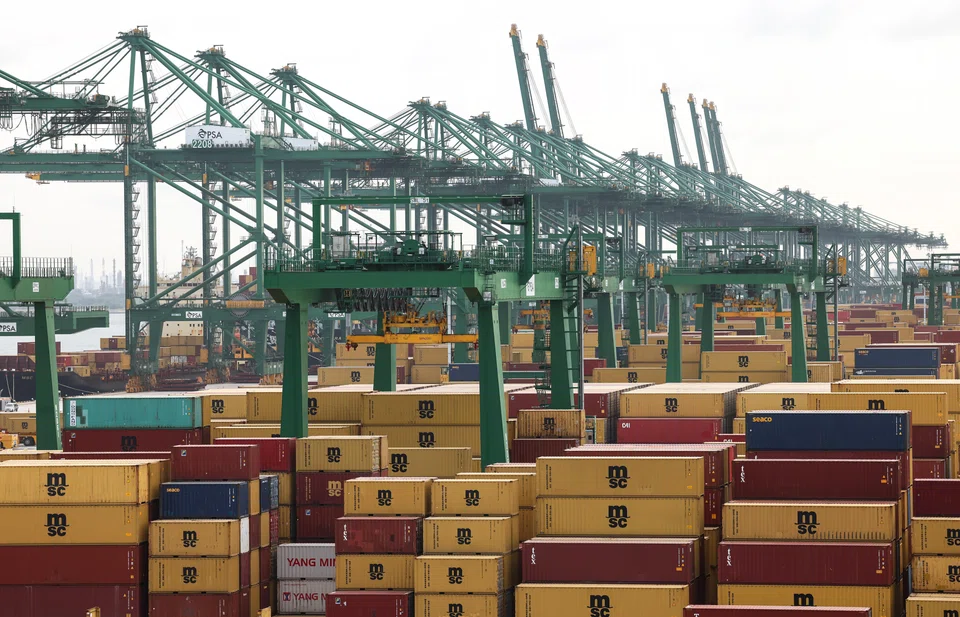
[SINGAPORE] Singapore’s non-oil domestic exports (NODX) expanded 38.4 per cent year on year in May, extending the 24.4 per cent rise in April, data from Enterprise Singapore showed on Wednesday (Jun 17).
The expansion marked the highest rise since December 2003, said DBS senior economist Chua Han Teng.
It also outperformed private-sector economists’ median forecast of 30.5 per cent year-on-year growth, a Bloomberg poll showed.
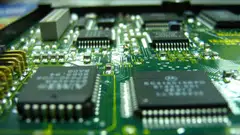
Electronics NODX surged 94.8 per cent in May, from 66.7 per cent growth in April, supported by robust artificial intelligence-related demand.
Non-electronics NODX expanded 17.7 per cent, compared with the 10.9 per cent increase in the previous month.
For the first five months of 2026, NODX grew 18.1 per cent.
Singapore’s overall goods exports also sustained an exceptional run, noted Chua, growing 36.1 per cent year on year in May and extending the 31.7 per cent expansion in April.
This was driven by the acceleration in NODX, while non-oil re-exports maintained a steady and robust increase of 33.6 per cent, compared with 29.6 per cent in April, he added.
Chua said that the robust performance in NODX continued to be primarily underpinned by surging and stellar growth in AI-driven electronics domestic shipments, while growth in the non-electronics segment for a second consecutive month was partly supported by a low base from a year earlier.
He added that Singapore’s exports cycle has become increasingly interconnected with those of key upstream AI players Taiwan and South Korea, with electronics NODX to both destinations continuing to expand by triple digits in May.
Key exports
The growth in electronics NODX was driven mainly by integrated circuits, which rose 80.9 per cent and contributed S$1.6 billion in value, along with disk media products, which more than trebled and added S$1.1 billion.
Meanwhile, exports of personal computers (PCs) more than doubled, contributing S$600 million.
On the non-electronics side, pharmaceuticals led the way, which more than doubled in value and contributed S$1 billion.
This was followed by specialised machinery, up 66.9 per cent and adding S$900 million, and non-monetary gold, which grew 83.2 per cent off a low base a year ago, contributing S$400 million.
NODX to all of Singapore’s top 10 markets grew in May, except for Indonesia, for which shipments contracted.
NODX to Taiwan more than doubled, up sharply from the 33.5 per cent expansion in April, lifted by integrated circuits, disk media products and specialised machinery.
Meanwhile, NODX to the US rose 80.9 per cent, up from 59.6 per cent in the previous month, driven by pharmaceuticals, disk media products and PCs.
NODX to China grew 31 per cent, slightly slower than April’s 37.8 per cent, supported by specialised machinery, non-monetary gold and integrated circuits.
In contrast, NODX to Indonesia contracted 26.9 per cent, but was still an improvement from the 60.8 per cent slump in the month before.
Total merchandise trade grew 39.7 per cent in May, extending the 33 per cent rise in April, with both exports and imports increasing.
The rise in total exports was driven by growth in both non-oil exports (up 34.9 per cent) and oil exports (up 43.1 per cent). Total imports climbed 43.6 per cent.
Positive on electronics segment
Chua expects ongoing NODX growth in the near term, amid continued expansion in new export orders reflected in the manufacturing purchasing managers’ index, with the electronics segment likely to continue outperforming.
Global AI-related tailwinds, driven by robust capital expenditure intentions amid the shift towards agentic AI usage, are supporting external demand for Singapore’s memory chips and server-related products, he said.
He noted that flows of critical input supplies from the Middle East, including oil and gas, are likely to take months to gradually normalise to pre-war levels as confidence in transiting the Strait of Hormuz rebuilds.
The reopening of the strait following the US-Iran interim peace deal, if signed on Friday as slated, would reduce the tail risks of escalating input cost pressures, persistent severe supply chain disruptions and significantly weakened external demand, he added.
Decoding Asia newsletter: your guide to navigating Asia in a new global order. Sign up here to get Decoding Asia newsletter. Delivered to your inbox. Free.
Copyright SPH Media. All rights reserved.