Small fraction of residential rent disputes involve corporate tenants; current laws protect landlords: Murali
Resources such as checklists by the Council for Estate Agencies can guide parties signing agreements, he adds

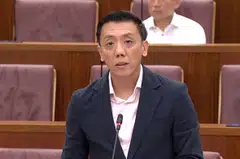
[SINGAPORE] From 2021 to 2025, between about 1,100 and 1,840 claims relating to residential leases were filed in the Small Claims Tribunal annually, Senior Minister of State for Law Murali Pillai said in Parliament on Wednesday (Nov 4).
Of these, between 14 and 40 claims a year – or about 1 to 2 per cent – involved cases where the claimant indicated rental arrears, and the respondent party was a company or another entity, he added.
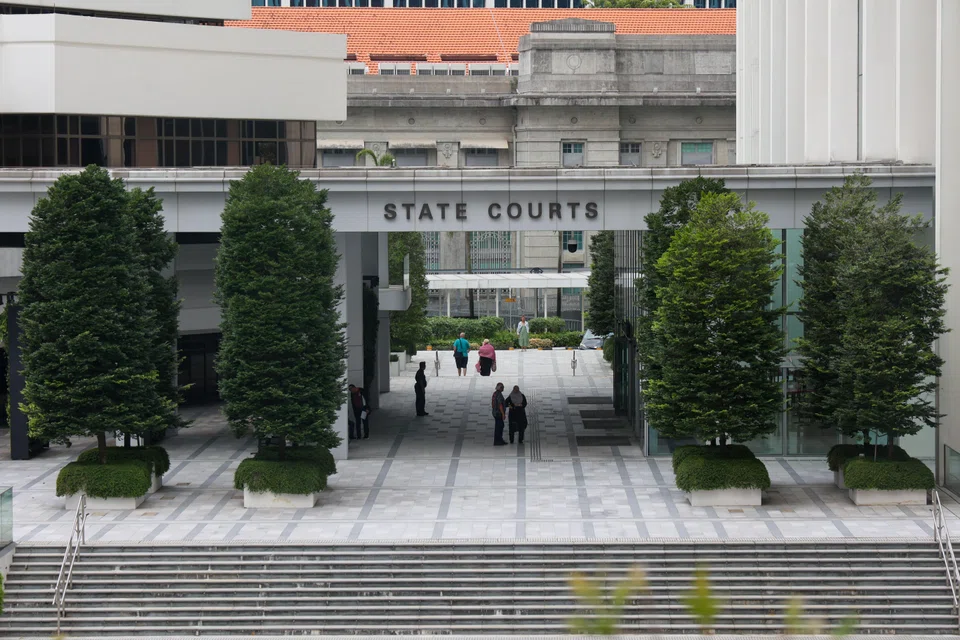
He was addressing questions regarding legal protections for landlords, amid an ongoing investigation for alleged cheating, after a court found that a man had a pattern of using shell companies to live in residential properties without paying rent.
The numbers were provided in response to a request for data on claims for unpaid rent against corporate tenants in the past five years, and on unrecovered judgment debts.
Noting that the courts do not track data at this level of detail, Murali said the small claims figures give “a rough sense of the numbers”.
But he also cautioned that the small claims figures are “approximate”, as they rely on the claimants’ descriptions, and the filing system does not record whether the respondent was a landlord or tenant.

“Larger claims are filed in the civil courts, whose filing system does not record whether a claim involves unpaid rent,” he added.
Responding to various calls for enhanced legislative measures to protect landlords in such situations, Murali also cited existing regimes.
When a company signs a lease, it is liable for the commercial obligations it entered into, and not its directors or shareholders.
But this does not allow companies to be used as a cover for fraud, or for individuals who set up the companies to evade responsibilities, he said.
“Besides possible criminal penalties, those involved can be made personally responsible for the company’s debts,” he added. “For example, where the court finds fraudulent or wrongful trading, the court can disregard the corporate form where it is abused for an improper purpose.”
Based on their own risk assessments, landlords are also free to seek personal guarantees from individuals such as company directors, before leasing their properties to companies, he said.
He added that making this a mandatory requirement would remove flexibility, and at the same time might not stop someone who is determined to cheat from appointing a director with no assets to give that personal guarantee.
Murali cited resources, such as checklists published by the Council for Estate Agencies, to help guide landlords and tenants entering into agreements.
As for legislation to speed up legal recourse and repossession for landlords, he noted that simplified processes already exist for residential leases of up to two years.
The Small Claims Tribunal can order payment of rental arrears as well as delivery of vacant possession, if the claim is within the small claims limit, he added, while a landlord with a clear case can also obtain an order for vacant possession without a full trial in the courts.
He also brought up the Distress Act, under which a landlord can recover rent arrears by applying for a Writ of Distress without giving the tenant prior notice.
As for the cost of delays when a corporate tenant seeks to prevent repossession after rent is unpaid, landlords can seek double rent – to cover the period from when the tenant is supposed to hand over the property, to when it is actually handed over – under the Civil Law Act, he said.
But Murali added that the government’s approach must ensure that between landlords and tenants, “whatever policies (implemented) in favour of (one party) would not unduly burden the other”.
Decoding Asia newsletter: your guide to navigating Asia in a new global order. Sign up here to get Decoding Asia newsletter. Delivered to your inbox. Free.
Copyright SPH Media. All rights reserved.