


Building solutions for changing needs
These Emerging Enterprise Award finalists use technology and new business models to tackle changing needs across industries
Jermaine Fok
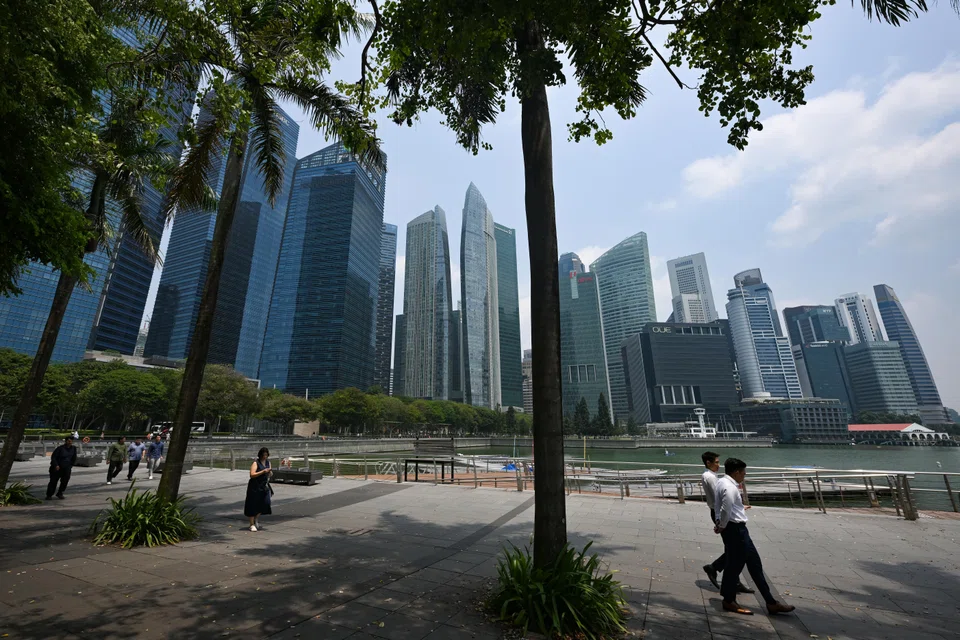
FROM cybersecurity and public-sector technology to sleep and workflow automation, these four companies are taking different approaches to addressing gaps in their respective industries.
They are among 18 finalists of the 2026 Emerging Enterprise Award. Established in 2008, the award recognises startups and young businesses across Singapore and Asia, providing resources to boost their growth. Such high-performing businesses have an enterprising mindset, consistently pursue growth and are always on the lookout for new markets.
The 2026 awards are co-presented by The Business Times and OCBC, and supported by preferred payment solutions partner Mastercard, official auditor RSM Singapore, A*Star, Enterprise Singapore and Paia from CBRE.
Providing SMEs with accessible cybersecurity
StrongKeep Cybersecurity is targeting an underserved segment of the cybersecurity market as regulatory and cyber risks rise
Small businesses are facing growing pressure to strengthen their cybersecurity, driven by regulation, procurement requirements from larger customers and rising risks from scams and malware. Yet many have no IT team, security budget, or time to navigate complex cybersecurity tools.
At StrongKeep, we provide cybersecurity for smaller, cost-conscious businesses, redesigning the experience around the needs of small and medium-sized enterprise (SME) users instead of large enterprises.
Our product can be deployed in minutes, covers the main risks out of the box and can be run by users without technical training.
The need for cybersecurity is also growing among businesses in regulated sectors. Our healthcare, legal and financial-services clients are being asked to meet cybersecurity and data protection standards they have not had to meet before.
At the same time, artificial intelligence has made attacks cheaper to carry out, making smaller organisations worth targeting.

Our vision is for every company in the world, no matter how small, to feel secure as they adopt technology and not fall prey to hackers or scammers.
We bundle the cybersecurity tools small businesses need into a single product, while automating configuration and monitoring that would normally require an analyst. For many regulated sectors, we also offer cyber and data compliance out of the box.
We see this as a different operating model, which we believe is harder to copy than a feature.
Against this backdrop, our product is backed by technological innovations developed through our research and development partnership with A*Star.
By designing for the small business segment from the outset and setting a price we consider reasonable for SMEs, we aim to serve a market we believe has been largely overlooked by the cybersecurity industry.
As an AI-native startup, we are also tracking how AI is changing businesses and we aim to protect our customers against evolving risks.
Betting on agility in public-sector tech
Vertis Digital is using tech to help public agencies tackle complex digital challenges while serving an ageing population and the younger, digitally savvy
As a small digital experience and technology consultancy, we help public-sector organisations turn complex technology challenges into digital experiences that are intuitive for citizens.
Being small allows us to stay agile and lean, while having enough experience to hold our own against much larger network agencies. Initially, clients took a chance on our tech-led approach, and today we deliver work that stands alongside the industry giants.
At Vertis Digital, our focus is on building technology for Singapore’s public agencies as they serve both an ageing population and a digitally savvy younger generation.
Currently, our work includes a healthcare subsidies marketplace for the Agency for Integrated Care, a citizen engagement platform for the People’s Association and a digital experience overhaul for Esplanade.
Internally, anyone can put forward a solution, allowing us to move quickly in an industry that punishes slow thinking.
That same adaptability shapes how we approach technological change.
We stay close to how enterprise platforms are evolving while investing in people rather than any single tool. We are committed to growing tech talent in Singapore and building a younger generation of local professionals. This also reflects Singapore’s push under Smart Nation 2.0 around trust, growth and community.
We see our public-sector work, particularly with an ageing population and digitally native youth, as aligned with where the country is heading.
As we adopt new technologies, human-centric design remains central to our work, particularly in the public sector, where citizen data requires strong security and governance from the outset.
AI is another tool in that process, and we are using it to personalise digital experiences and train models for more precise and helpful customer interactions while keeping the end result intuitive rather than automated.
Redesigning the sleep experience
Woosa aims to establish sleep as its own industry and retail category – not just another mattress store, but a destination dedicated to better sleep
Take a walk through one of Woosa’s three showrooms, and the experience is designed to feel less like a traditional mattress store and more like a space to discover better sleep.
For us, the goal goes beyond selling mattresses. We aim to evolve beyond the traditional mattress industry and establish ourselves as a leading regional sleep brand, shifting the focus from simply buying a mattress to curating a complete sleep environment.
We offer mattresses, adjustable bed bases, bed frames and sleep accessories, with an omnichannel retail model designed to simplify the traditionally complex mattress-shopping experience.
That philosophy extends to our mattresses themselves.
Our proprietary mattresses use 100 per cent foam construction, combining premium European foams with different performance characteristics to create distinct comfort profiles while maintaining the support and durability we expect.
The same thinking carries through to the retail experience. We have moved away from the commission-driven, high-pressure environment traditionally associated with mattress shopping.
Our consultants do not earn commissions. Customers can privately try our mattresses in Sleep Pods, where elements such as lighting, scent, materials and spatial design are considered to create a comfortable environment.
We also operate our own premium and personalised logistics team, giving us greater control over delivery and installation.
The longer-term ambition is to build a broader infrastructure around sleep, with plans to expand into adjacent areas such as wellness, hospitality and healthcare. The objective is to strengthen our relationship with sleep itself and be part of the conversation wherever better sleep matters.
That expansion is also supported by our research and development capabilities and product teams, which allow us to test emerging technologies, materials and ideas that can meaningfully improve sleep.
Artificial intelligence is increasingly part of that process.
Rather than adopting technology for technology’s sake, we use AI to improve our products and customer experience, including demand forecasting, inventory planning and analysing customer feedback and purchasing patterns.
With some bed frames offering more than 200 possible customisation combinations, AI also helps us manage this complexity while feeding customer insights back into product development.
Saving hours, one form at a time
Redoc is targeting further growth across Singapore’s banking and real estate sectors
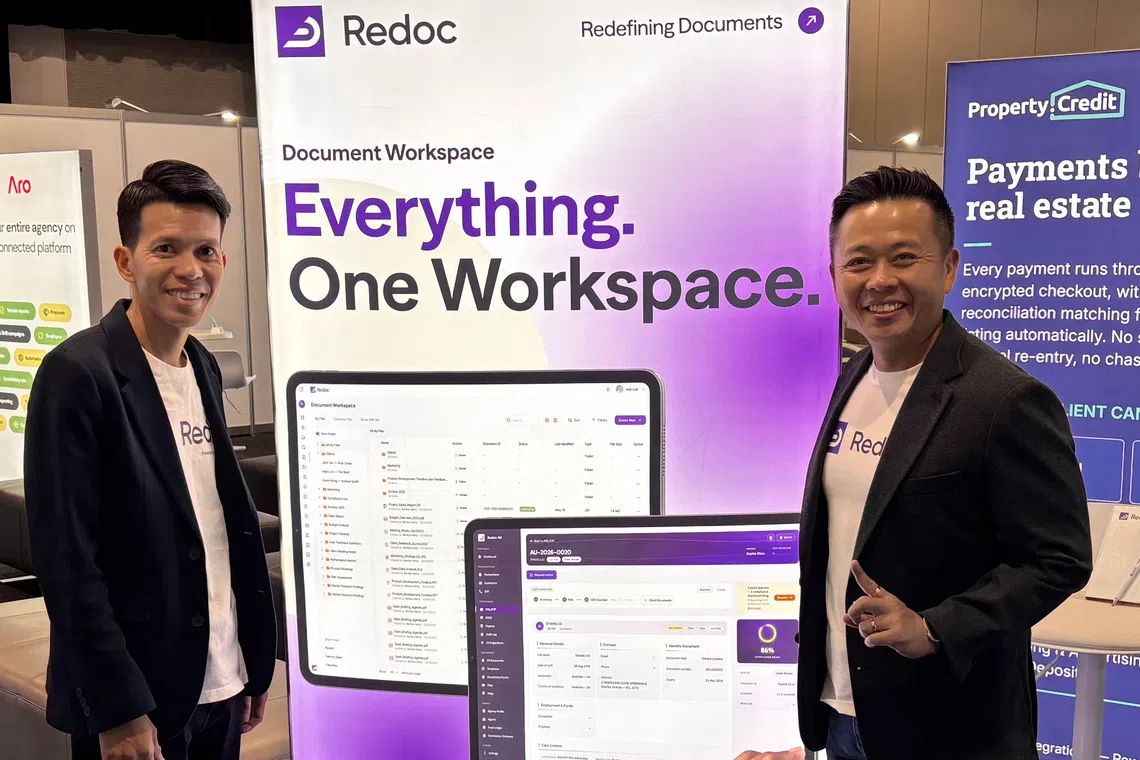
Analysing bank statements once meant a salesperson hunched over a photocopier, scanning clients’ physical documents into digital formats before each entry was keyed into a spreadsheet to tabulate lending ratios.
Today, optical character recognition can extract such data; while an orchestrated set of system calls can handle the remaining computations. What once took days can be reduced to minutes.
That was the reality more than a decade ago, and is one of the problems Redoc now solves.
Incorporated in 2017, our intelligent document and transaction workflow management platform is built for the real estate and banking industries. We simplify complex workflows and customer lifecycle management, from application through to digital deal acceptance and payout – so our clients can focus on what matters most: time with their customers.
Alongside our banking clients, we currently serve some 10,000 real estate agents and have supported more than S$10 billion in transactions.
Most platforms pick a side: they serve property agents or banks. We are one of the few doing both, in the same market, at scale. Property and credit fuel each other, and sitting in both industries means we understand the full arc of a transaction rather than one slice of it.
By our estimates, roughly a third of Singapore’s property agents use us. We want to grow that statistic to half of the market in the next 12 months, and are working to onboard more banks and enter an additional market.
We have survived this far on a single seed round. But fundraising is a full-time job. We prefer to go out and sell to customers, close deals and secure real revenue while staying ready to pitch to an investor when opportunity knocks.
Eventually, I would like to see Redoc go public and become a regional household name.
Decoding Asia newsletter: your guide to navigating Asia in a new global order. Sign up here to get Decoding Asia newsletter. Delivered to your inbox. Free.
Share with us your feedback on BT's products and services
TRENDING NOW

Companies still in search of AI use cases with worthwhile ROI, says Broadcom’s CEO

Malaysian king buys stake in Singapore-listed mining firm expanding into rare earths

Once staunchly pro-China, Malaysian Chinese businesses are now distancing themselves from Beijing

Singapore’s wealth management success should extend to everyday families

