


A fresh approach to frozen foods
Eastern Harvest Foods keeps local businesses well stocked with frozen imports
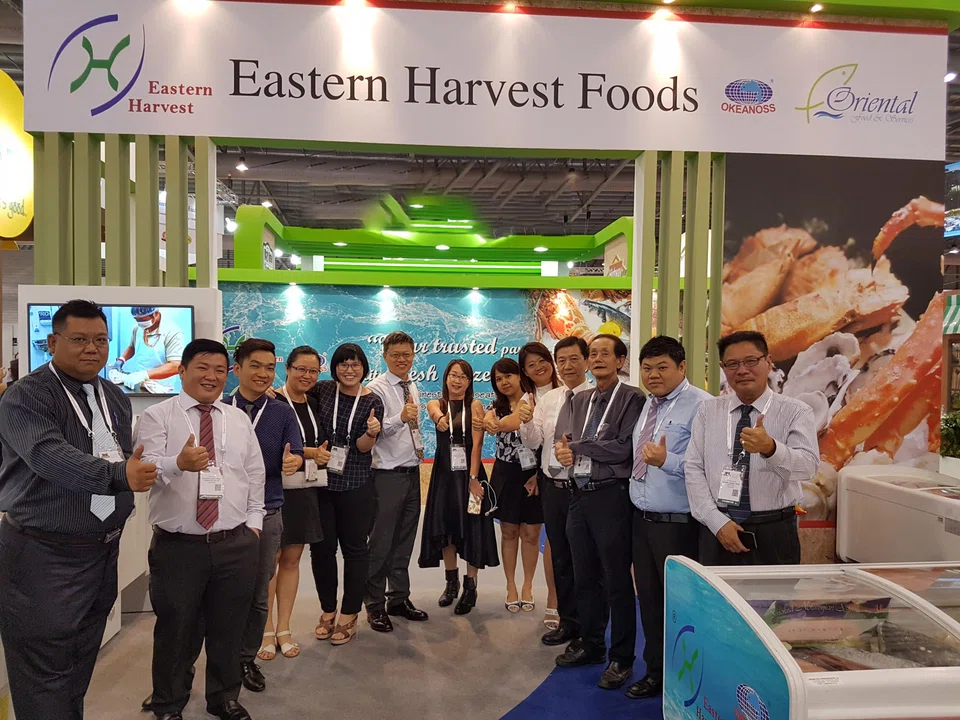
WHEN Malaysia banned the export of fresh chickens on Jun 1, 2022, food supplier Eastern Harvest Foods (Singapore) was there to provide an alternative for Singaporeans: frozen chicken.
Sales soared and the prices of its chicken products rose. As a frozen meat supplier, Eastern Harvest helped “to meet the strong market demand for chicken during this difficult time,” said founder and managing director Derek Cheng.
This ability to seize opportunities has helped Eastern Harvest become one of Singapore’s largest suppliers of frozen seafood, meat and Japanese food products.
Before setting up the company in 2006, Cheng had years of working experience at Do Better Trading (DBT), an importer of Japanese foods established by his wife. But he saw an opportunity to go further, drawing upon his knowledge of local demand.
Although DBT and its affiliates excelled in their niche, Cheng noted that Singaporeans were becoming receptive to a wider variety of foods – in particular, seafood products such as codfish – as well as frozen food, which were growing popular thanks to its convenience. Armed with a strong vision and in-depth knowledge of local needs, his 10-person team set out to build a new business.
Since then, Eastern Harvest has seen growing demand for its products, with annual revenue crossing the S$100 million mark in the last couple of years.
To meet this demand, it has acquired various types of machinery to increase production yield and reduce wastage, and expanded its production and storage facilities as well as manpower. From an original two-storey building, it now operates from a five-storey block in Jurong Industrial Estate, with about 150 employees.
To mitigate the risk of stock shortages, Eastern Harvest ensures that each product has at least two suppliers. It has a diversified portfolio of suppliers from 24 countries, and serves over 2,000 customers in Singapore from food factories, supermarkets and wet markets, to restaurants, schools and hotels.
Building relationships
In developing a broad product range, supplier relationships have been crucial. For instance, codfish is tightly regulated, and suppliers had to be persuaded to sell their stock. In addition, Cheng visited dozens of factories overseas, checking the products to ensure that the quality met Eastern Harvest’s standards.

While Eastern Harvest’s wide variety of products has proved a worthwhile investment, procurement was difficult in the company’s early days. Within a single product type such as fish, prices vary greatly across different sizes and species. Sourcing from overseas also meant various logistical difficulties.
Eastern Harvest overcame these challenges by building a strong organisational structure and prioritising different processes according to its needs. For instance, the distribution department is now the biggest in the company, helping to fulfil customer demand.
To provide greater convenience to customers, Eastern Harvest strives to be a one-stop supplier by offering a wide range of products. Today, it has over 1,000 distinct products or stock-keeping units.
Eastern Harvest’s forecasting system ensures that it can meet last-minute surges in demand. Relying on its operational expertise, the company holds an optimal level of safety stocks. This also reduces wastage and thus lowers operational costs, which translates to savings for its customers.
For a better buying experience, Eastern Harvest established a customer service team that addresses feedback and complaints in a timely and efficient manner, and created a quality assurance department.
Supply chain shocks
The Covid-19 pandemic caused supply chain shocks which sent business ecosystems buckling. Eastern Harvest had to diversify sources and adapt to delays in shipments.
Previously, order forecasts were made one month before products were needed. The pandemic meant that this forecasting period had to be extended to three months. Said Cheng: “As suppliers started to gradually delay, we had to start to perform longer forecasts to anticipate any disruptions. Timing was very important.”
Although stocks sometimes ran out, the team focused on adaptability. For instance, when prawns of a certain grade faced global shortages, customers were given the choice to purchase prawns of a different grade.
Even amid global uncertainty, reliability remains at the core of the company’s mission. Nor was the pandemic the first time that Eastern Harvest had to adapt to unpredictable global events.
In 2018, the company faced an outbreak of African swine fever that killed hundreds of millions of pigs in Europe and Asia. As a major distributor of frozen pork, Eastern Harvest found its sources swiftly shrinking, and had to act fast to diversify its supply network.
A wider range
Besides improving its processing techniques and use of automation, Eastern Harvest intends to widen its range in terms of both products and geography. First, customers can expect a wider range of products: more seafood choices, ready-to-eat meals and customised cuts.
Second, while most customers are currently from Singapore, Eastern Harvest has ventured into other Asean markets like Malaysia, the Philippines, Indonesia and Myanmar, with plans to expand to China and Vietnam after travel restrictions are relaxed.
Even as things change, Eastern Harvest’s culture of teamwork remains a priority, said Cheng. Staff know the daily operating procedures and workings of the machines inside out, with frequent training. The team is also encouraged to collaborate and share new insights and ideas at meetings. This culture, he said, has been a key ingredient in ensuring the continued growth of the business.
This series is part of the Enterprise 50 Educational Project between the E50 partners and the NUS Business School. Eastern Harvest was among the winners in 2021. The annual E50 ranking is co-organised by The Business Times and KPMG, sponsored by OCBC Bank, and supported by Enterprise Singapore, Singapore Exchange and Singapore Business Federation.
Decoding Asia newsletter: your guide to navigating Asia in a new global order. Sign up here to get Decoding Asia newsletter. Delivered to your inbox. Free.
Share with us your feedback on BT's products and services






