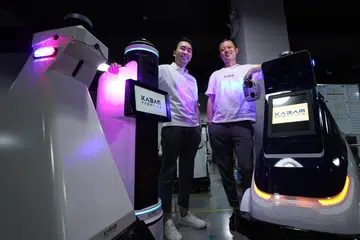
Freshening Industries, maker of Zappy wet wipes, boosts productivity with round-the-clock automation
Its new Loyang facility is 3.5 times bigger than the previous plant and features a smart shuttle storage hub that lifts output by over 50%
Jermaine Fok
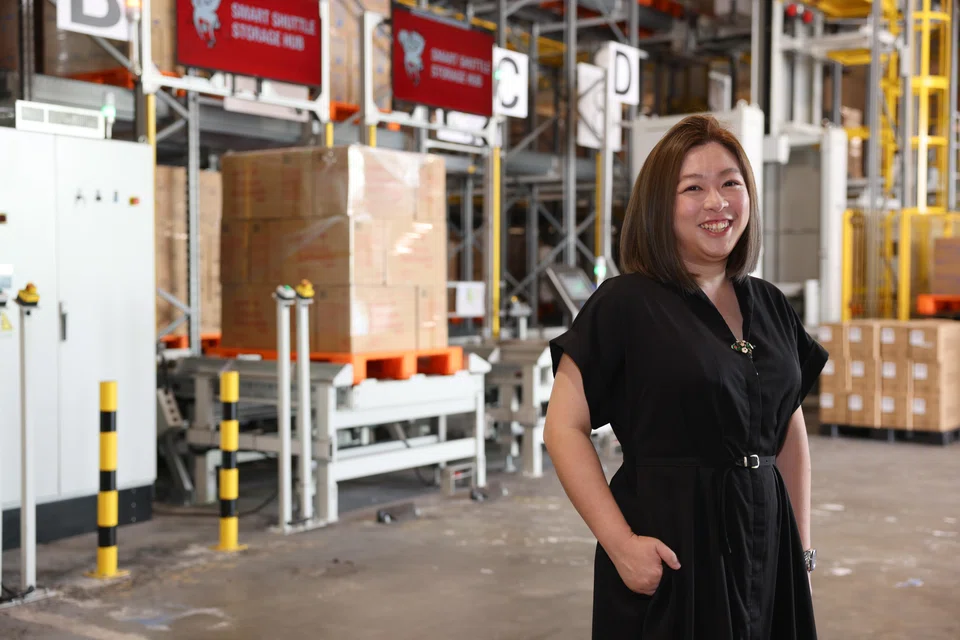
[SINGAPORE] Many in Singapore are familiar with Zappy, the brand most known for its red-and-white packaged wet wipes that have become a staple in households and are commonly used by restaurants.
Over the years, the brand – owned by Freshening Industries – has grown, and now includes a wide range of hygiene products including sanitiser sprays and glass cleaners.
Freshening launched Zappy in 2005 in the aftermath of the Sars pandemic in 2003, when demand for such products surged.
“Zappy’s goal is to take care of you – all the way from young to old,” said Freshening managing director Moh Yan Ting in a recent interview with The Business Times. This vision has guided the brand’s expansion into both baby and adult product lines.
Now a second-generation company, Freshening is led by Moh, who took over from her father, Albert Moh, who founded the company in 1994.
Freshening began as a small shop in Eunos supplying individual sachet wipes to restaurants, before evolving into one of Singapore’s leading wet wipe manufacturers.
Over its 32-year history, the company has also built a wider portfolio of disinfectants and hygiene brands, including its medical-grade line HospiCare and pet care products under Woosh.
Incorporating automation
“For Freshening, we never stop innovating,” said Moh Yan Ting.
That philosophy shaped the design of the company’s new facility in Loyang, which incorporates an automated warehouse and production system. Automation has since been embedded across operations, from sales processes to warehousing.

At the heart of the facility is the company’s smart shuttle storage hub – an automated four-way shuttle warehouse system where robotic shuttles move autonomously in four directions.
Operating 24 hours a day, the system has boosted the company’s output and productivity by more than 50 per cent.
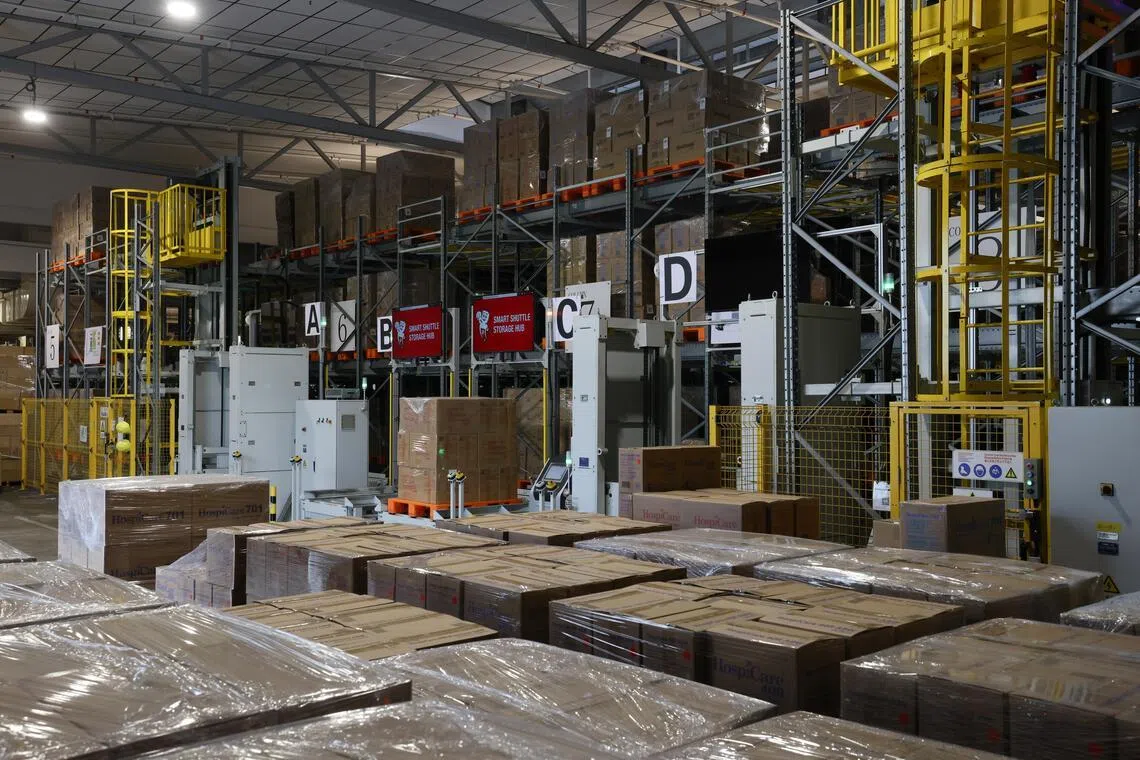
“We are working while we sleep, letting the machines run overnight,” Moh Yan Ting said. “This results in greater supply and efficiency.”
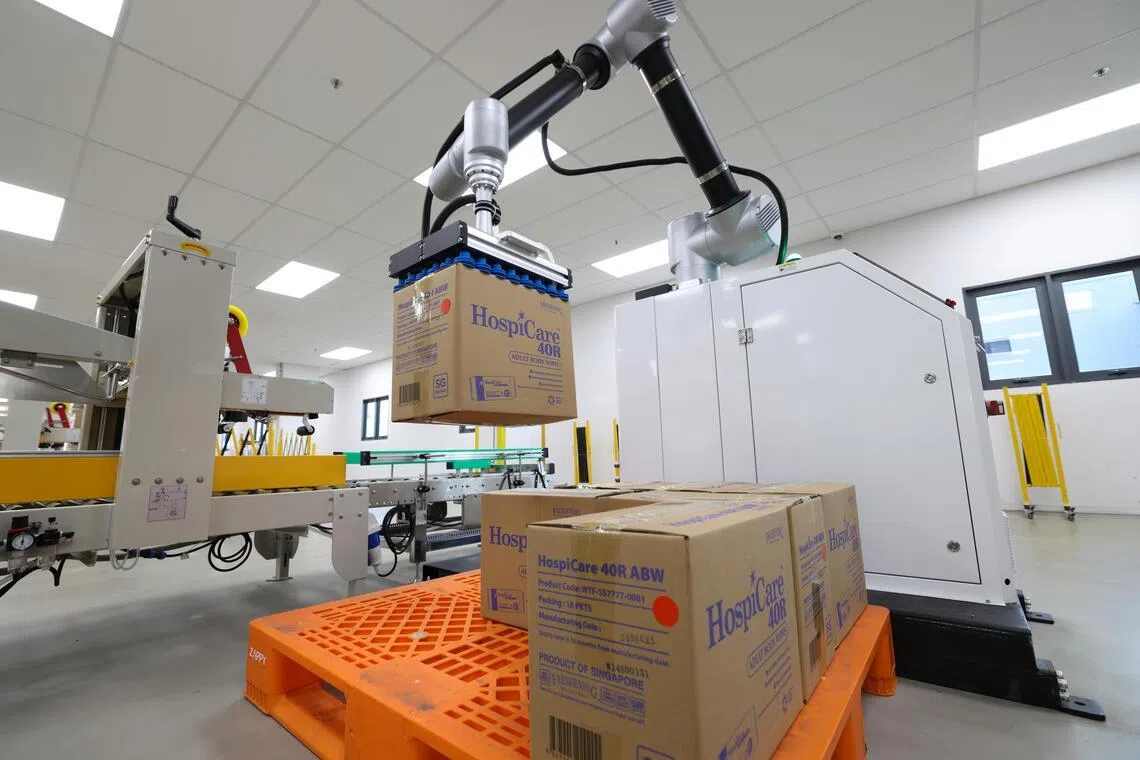
From order processing to packing and storage, the workflow is largely automated with the help of artificial intelligence, allowing products to be packed and stored within the system at the click of a button.
“What I envisioned was a seamless flow for everybody, including the customers,” she added.
Beyond efficiency, she noted that automation has also improved workplace safety and hygiene. With fewer manual processes, the risk of warehousing accidents is lower, while limited human contact with products helps maintain higher hygiene standards.
“Accuracy is much higher as typos (during order processing) are also reduced,” Moh Yan Ting said.
While automation often raises concerns about worker displacement, she said this has not been the case at Freshening.
Instead of cutting manpower, the company retained its employees and upskilled them to operate and manage the new automated systems.
The warehousing team of six is now “more efficient and productive”, with workers undergoing on-the-job training to adapt to their new roles.
“This building is three-and-a-half times bigger than our old one. Technically, we would need many more people to operate it,” Moh Yan Ting said. “But with the same number of staff, they can now do a lot more.”
At the company’s previous facility, workers relied on forklifts to move pallets of stock and manually loaded cartons into lorries – a physically demanding and time-consuming process. Operations were not run around the clock, manpower was limited, and the team “could not catch up”.
Today, production is significantly faster despite having the same manpower, and workers have “started to appreciate” the automated systems.
“If we produce one piece faster, it is one extra piece,” the managing director said.
Even as Freshening embraces automation, sustainability remains a core focus.
Since relocating to its new facility in late 2024, the company has reduced its energy usage by 50 per cent. The facility is powered by solar energy from solar panels installed across its rooftops.
Although automated systems run overnight, operations are designed to minimise energy consumption, with lights switched off at night.
Looking beyond Singapore
Beyond domestic operations, innovation has also supported Freshening’s regional and global expansion plans.
The company has already established a foothold in Europe, producing private-label products for customers including airlines and train operators.
It also operates factories in Indonesia and China, with its Huizhou facility expanding last year through the addition of multiple product lines and warehouse space to meet growing demand.
Freshening is setting its sights on the Middle East, with Zappy and HospiCare slated to enter the region next year.
To build its overseas presence, the company has been actively participating in trade exhibitions in the region, including an upcoming showcase in Dubai during February.
When asked about maintaining its competitive edge amid expansion, Moh Yan Ting said automation has helped to ensure that consistency and quality remain intact. “That’s how we achieve the competitive edge in the market,” she said.
The company’s strategy has not gone unnoticed within the manufacturing sector.
At the recent Singapore Innovation and Manufacturing Awards 2026 held in January, Freshening won the Most Promising SME award, which recognises companies with strong manufacturing vision as well as robust innovation and digitalisation strategies.
Moh Yan Ting also clinched the Next Generation Leadership (Under 40) award, which recognises leaders who demonstrate outstanding leadership, innovation and impact in advancing manufacturing excellence within their organisations and the broader industry.
Decoding Asia newsletter: your guide to navigating Asia in a new global order. Sign up here to get Decoding Asia newsletter. Delivered to your inbox. Free.
Share with us your feedback on BT's products and services