


Hotels, restaurants see stronger CNY dining demand, as reunion dinner bookings stream in earlier
While diners are gravitating towards premium experiences, corporates seem more budget-conscious this year

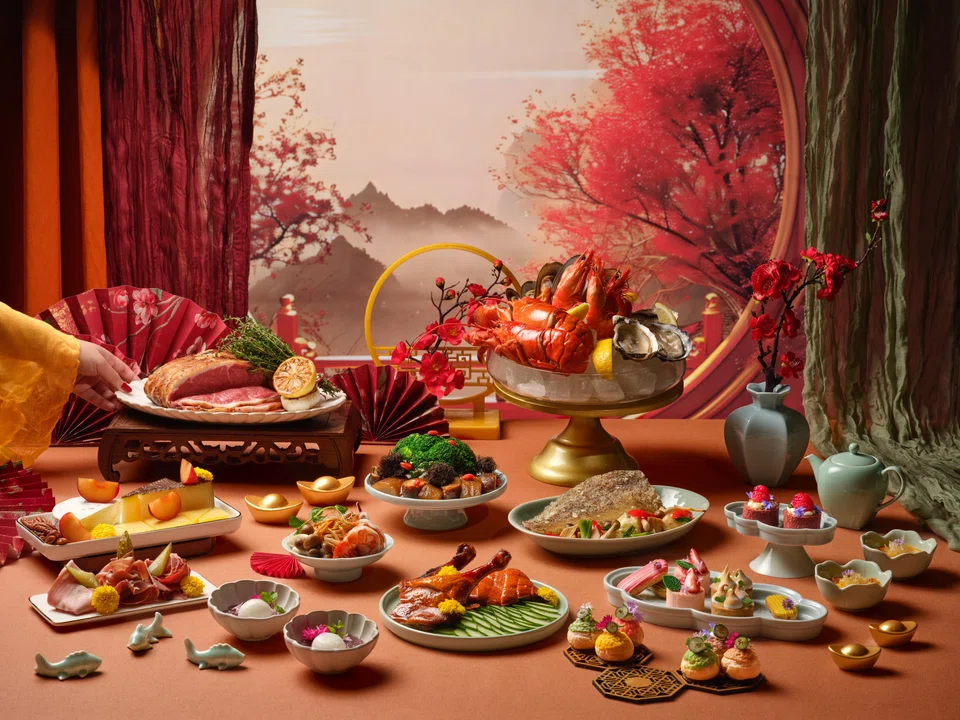
[SINGAPORE] Hotels and restaurants are experiencing stronger Chinese New Year (CNY) dining demand with this year’s longer lead-up to the festive period, as reunion dinner reservations stream in earlier than they did last year.
Food and beverage (F&B) operators said that economic uncertainty has not dampened dining demand or spending, as consumers continue to prioritise gatherings during CNY.
White Restaurant, for instance, has recorded a 50 per cent surge in reservations across the entire month of February, compared with the corresponding CNY period in 2025.
Victor Tay, the restaurant chain’s chief executive, attributed this partly to the longer duration leading up to the festival. This first day is Feb 17 this year, compared with Jan 29 in 2025.
As this year’s CNY is taking place further from the Christmas and New Year festivities, people have more time to make dining-out plans and recover from the year-end spending fatigue, he said.
White Restaurant’s early marketing efforts for its CNY offerings are also boosting demand, he added.
“Guests are downsizing group sizes, but upgrading the quality and personalisation of their experience. They’re investing in premium offerings and purchasing premium takeaway goodies.”
Jacqueline Poey, general manager of Sofitel Singapore City Centre
At Yan Ting at The St Regis Singapore, dining demand is 20 per cent higher across this year’s CNY period than in 2025.
Its reunion dinner slots were fully booked two-and-a-half months ahead of CNY, with reservations being made as early as the fourth quarter of 2025, noted Sushant Rege, the hotel’s F&B director.
In contrast, Yan Ting’s reunion dinner slots last year were filled only a month in advance.
Likewise, the majority of reunion dinner reservations at Sofitel Singapore City Centre’s Racines Restaurant were made “considerably earlier” at six to eight weeks ahead of CNY, said the hotel’s general manager, Jacqueline Poey. This is compared with four to six weeks in 2025.
Guests have also committed to bookings with “greater certainty”, she added, such as by making pre-payments to secure their reservations. Reunion dinner slots at Racines are now fully booked.
“Reunion dining during the (CNY) period continues to hold significant cultural and emotional value for our guests,” she said, adding that such celebrations appear to “transcend short-term economic considerations”, reflecting the resilience of this market segment.
While TungLok Group is seeing “similar” demand for its reunion dinners this year, the bookings are staggered over a longer stretch as CNY Eve falls later, said Andrew Tjioe, the group’s president and CEO.
Some families planned well in advance, while others made reservations closer to the date, he noted. This resulted in a more even flow of bookings.
“While broader economic conditions remain mixed, many families still view CNY dining as an important annual occasion,” he said.
Restaurants have expanded their capacity to cope with increased booking demand.
For instance, Yan Ting will turn a ballroom on the same level into a second venue for reunion dinners.
Estate Restaurant at Hilton Singapore Orchard, meanwhile, has two reunion dinner buffet seatings, up from one in previous years.
The first seating is nearly 90 per cent booked, while the second seating is approaching 80 per cent, said Kazi Hassan, the hotel’s director of F&B and culinary operations.
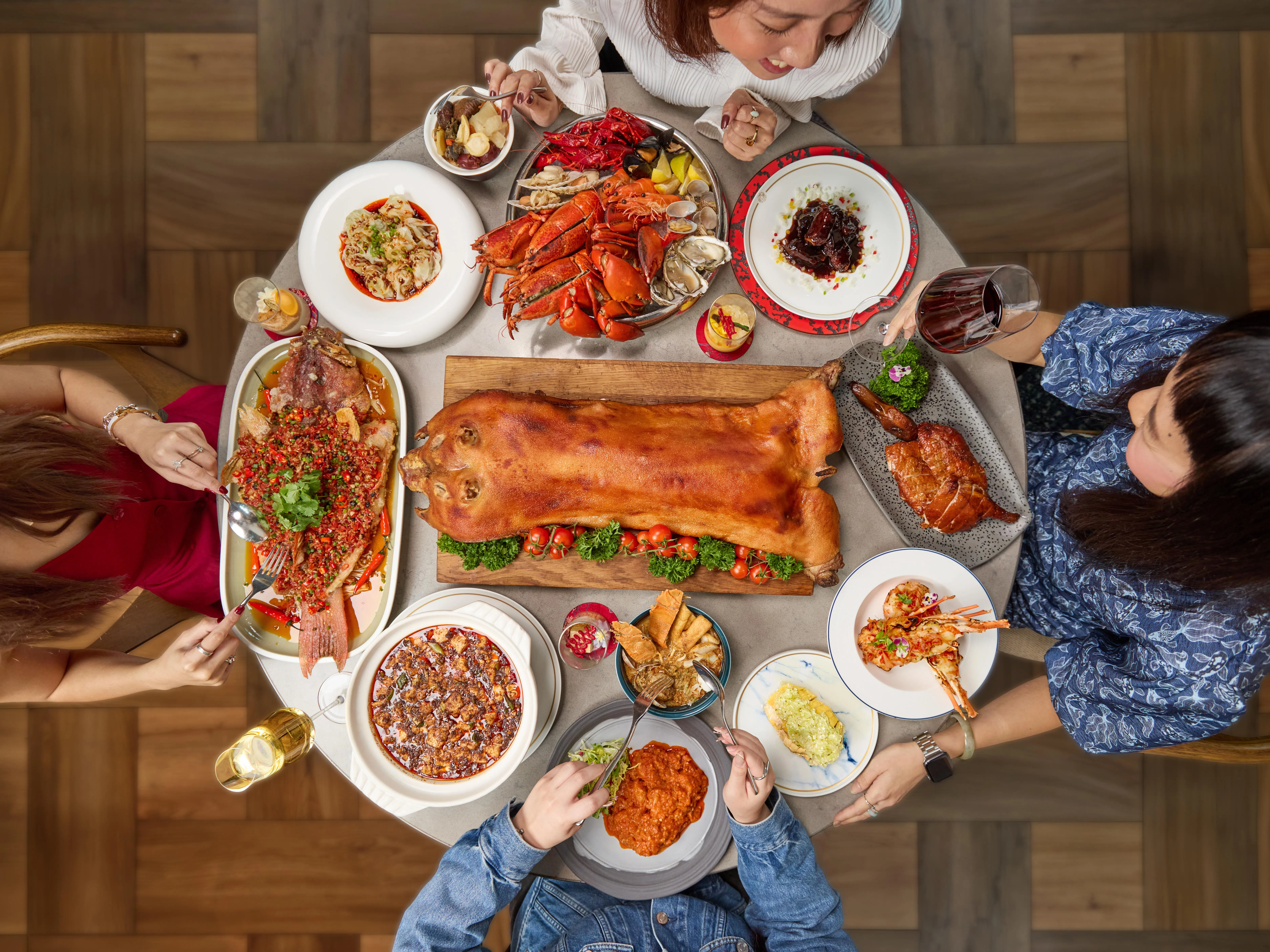
Strong corporate demand
Demand from companies also remains robust.
Inquiries on the Singapore Expo’s CNY corporate packages have more than trebled year on year, and have been coming in as early as mid-October.
This suggests growing interest in “larger-format” corporate CNY gatherings, especially those with customisable spaces and structured dining formats, said Ng Sim Lim, vice-president of sales at Constellar, which manages the Expo.
At Estate Restaurant, corporate bookings have surged by a “double-digit percentage” this CNY from the year before, with many firms holding appreciation lunches and dinners.
Corporate bookings at Racines Restaurant have “held steady” at 2025 levels, said Poey.
Rather than treating such meals as a discretionary expense, more corporate clients consider them a “critical touchpoint” for employee engagement and client relationship management, she said.
This is “especially given the competitive talent landscape and the importance of strong business relationships in the Asian market”, she added.
Prioritising quality and value
While the economic climate may be uncertain, diners seem to have become more selective and are going for premium experiences rather than cutting back, said F&B operators.
Said Tjioe: “Many are willing to spend on quality ingredients, signature dishes and curated set menus for important occasions.”
In response, TungLok Group refreshed its CNY menus with new dishes and enhanced presentation. It also introduced more flexible menu options that can be customised for different group sizes and dining preferences.
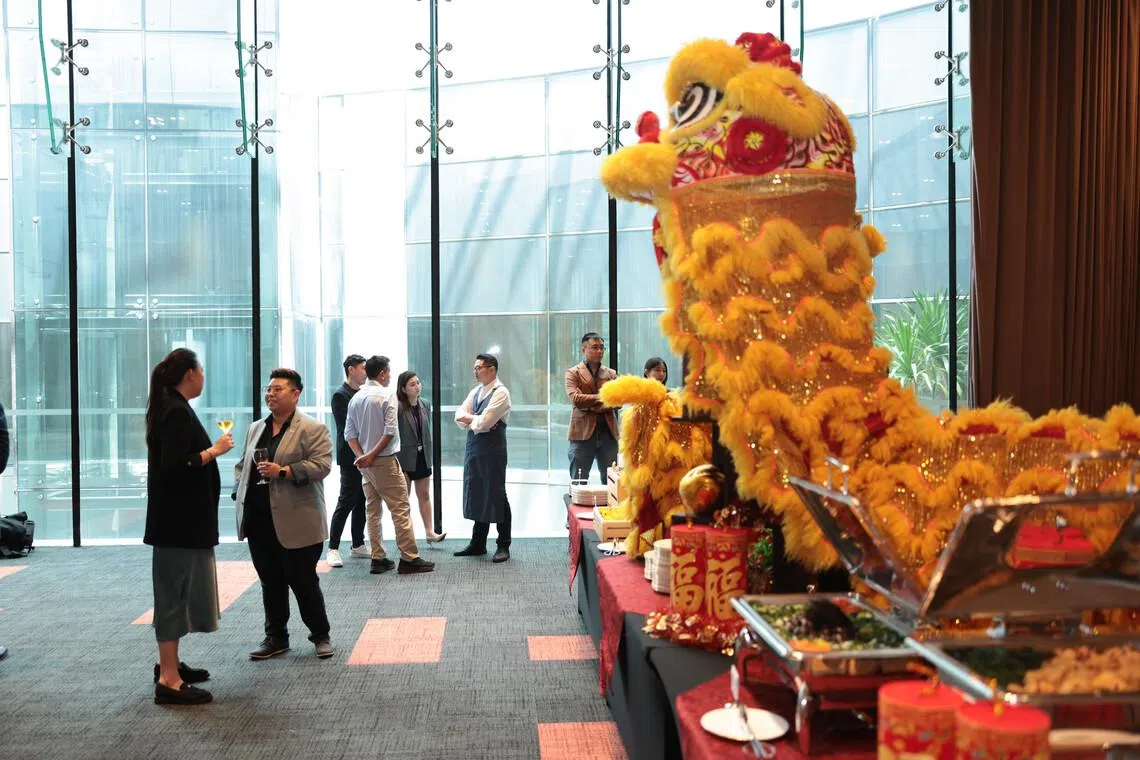
White Restaurant has seen 10 to 15 per cent more customers opting for its higher-tier menu this year, compared with 2025. The menu offers higher-quality ingredients and premium seafood such as sea cucumber and abalone.
“This indicates a potential shift in consumer priorities, where assurance of a premium experience outweighs marginal cost increases,” said Tay.
Although Racines Restaurant has observed a shift towards smaller group sizes this CNY, overall spending has not dipped.
“What we are witnessing is more sophisticated spending, or what I like to call ‘intentional indulgence’,” said Poey.
“Guests are downsizing group sizes, but upgrading the quality and personalisation of their experience. They’re investing in premium offerings and purchasing premium takeaway goodies.”
Corporates, however, seem more budget-conscious this year.
At Yan Ting, Rege has noted reduced alcohol consumption among corporates, with firms opting for “lighter and more restrained” dining experiences.
Constellar’s Ng also said that companies are taking more time to compare CNY offerings before committing to a booking, weighing factors such as menus, venue scale, layout flexibility and overall hosting capabilities.
“The market remains highly competitive, with hotels and city-based restaurants offering CNY packages at comparable price points,” he added.
To accommodate a wider range of corporate hosting needs, the Expo has introduced more dining formats in its CNY packages, from buffet receptions to sit-down banquets.
This gives organisations greater flexibility to curate their celebrations according to group size, level of formality and budget, he said.
TRENDING NOW
Singapore identifies 7 firms responsible for haze fires, notices issued urging action: Grace Fu

DBS remains analysts’ pick ahead of Q3 earnings after Singapore banks’ share slump

High Court rules against Julius Baer’s Singapore trust arm in US$50 million family trust dispute

Could stablecoins be the future of money?

