


Keeping quality high for over a century: VSS Varusai Mohamed & Sons fends off cheaper competition
Founded to supply pilgrimage necessities, the Kampong Glam business has diversified into perfumes while resisting pressure to cut corners

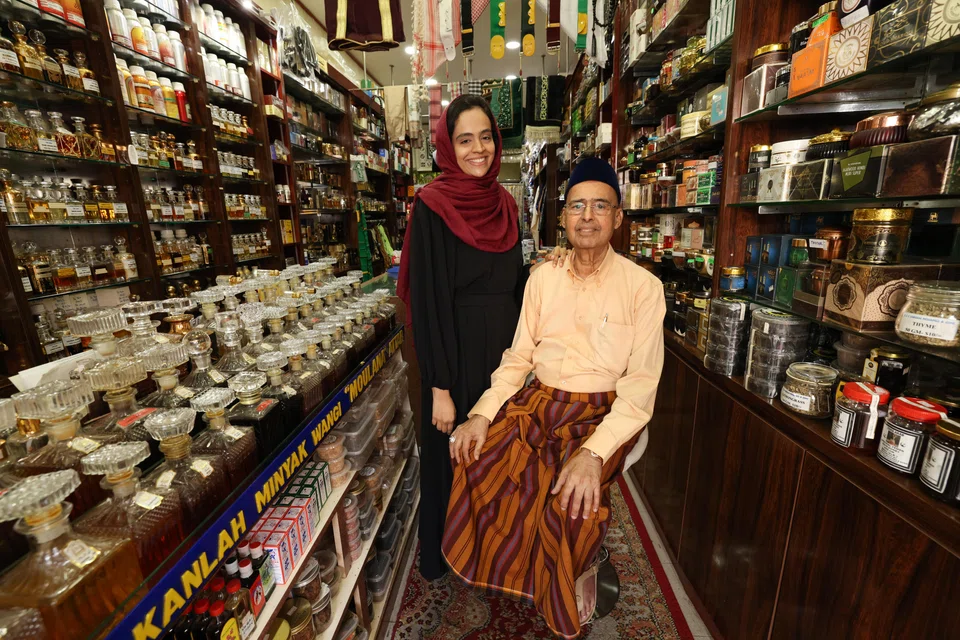
[SINGAPORE] Integrity – including a refusal to cut corners – has kept VSS Varusai Mohamed & Sons going for over a century, even in the face of price competition.
The Kampong Glam business bears the name of its founder, who started it in 1924 to supply necessities for Muslim pilgrimages.
Today, it has diversified into perfumes and is run not just by one of Varusai Mohamed’s sons, but also granddaughter Fauzia Rani, who joined her father Haji V Syed Mohamed in 2007.
What remains unchanged is the company’s philosophy.
Fauzia, the first woman to be involved in running the family business, said: “Whatever we do, we must do with integrity. I think that’s one reason why we’ve been able to hold on to this business for the past 100 years.”
For the family, integrity means not cutting corners in business dealings and product quality.
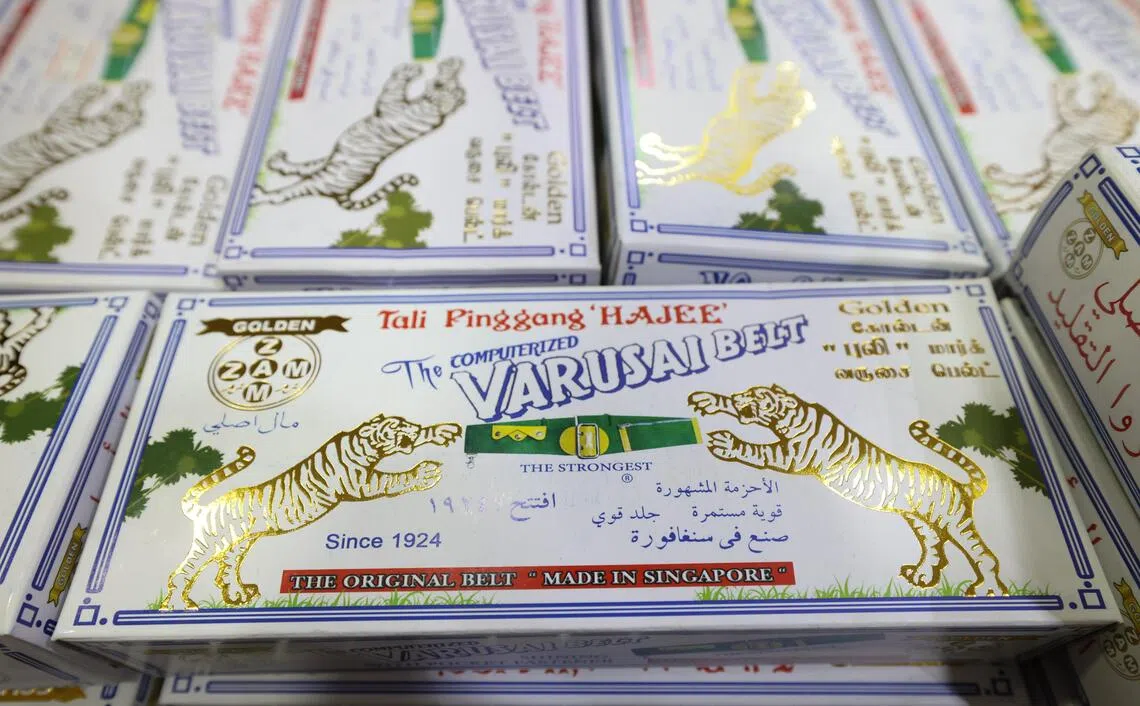
In the 2000s, the family noticed that China-based manufacturers were producing cheaper copies of their signature tali pinggang haji.
This money belt, used during the Haj and Umrah, was designed by the founder and later patented by Syed Mohamed.
The business came under pressure to compete on price. But Syed Mohamed refused to compromise on the standards that customers trusted.
He held firm on the belt’s quality, refusing to use cheaper materials to lower its S$15.50 price, and agreed to introduce a simpler second line at S$10.50 only after much persuasion.
That consistency, said Fauzia, is why some Malaysian patrons remain loyal despite cheaper options at home. “From a consumer’s perspective… they can see the difference (in quality).”
But Fauzia acknowledges that such customers are a minority. Even Singaporean shoppers often opt for more affordable options across the border, she said – especially during Ramadan, when many do their bulk shopping overseas.
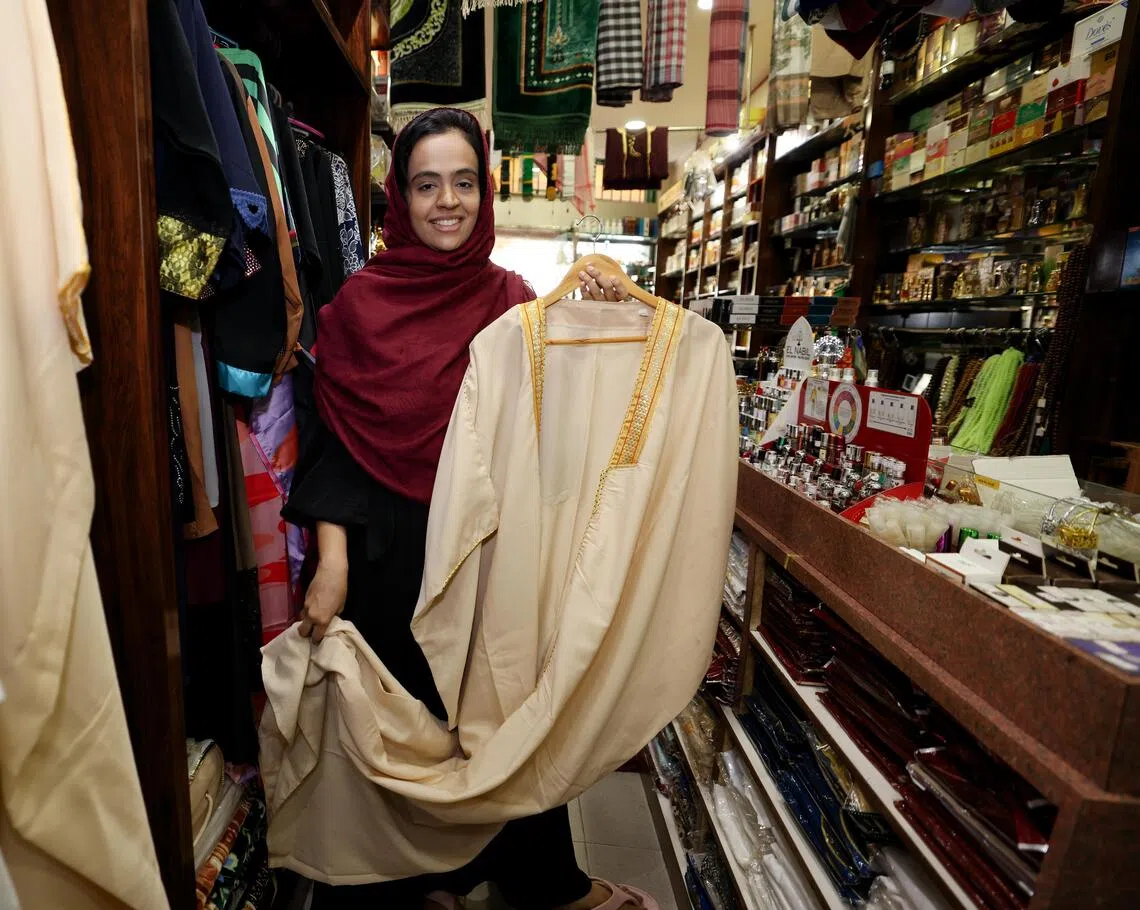
The shop tends to see demand only for items that cannot be easily found in Malaysia.
An ageing customer base adds to the challenge, as younger patrons increasingly see little need for pilgrimage-specific products.
“Last time, if you were going on a pilgrimage, you would buy the towel, the belt, and all the related items,” said Fauzia, referring to the ihram towel worn by Muslim men.
“But now… they think, ‘For what?’ and that they can just wear a normal belt… and get a plain cotton cloth and then use it (in place of the ihram towel).”
Evolving the trade, keeping the trust
To adapt, Fauzia brought the business online in the late 2010s, and has pared back certain traditional items for which the shop sees less demand.
These include kemenyan, an incense that produces heavy smoke when burned, and is easily available elsewhere.
“Youngsters these days find it very tedious to burn and then enjoy the smell. They prefer to go with things which are very simple… (such as) perfume and incense sticks,” she said.
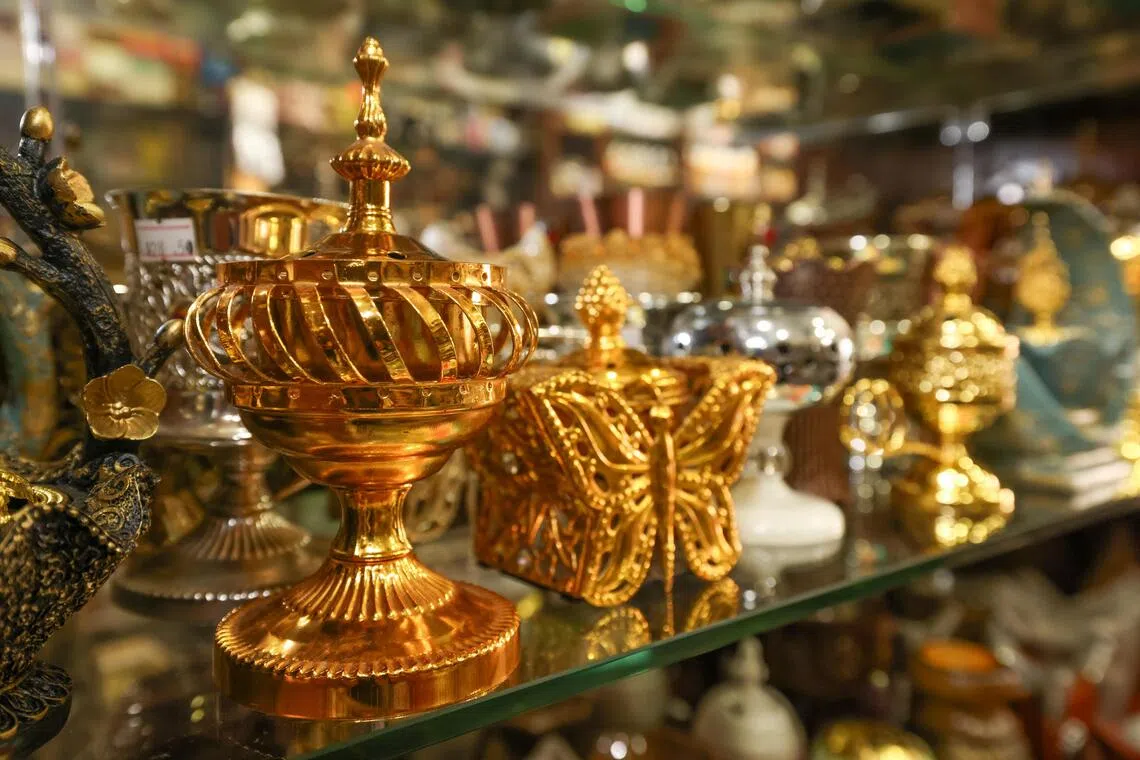
Perfumes were introduced to the shop’s offerings in the 1990s by Fauzia’s father. This segment, which includes essential oils, has become a greater focus for the business in recent years.
Once used mainly for religious purposes, the oils now see everyday use, from aromatherapy to personal fragrance, so carrying them helps to widen the shop’s appeal.
In fragrances, too, the business remains guided by its founder’s ethos of honesty, said Fauzia.
The shop focuses on pure oil concentrates and carefully crafted blends, avoids dilution or additives, and works only with trusted suppliers.
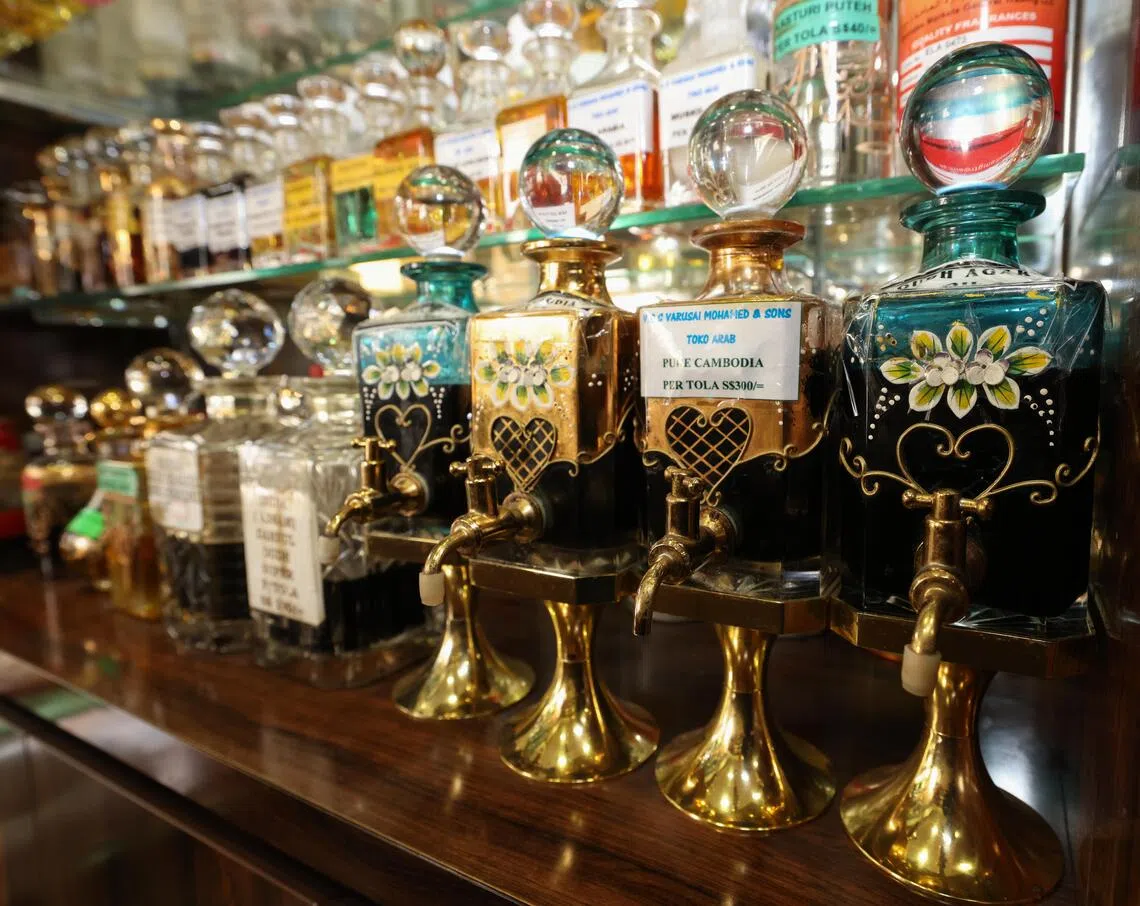
Instead of making quick transactions, regular customers often linger, pulling up chairs, accepting the offer of tea, and discussing their needs before choosing from some 400 to 500 scents.
“Although (our interactions) are always within the boundaries of buying and selling, they feel comfortable when they are dealing with me,” she said.
While business has weakened from past decades, the shop continues to break even, said Fauzia.
“We survive with the grace of God, with our family support and a pool of regular customers,” she said.
“It has pulled us through, but looking ahead, I don’t know what the future will hold; we’re just trying to run the show as long as possible.”
Preserving a legacy
With the future uncertain, preserving the shop’s legacy has become as important as keeping it afloat, Fauzia added.
Around 2018, she became involved in a heritage initiative that documents Kampong Glam’s cultural trades.
This gained momentum after the Covid-19 pandemic, placing the shop on heritage maps, walking trails and brochures. The increased visibility has brought a steadier stream of visitors, including tourists and embassy groups.
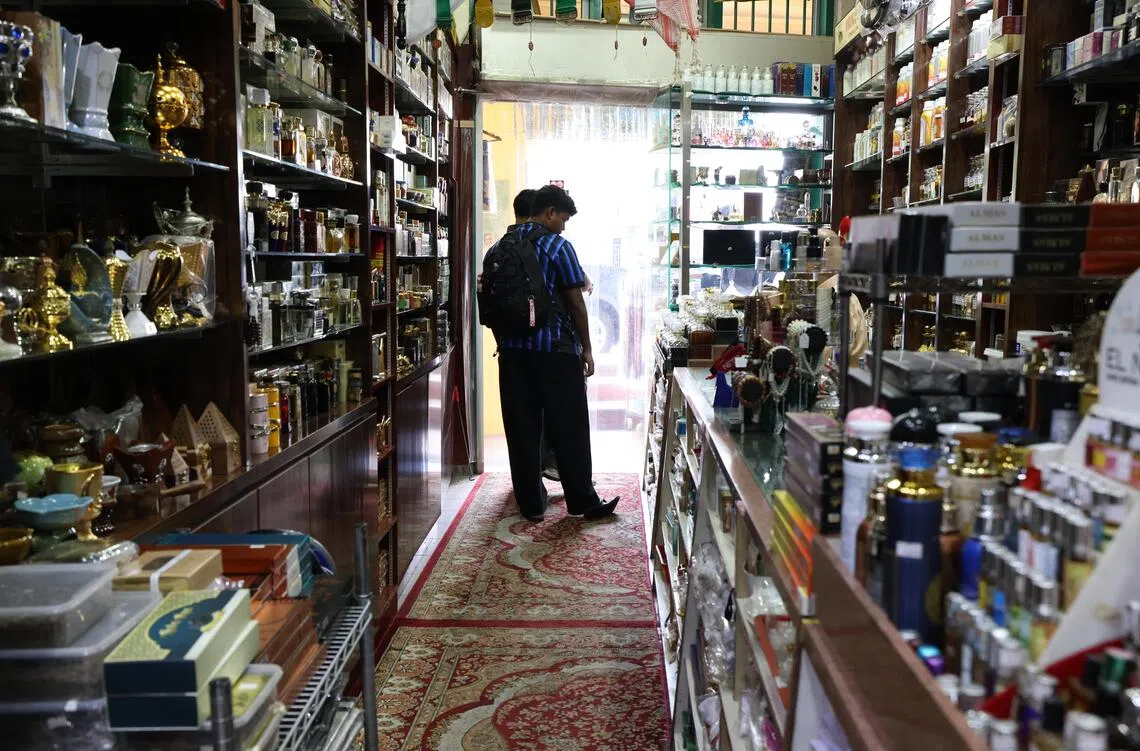
“Before that, people would just go to the mosque and leave,” she said, referring to the iconic Sultan Mosque, which the business is located close to.
This year, she applied for the National Heritage Board’s SG Heritage Business Scheme to ensure the shop’s history – and her grandfather’s role in it – would not be lost.
VSS Varusai Mohamed & Sons is among the first batch of 42 local businesses to be recognised. While the scheme provides marketing and business support, that is not why Fauzia applied.
Rather, her aim was to ensure the shop’s history would be formally recorded, in a tribute to her grandfather.
“Whether we are still around or not, at least we will be there in the books as a business that ran for 100 years,” she explained.
Fauzia added that, beyond her own family business, heritage trades face a wider challenge.
She believes their survival should not be left to market forces, but instead ensured through dedicated, government-controlled spaces. “When (a property) is held by private landlords, of course the purpose is to get more money from it.”
Recent preservation efforts are welcome, but have come too late for many trades that once defined the area, including handmade songkok makers, rattan craft shops and antique dealers, she said.
While the reasons for each closure may have varied, common pressures were rising rents and operating costs.
Many of these trades disappeared without ever being recognised for the role they played in Singapore’s story, she added. “By the time the government steps in and finds a solution, more of us will be gone.”
This is part of a series on companies recognised under the National Heritage Board’s SG Heritage Business Scheme
TRENDING NOW

High Court rules against Julius Baer’s Singapore trust arm in US$50 million family trust dispute

MSCI proposes standalone status for Indonesia; Jakarta stocks plunge 8%

Once staunchly pro-China, Malaysian Chinese businesses are now distancing themselves from Beijing

No chicken feed: How Malayan Flour Mills built an empire from flour to fowl

