


Music school Aureus Academy to open first US outlets, backed by new S$15 million proprietary curriculum
Co-founders Lawrence and Julius Holmefjord-Sarabi plan to pursue a US IPO in the near term to raise capital for expansion

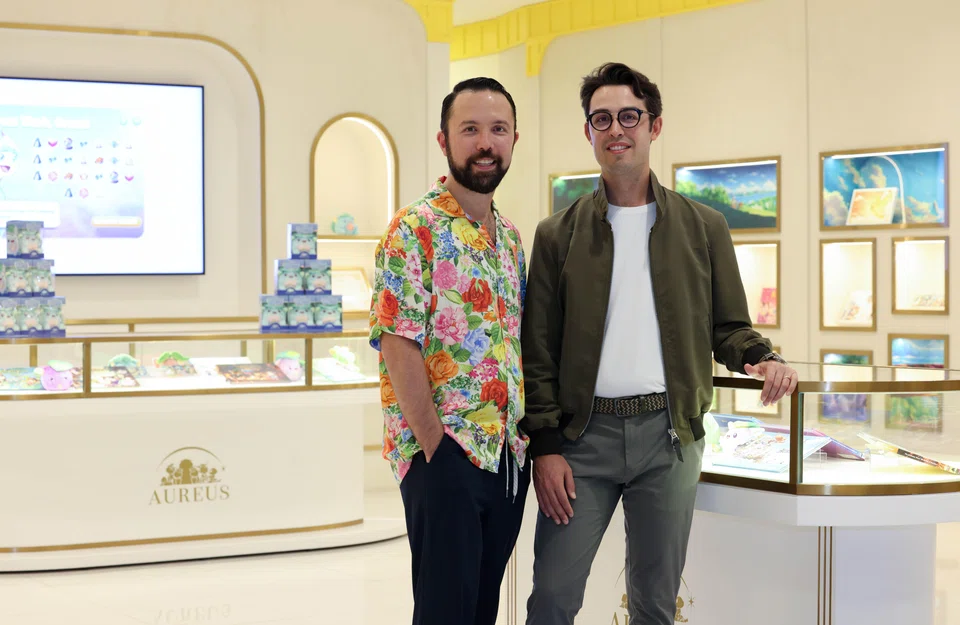
[SINGAPORE] Home-grown music school Aureus Academy is gearing up to open its first outlets in the United States, as it bets on its newest product – a S$15 million proprietary music education curriculum – to accelerate its internationalisation efforts.
Co-founders Lawrence and Julius Holmefjord-Sarabi expect to open up to three centres in the Greater Dallas-Fort Worth area, Texas, by the first quarter of 2027. The brothers are currently looking for suitable sites.
But this is merely the tip of the iceberg. Their longer-term target is to establish 1,000 centres in the US within the next decade.
While the brothers admit this is an “audacious” goal, their confidence in attaining this comes from Aureus Interactive – the school’s latest offering that they believe sets the business apart from its competitors.
Launched in August 2025, Aureus Interactive is Aureus Academy’s in-house music education curriculum designed for children. It incorporates gamification and technology into the learning experience.
“A core part of our whole thesis was building a product that we could scale into large international markets,” Lawrence Holmefjord-Sarabi told The Business Times.
The group’s bid for the US comes after its most significant and rapid expansion to date. In the last 18 months, Aureus opened eight new centres in Singapore and entered the Middle East in January, establishing three centres in Dubai over the last quarter.
The wave of new openings lifted the group’s FY2025 revenue to S$60 million, from S$54 million the year before.
The brothers are forecasting revenue of “well above” S$70 million in FY2026, and have set their sights on reaching S$200 million within the next five years. Said Julius Holmefjord-Sarabi: “With a product like Aureus Interactive – that’s how we’re going to achieve it.”

Embarking on a growth strategy
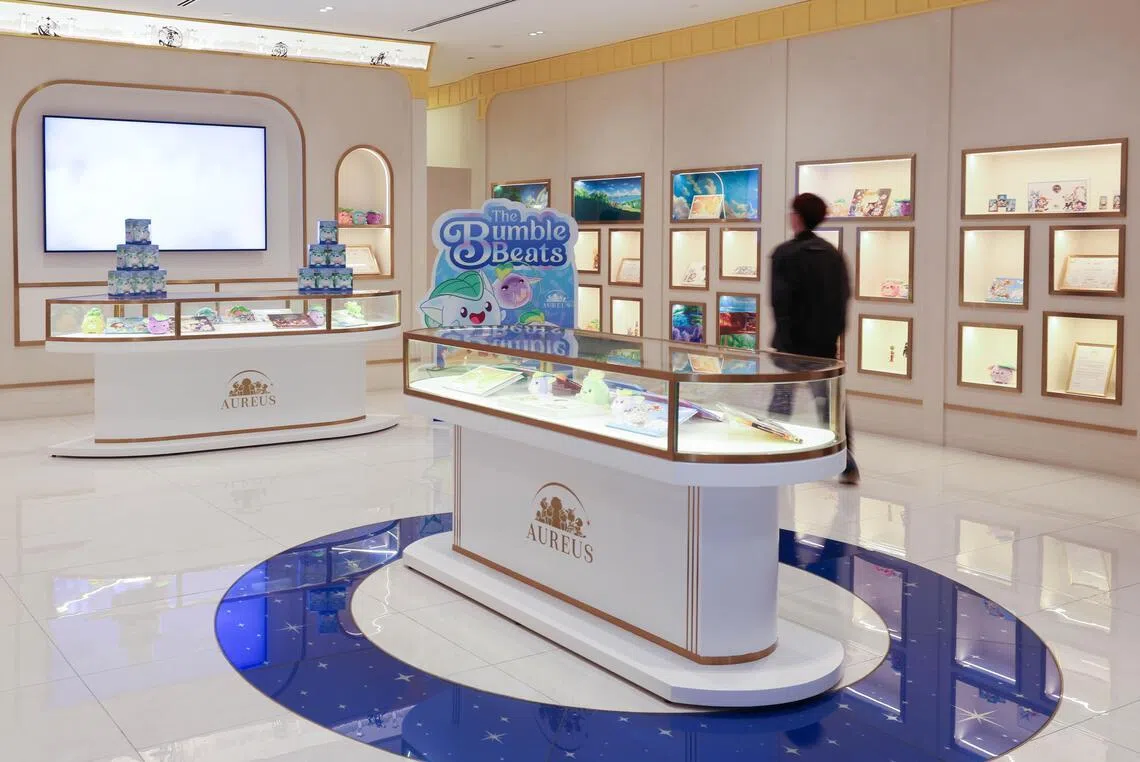
Established in 2013, Aureus Group – the parent company of Aureus Academy – runs one of Singapore’s largest music school chains. It has 30 centres across the Republic and employs 500 full-time teachers.
Despite its sizeable footprint, the brothers continue to see “huge upside potential” in Singapore, noting that more parents today are willing to pay a premium for their children’s music education.
Recent numbers appear to support these views. Julius Holmefjord-Sarabi noted that Aureus’ new centres have broken even in as quickly as three months, compared to past ones that would typically run at an operational loss for as long as 18 to 24 months.
Despite finding success in Singapore, the brothers were not convinced that their business model could scale globally.
In their view, Aureus did not offer a differentiated product from their competitors. Like other schools, Aureus taught music through traditional methods such as Suzuki, Alfred and Faber which rely on black-and-white method books.
“The books are not vibrant or engaging. There’s no storytelling,” said Lawrence Holmefjord-Sarabi, noting that these methods also use music arrangements composed between the 1600s and early 1900s.
“These are rigorous foundations we respect and learn from, although we don’t find them complete enough for the 21st-century student.”
Adding to this was the growing challenge of student retention. The brothers observed that more parents were withdrawing their children from Aureus, citing waning interest in learning music.
That made them realise that the traditional methods of teaching music were no longer resonating with younger students, who have increasingly shorter attention spans today.
Modernising music education
With that in mind, they set out to build Aureus Interactive – a curriculum where students learn music through immersive storytelling and adventure-based environments.
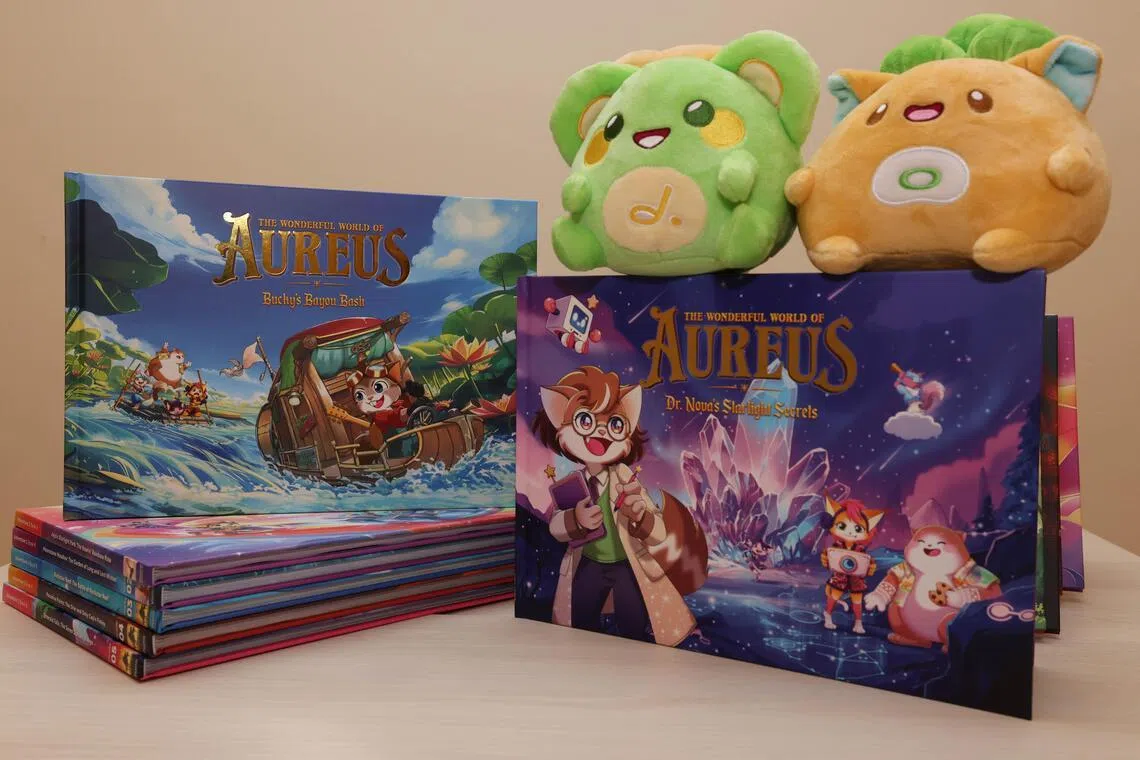
Gamification is a key feature of the programme. Students progress through five grades in a “musical universe” populated by original characters and quests, earning collectibles and plushies as they complete milestones.
Alongside this, they can learn to play more than 100 original and reimagined compositions recorded by Aureus. These span more than 30 musical genres from classical to pop, jazz, musical theatre, rock and electronic.
Developing Aureus Interactive took four years and the efforts of a 50-member team that included composers, storytellers, artists, animators and software developers.
“We have to continuously up our game to keep children invested in music lessons,” said Lawrence Holmefjord-Sarabi.
“What we’ve done is built and modernised a product for a new generation. We’ve taken the best of the old methods – such as the rigour – and integrated improvements that we thought were missing.”
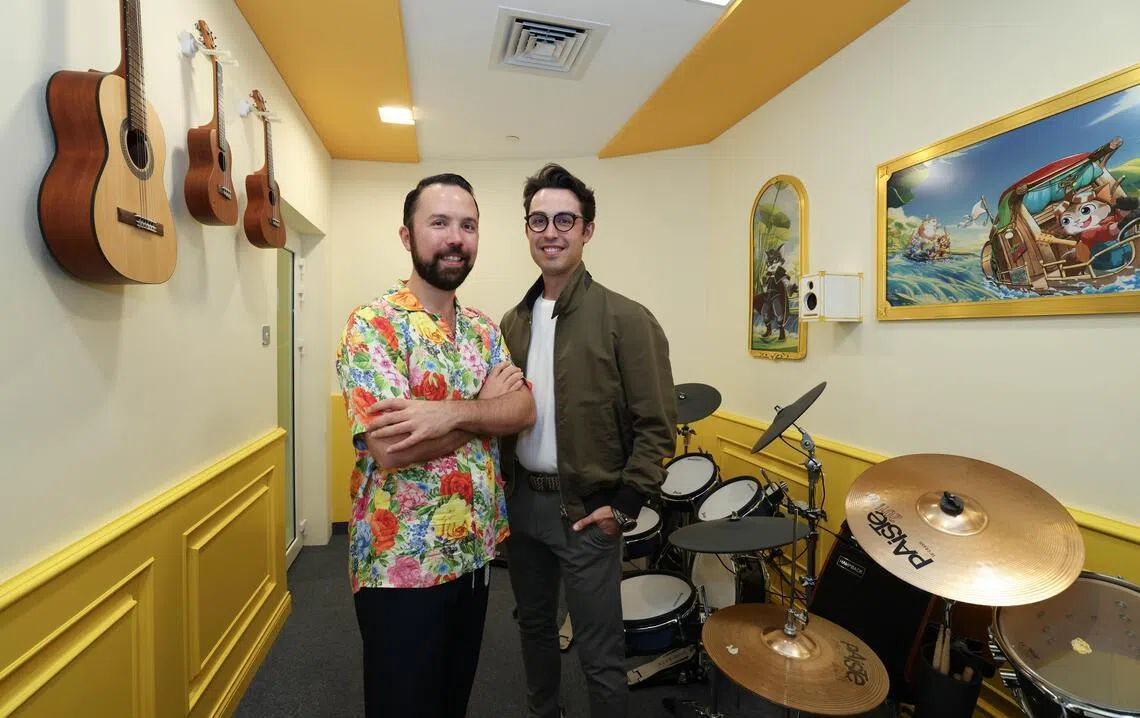
To support the roll-out of Aureus Interactive, the group has revamped the look and feel of all Aureus centres. This included upgrading the music studios in each centre with tablets and digital screens to create a more immersive learning environment.
Still, Julius Holmefjord-Sarabi stressed that the curriculum remains a “book-first method”, where students primarily learn music through physical storybooks that the school has developed. The curriculum includes more than 300 storybooks designed for different instruments and grade levels.
Technology is used only to enhance lessons. For instance, teachers can trigger certain music-oriented games on their tablets if students are getting restless.
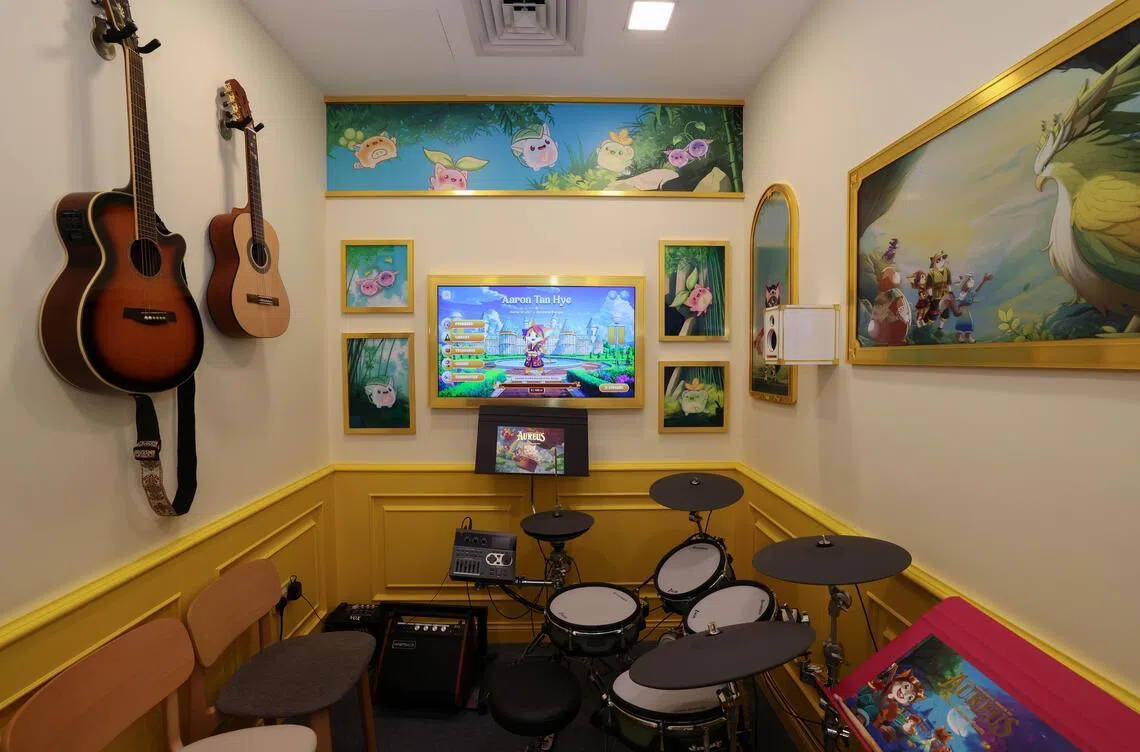
Since the launch of Aureus Interactive, Lawrence Holmefjord-Sarabi noted that the school’s customer retention rate has increased by more than 20 to 30 per cent, while same-store sales have grown by double digits.
This is despite Aureus raising its lesson fees by 5 to 7 per cent to cover the cost of the new learning materials, as well as to retain and recruit quality teachers.
Aureus Interactive has also opened up more revenue streams for the school.
Complementing the product is a new certification pathway, Aureus Grades, that students can pay to sign up for. The programme is endorsed and internationally accredited by the Royal Welsh College of Music & Drama in the UK.
Around 6,000 to 7,000 students have signed up for Aureus Grades, with the certification already generating “millions of dollars” in revenue, said Julius Holmefjord-Sarabi.
Middle East, US as near-term targets
With Aureus Interactive as the group’s secret sauce, it is now prioritising expansion into the Middle East and US – its first markets outside Asia.
Aureus previously operated three centres in Hong Kong. But it exited the market in 2023 due to difficulties in retaining teachers as more Hongkongers relocated amid rising political tensions with mainland China.
The brothers have identified the United Arab Emirates as a key growth engine, citing the market’s high household income levels and growing demand for premium music enrichment education, alongside a shortage of such providers.
Business at Aureus’ three Dubai centres has not been affected by the ongoing Gulf War, with demand “ramping (up) well ahead of expectations”.
“Achieving this growth against a backdrop of regional uncertainty reinforces our conviction in expanding across the UAE,” said Lawrence Holmefjord-Sarabi.
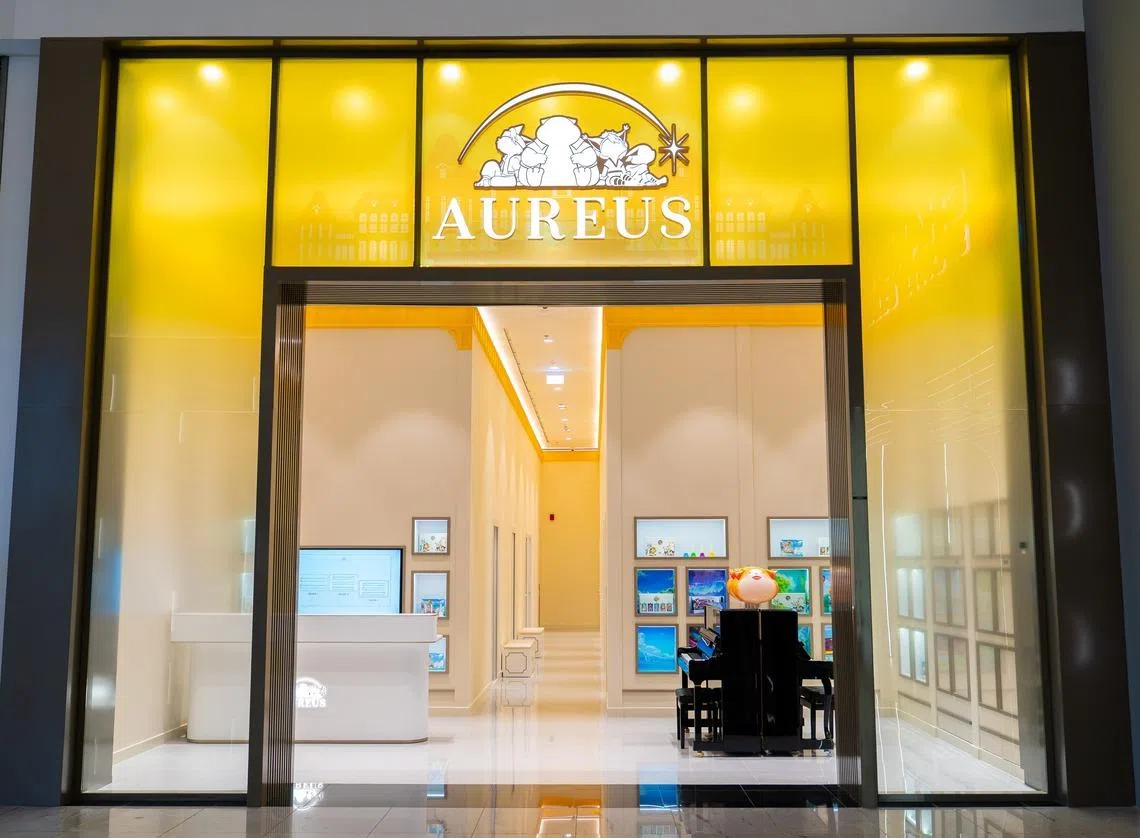
With plans to open more outlets in Dubai and expand to Abu Dhabi, the company’s footprint in the UAE is expected to match that of Singapore over the next five years.
The US, on the other hand, is a different beast altogether. The brothers – who hail from Hawaii, but were raised in California – acknowledged the market’s “intensely competitive” landscape with “thousands and thousands” of music schools.
Still, they remain bullish on the US. Lawrence Holmefjord-Sarabi described Texas and the greater Dallas area as a “genuine boomtown”, pointing to an influx of capital, formation of new businesses and steady inflow of young families relocating to the region.
Certain aspects of Aureus’ business model may need to be localised for the market. Unlike Singapore and the UAE where all teachers work full-time, part-time music teachers may be hired for the US centres.
This is because most Americans in the music industry typically engage in a mix of part-time and full-time work, said Lawrence Holmefjord-Sarabi.
Another possibility is purchasing the real estate that the centres will sit on in the US.
To reach its eventual US target of 1,000 centres, Aureus plans to raise capital via an initial public offering on either the New York Stock Exchange or Nasdaq in the near term.
Decoding Asia newsletter: your guide to navigating Asia in a new global order. Sign up here to get Decoding Asia newsletter. Delivered to your inbox. Free.
Copyright SPH Media. All rights reserved.






