


Steak-ing it on e-commerce amid the pandemic
Adirect’s online platform saw low sales initially, but paid off when Covid-19 caused restaurants to close
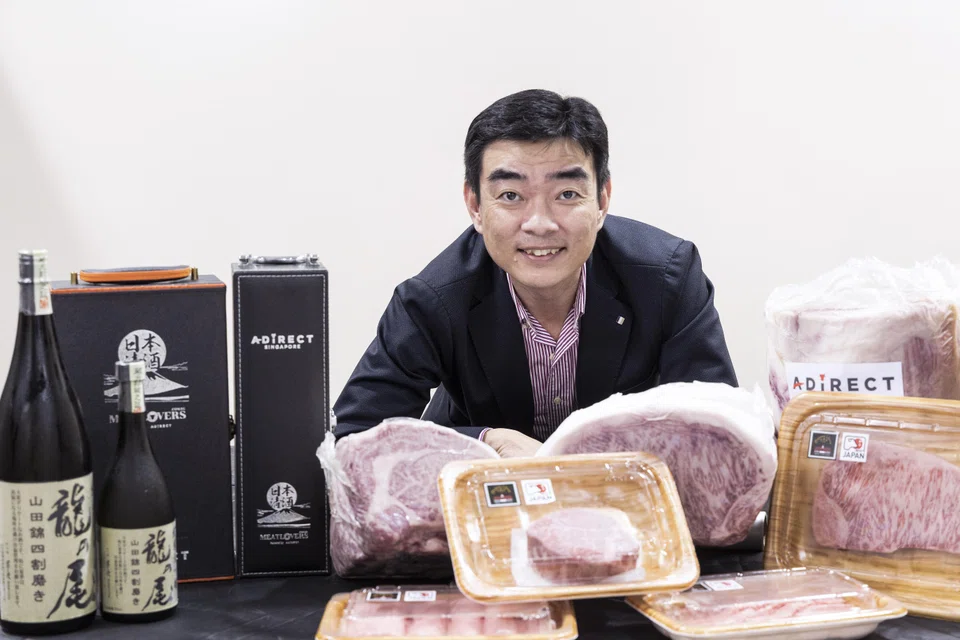
WHEN Adirect Singapore set up meatlovers.com.sg in 2015 to sell wagyu beef directly to consumers, it received less than 10 orders a month.
At the time, the company was doing well in its business-to-business segment, supplying premium meats to fine-dining restaurants. There was no pressing urgency to have an e-commerce channel; none of its competitors had one.
Still, when chief executive officer Jackie Goh joined in 2018, he dedicated more resources to the online platform because he believed in the potential of e-commerce.
The decision proved prescient. Adirect’s e-commerce head start provided a lifeline in 2020, when the Covid-19 pandemic led to an unexpected dining-in ban.
Restaurants were hit hard, with nearly all of Adirect’s customers cancelling their orders. But Goh did not back out of Adirect’s orders with overseas suppliers, as he sympathised with them. Instead, the company focused on another market for its meat: consumers.
Said Goh: “If we didn’t have the e-commerce platform before the pandemic, it would have been very disruptive to us. This is because this (channel) suddenly became our only window to allow us to continue selling.”
The online business gained traction during the pandemic. Adirect’s e-commerce sales have grown more than 20 times, with the business-to-consumer (B2C) segment now contributing a “substantial” portion of its revenue.
Adirect was founded in 2005 in the United States by Paul Dojo, now chairman of the board of directors, who saw an opportunity in the wagyu beef trade. In 2009, he chose Singapore as a springboard into the international market.
Adirect Singapore has since become the largest local supplier of premium Japanese meats such as wagyu beef, kurobuta and shirobuta pork, and ootoro tuna. It delivers these from Japan to markets across the world, including Asean, North America, the Middle East and the European Union.

Adirect’s sales have three main channels: high-end restaurants, including some run by Michelin-starred chefs such as Wolfgang Puck; retail outlets and B2C online marketplaces such as Shopee, Lazada, and Qoo10; and its own meatlovers.com.sg platform.
Goh attributes Adirect’s success to “people” – customers, suppliers and his team. Aiming to build a people-centric culture, he encourages team members to make their own decisions. Finding people with passion and heart is key, he said. “Skills can be taught later but getting people with the right attitude is important for us…The right people will naturally lead Adirect in the right direction.”
Tackling a crisis
When Covid-19 began, Goh recognised its seriousness early, mobilising his team to chart a few strategies based on different scenarios.
The pandemic presented two main challenges to Adirect: cancelled orders and supply chain disruptions. Almost 80 per cent of its customers cancelled orders during the “circuit breaker” period between April and June 2020.
But Adirect was able to redirect the goods to its e-commerce platform, cushioning the loss of restaurant sales – its main revenue driver – while preventing food wastage. At the same time, excess meat was also quickly turned into alternative products such as hamburger patties.
When media channels began offering discounted promotional packages, Adirect seized the opportunity to raise awareness of its brand. It also earned some breathing room when its suppliers reduced meat prices during the economic downturn.
This investment in advertisement, coupled with its established e-commerce channels, enabled Adirect to achieve strong sales growth during the pandemic.
Tackling the challenge of supply disruptions was harder. With airports closed in the early peak of the pandemic, Adirect was unable to receive airflown deliveries of its perishable goods.
Instead of simply waiting for borders to reopen, the company used the downtime to explore other modes of transport.
When Goh joined Adirect back in 2018, he had seen the possibility of using sea freight – but was hesitant because of higher risks, longer lead times and a larger minimum order quantity.
During the pandemic, ocean freight became Adirect’s only viable option. The company quickly pulled its draft plans out of the drawer and put them into action, reorganising operations to keep its supply chain intact via sea freight. In the long term, Adirect aims to further leverage on sea shipping for cost savings.
The pandemic did not deter Adirect from opening its first overseas office in Ho Chi Minh City in 2020 – without even setting foot in Vietnam. Thanks to substantial market research and help from the local authorities on regulations, the company was able to set up the office from abroad.
“It was a big mess but we decided not to sit and wait, because nobody knew in 2021 if this (pandemic) was going to finish in 2022,” recalled Goh. “It could be 2029! So do you wait for things to be over or start doing whatever you can?”
This series is part of the Enterprise 50 Educational Project between the E50 partners and the NUS Business School. Adirect Singapore was among the winners in 2021. The annual E50 ranking is co-organised by The Business Times and KPMG, sponsored by OCBC Bank, and supported by Enterprise Singapore, Singapore Exchange and Singapore Business Federation.
Decoding Asia newsletter: your guide to navigating Asia in a new global order. Sign up here to get Decoding Asia newsletter. Delivered to your inbox. Free.
Share with us your feedback on BT's products and services
TRENDING NOW

Malaysian king buys stake in Singapore-listed mining firm expanding into rare earths

Grab CEO’s wife Chloe Tong on life with Anthony Tan and finding her purpose

Once staunchly pro-China, Malaysian Chinese businesses are now distancing themselves from Beijing

Longer wait times expected as S’pore healthcare institutions report system disruptions

