Temasek, portfolio firms need to make commercial decisions without fear of politicisation: Shanmugam
He warns if corporate boards become overly cautious, it will compromise investment returns in the long run
 Add BT as a preferred source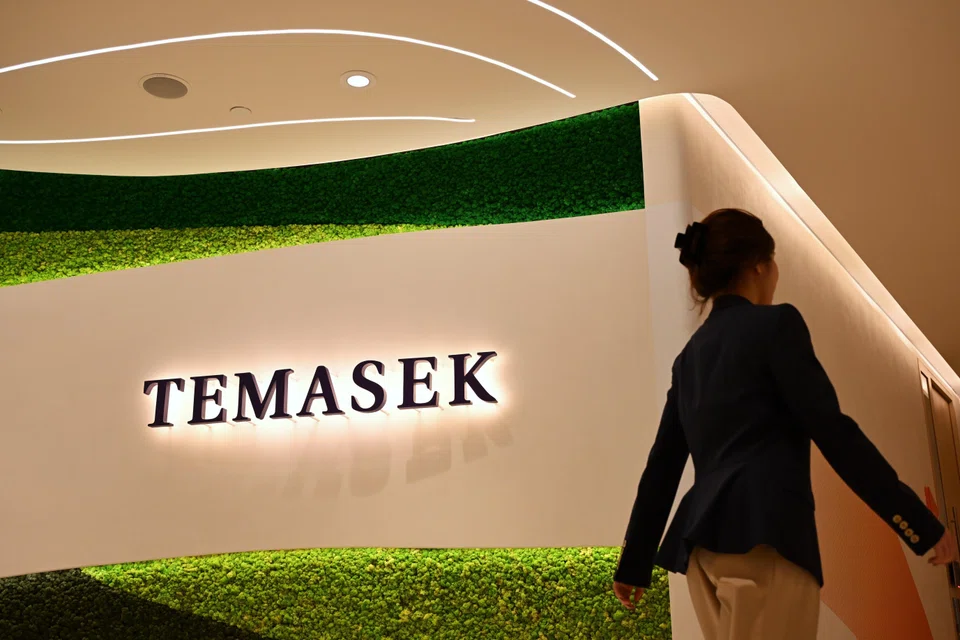
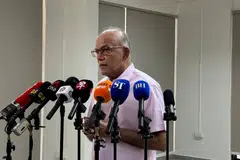
[SINGAPORE] Temasek portfolio companies must not fear making investment decisions because of political pressure or politically motivated criticism, said Senior Minister and Coordinating Minister for National Security K Shanmugam on Sept 4.
Addressing recent racist comments surrounding Singapore Airlines’ (SIA) investment in Air India, he warned that if corporate boards become overly cautious to avoid politicisation, it will compromise investment returns in the long run and ultimately disadvantage Singaporeans.
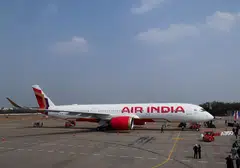
The news of Air India seeking US$1.5 billion in fresh equity from its shareholders, after posting a record loss of US$2 billion in the last financial year, sparked a recent wave of racist comments online in Singapore.
SIA has a 25.1 per cent stake in the Indian airline, through its previous stake in Vistara, a joint venture with Tata and Sons established in 2013. In 2022, after Tata acquired Air India from the Indian government, SIA and Tata formally agreed to merge Vistara into Air India.
Shanmugam, who is also home affairs minister, said SIA shareholders as well as the broader public have a right to expect that the company will be accountable and transparent.
“People have a right to expect that there will be a rigorous assessment before money is committed, and shareholders can ask the SIA management and directors questions at its AGM (annual general meeting),” he said.
He also cited a social media post by Workers’ Party MP Kenneth Tiong, in which the Aljunied GRC MP had said that he had filed a question on the issue for the Sept 8 sitting of Parliament.
“No one, least of all Singaporeans, owes Air India a living,” he said in his post.
Referring to this, Shanmugam said the actual shareholder in Air India is SIA and not Temasek, and any decision to invest in Air India lies with SIA.
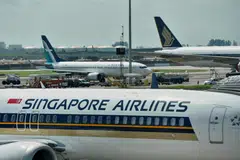
As a listed company, SIA should be left to make decisions on its investments based on its professional judgment and its resources, noting that SIA had declared more than S$10 billion in cash reserves and over S$3 billion in undrawn credit.
He added that Temasek, as a shareholder in SIA, will expect the airline company to make its investment decisions responsibly.
While the late founding prime minister Lee Kuan Yew had questioned SIA investing in Air India back in 2000 or 2001, this had been 25 years ago under vastly different circumstances, he said.
Lee had also caveated his comments by saying that it was “none of his business”, as the commercial decision was for SIA to make, added Shanmugam.
Temasek and SIA are entitled to make their own assessments today and make their commercial judgments, he said.
He also said that Tiong was entitled to his views like any other Singaporean, and to ask questions about SIA and Temasek.
“But neither his views nor those of any minister or any other MP should substitute for the commercial judgment of SIA’s management and board of directors,” he said.
Shanmugam emphasised that the government maintains a strict principle of not intervening in individual investment decisions or putting political pressure on Temasek portfolio companies.
Temasek, an investment company owned by the Ministry of Finance, is accountable to the government for its overall portfolio and overall long-term performance, but does not account to the government for its individual investments, nor does it account for individual investment decisions of its portfolio companies, he said.
Temasek and its subsidiaries decide how to invest across a wide portfolio, with investments of varied risks and varied time horizons, he added.
On the government’s part, its job is to ensure professional management in Temasek, and then provide the professional managers in Temasek and the Temasek portfolio companies the political cover and the confidence to make properly considered commercial decisions free from untoward pressures, he said.
He said the government had established the discipline of not interfering so that Temasek and the portfolio companies can make the best professional investment decisions in the same way as other well-run and successful investment houses do.
“Once governments or politicians start directing individual investment decisions, commercial discipline will be compromised. Decisions will become politicised, shaped by political considerations rather than commercial judgment. In the end, Singaporeans will bear the cost,” he said, noting that this has happened in other countries.
“Temasek portfolio companies must not make – and must not fear to make – investment decisions because they are concerned about politics or politically-motivated comments by critics of the government.”
If boards of companies fear they will be attacked for irrelevant reasons such as ethnicity when investment decisions go wrong, they may become overly cautious and take the safer course of action.
In the medium to long term, this could result in lower returns, he said.
Noting that there will be losses and gains in investments, he said they should be judged overall and not be pressured on every decision “by an online mob attacking individuals”.
Describing some of the comments online, he said they had targeted the management and chief executive officer of Temasek and also Singapore Airlines in “wild”, “nasty”, ethnically charged attacks.
This included claiming that Temasek CEO Dilhan Pillay Sandrasegara would favour Air India because of his Indian ethnicity, even though he is “as Singaporean as any of us”, he said.
He added that the online commentators had also ignored facts such as that India has been Temasek’s best-performing geography over the last 10 years when compared against investments in the rest of the world.
He cited several investments that Temasek portfolio companies had made in India, such as Singtel’s investment in Bharti Airtel in 2000, which has “recovered its investment many many times over”.
In late 2025, a sale of 0.8 per cent of its stake in the Indian telecommunications company had brought in about S$1.5 billion, with a net gain of S$1.1 billion, said a Singtel press release.
In the same year, Temasek sold its 35 per cent minority stake in its Indian joint venture Schneider Electric India Private Limited to French majority owner Schneider Electric for 5.5 billion euros (US$6.4 billion), almost 10 times what Temasek had initially paid for the shares, said Shanmugam.
Temasek also holds a major controlling stake in India’s Manipal Health Enterprises, which was listed on the Indian stock exchange in August and is said to be valued at more than US$11 billion, he noted.
“Temasek portfolio companies, by investing sensibly all over the world, have been making money for Singaporeans, they are creating jobs for Singaporeans,” he said, noting that the returns from investing Singapore’s reserves contribute some 20 per cent of the Government’s annual budget and help to keep taxes low.
“For this online mob, however, the facts don’t matter. What matters is their racism and their own prejudices.”
Asked if Tiong’s post had crossed the line, Shanmugam said: “As regards Mr Tiong, and whether he was being xenophobic or racist, I think you best ask him.” THE STRAITS TIMES
Decoding Asia newsletter: your guide to navigating Asia in a new global order. Sign up here to get Decoding Asia newsletter. Delivered to your inbox. Free.
Share with us your feedback on BT's products and services