Transition in full swing: The 4G leadership’s direction and Budget 2026 priorities
With the election over, the focus may be on long-term issues such as climate change and the ageing population

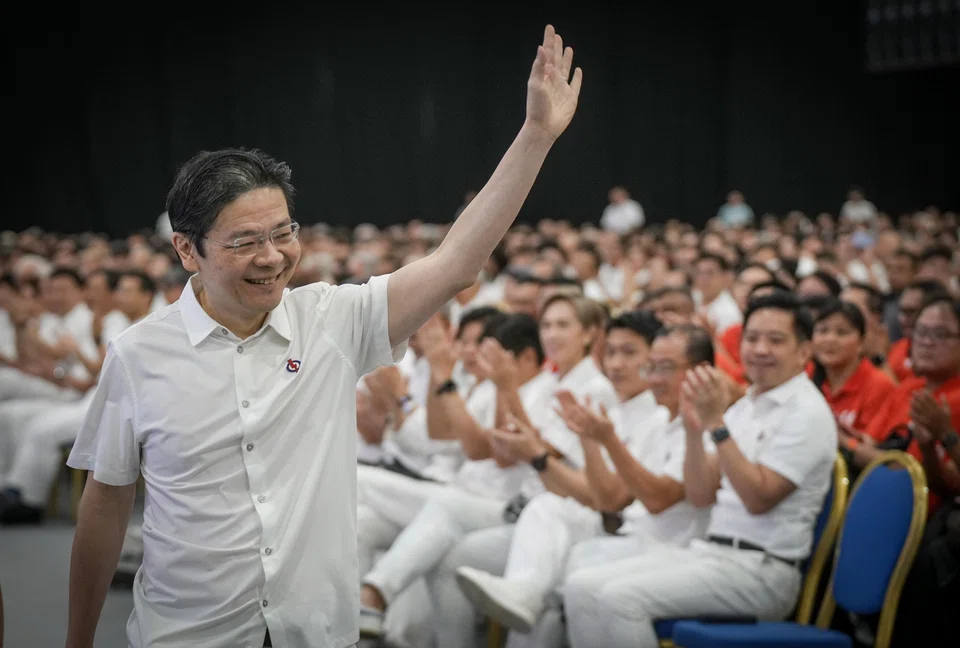
[SINGAPORE] The year 2025 may be remembered as solidifying Singapore’s transition to its fourth-generation (4G) leadership.
This year should bring a clearer sense of the 4G team’s priorities, with its economic strategy review to be completed by mid-year.
The city-state’s leadership transition officially began when Prime Minister Lawrence Wong took the reins in May 2024. But it was only a year later that he led the People’s Action Party (PAP) in his first general election (GE) as PM – and to an improved vote share of 65.57 per cent, bucking the trend of new prime ministers seeing lower vote shares.
Ahead of the GE, six political officeholders and 14 backbench MPs stepped down, making way for 24 new faces. Several of these new faces went on to take office in the new Cabinet, including Acting Ministers Jeffrey Siow and David Neo.
In an interview with the Financial Times in October, PM Wong said his hardest task so far has been managing people.
“One of the keys to the PAP’s success has been a full focus on renewing our team every election, and this is not easy to do at all,” he said. “It’s very easy to say, ‘Let’s just continue with the status quo, I don’t want to offend anyone, it’s okay, we all move along.’”
But neglecting renewal now means paying the price further down the road, he said.
4G leadership takes centre stage
Last April, US President Donald Trump announced his “Liberation Day” tariffs. Within two weeks, the Singapore Economic Resilience Taskforce (Sert) was unveiled, to help businesses tackle the new tariff environment.
To some observers, this swiftness evoked memories of the Covid-19 multi-ministry task force that had steered the city-state to safety before GE2020.
GE2025 was called soon after April’s developments. Holding it during heightened global uncertainty likely worked to the ruling party’s advantage by “reinforcing voter risk aversion”, said Nydia Ngiow, managing director for global trade and economics at strategic advisory firm BowerGroupAsia.
Singapore Management University law don Eugene Tan, however, doubts Trump had any “significant effect”.
He noted that margins in constituencies where the PAP faced the Workers’ Party (WP) were “pretty much status quo”. Rather, the PAP’s higher vote share “was due to the decimation of the non-WP opposition, which were hard-pressed to demonstrate their relevance”, he added.
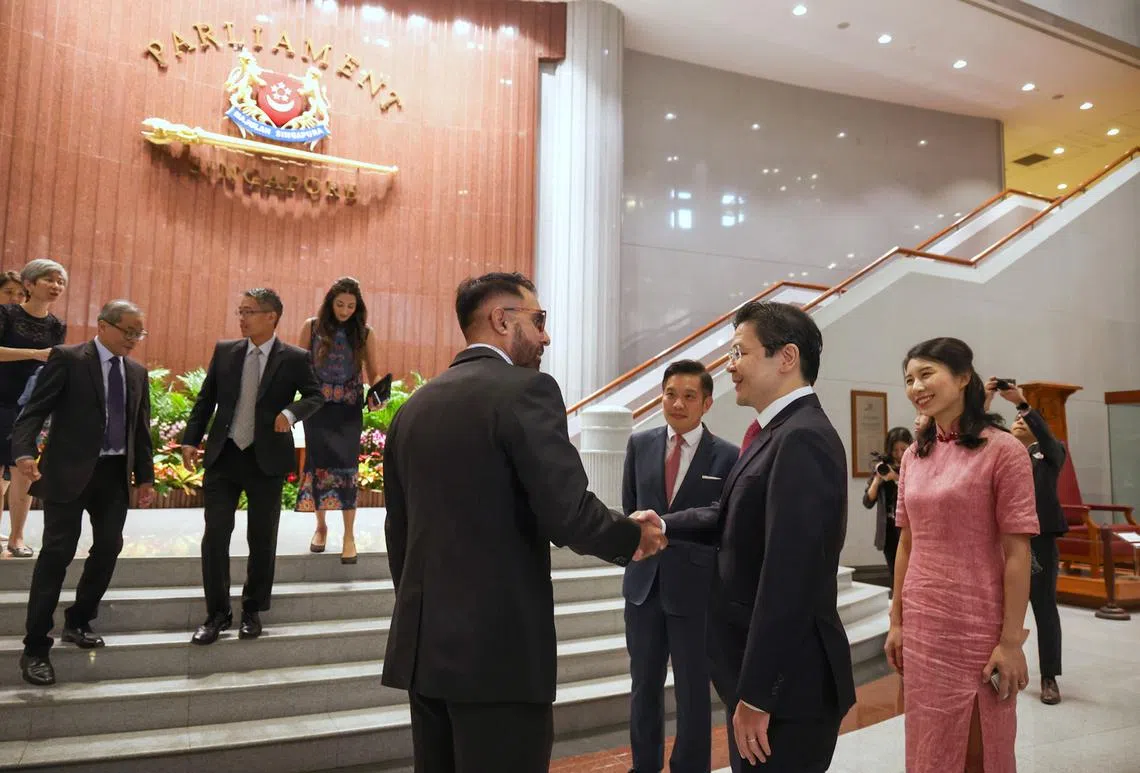
Teo Kay Key, senior research fellow at the Institute of Policy Studies, said it may take a while to see the character of the new leadership, as policies require time to take effect.
But she added: “In terms of approach and tone, they have tried to ensure that there are more communication points with the citizens, and allow more of the new individuals, especially officeholders, to speak up on behalf of the ministry they represent.”
Ngiow noted that retiring politicians included not just senior leaders, but also one-term backbenchers.
“This points to renewal focused on reshaping the broader bench rather than the top, creating space for new entrants but also shortening the runway for developing newer MPs,” she said.
Tackling long-term objectives in Budget 2026
Some observers dubbed Budget 2025 an “election Budget”, characterised by largesse in a year that was also Singapore’s 60th year of independence.
With another election unlikely for four to five years, Budget 2026 could focus on long-term issues such as climate change and ageing – themes also present in past years, said Denise Cheok, head of South-east Asia economics at Moody’s Analytics.
Ngiow said Budget 2026 is likely to “reflect a strategic integration of economic and social priorities, rather than a return to overt redistribution”.
“Instead of scaling back the social dimension, the government is expected to embed social challenges within its economic strategy.”
This approach can be seen in frameworks such as the Research, Innovation and Enterprise 2030 plan, where ageing is framed as a “grand challenge” with implications for healthcare, workforce participation, productivity and industry development, she added.
“A similar logic is likely to carry through into fiscal policy, aligned with PM Wong’s Forward Singapore agenda, which emphasises preparing society for long-term structural shifts by linking social resilience with economic competitiveness.”
Supporting businesses and households
Singapore ended 2025 on a better economic note than expected, with full-year growth at 4.8 per cent. But 2026 may bring the full brunt of US tariffs – which should be a focus of the next Budget, said Moody’s Cheok.
Maybank economists Chua Hak Bin and Brian Lee noted “ample fiscal space” to tackle headwinds, given that government revenue grew 10.4 per cent in the first half of fiscal year 2025.
However, DBS senior economist Chua Han Teng expects Budget 2026 to provide “calibrated and targeted policy support with fiscal responsibility and prudence in mind” – consistent with previous Budgets at the start of new government terms.
This is especially since the government expects softer growth of 1 to 3 per cent in 2026.
KPMG partners Ajay Kumar Sanganeria and Yong Jiahao expect Budget 2026 to address cost concerns and provide near-term support, particularly for households and small and medium-sized enterprises (SMEs).
But businesses may also get more help to bridge skills gaps in fast-growing areas such as artificial intelligence (AI) and sustainability, they said.
Similarly, Rohan Solapurkar, tax and legal leader at Deloitte Singapore, expects encouragement for companies to embrace AI.
Enhanced AI road map
Budget 2026 may update Singapore’s National AI Strategy (NAIS), said watchers. The current 2.0 iteration was released in 2023, just as generative AI burst into the mainstream.
“While NAIS 2.0 provides a framework for building AI capabilities and upskilling the workforce, more can be done to encourage corporates to redesign jobs and leverage AI to drive employees’ productivity,” said the KPMG team.
This includes having structured pathways and identifying essential AI competencies for specific roles, they said.
Deloitte’s Solapurkar said there must be continued investment in AI-related training, even as widespread AI adoption is encouraged.
“Smaller firms and mid-career workers often face steeper adjustment challenges and may therefore require more targeted support to ensure that AI adoption complements, rather than competes with, the workforce.”
Economic restructuring
Budget 2026 may also foreshadow eventual Sert recommendations.
This is even as business fears about US tariffs have cooled, according to Singapore Business Federation surveys. In April, four in five respondents expected to be hurt by US tariffs; in November, this fell to three in five.
Nonetheless, Sert’s work remains critical amid strong headwinds and tariff uncertainty.
Said Cheok: “While Singapore has come away with a baseline rate of 10 per cent, periodic flare-ups of tensions are likely to persist into next year, and it is not certain that the economy will perform as well as this year.”
Sert launched the longer-term economic strategy review in August. Five committees led by 4G members are consulting the public and working on recommendations to be published in mid-2026.
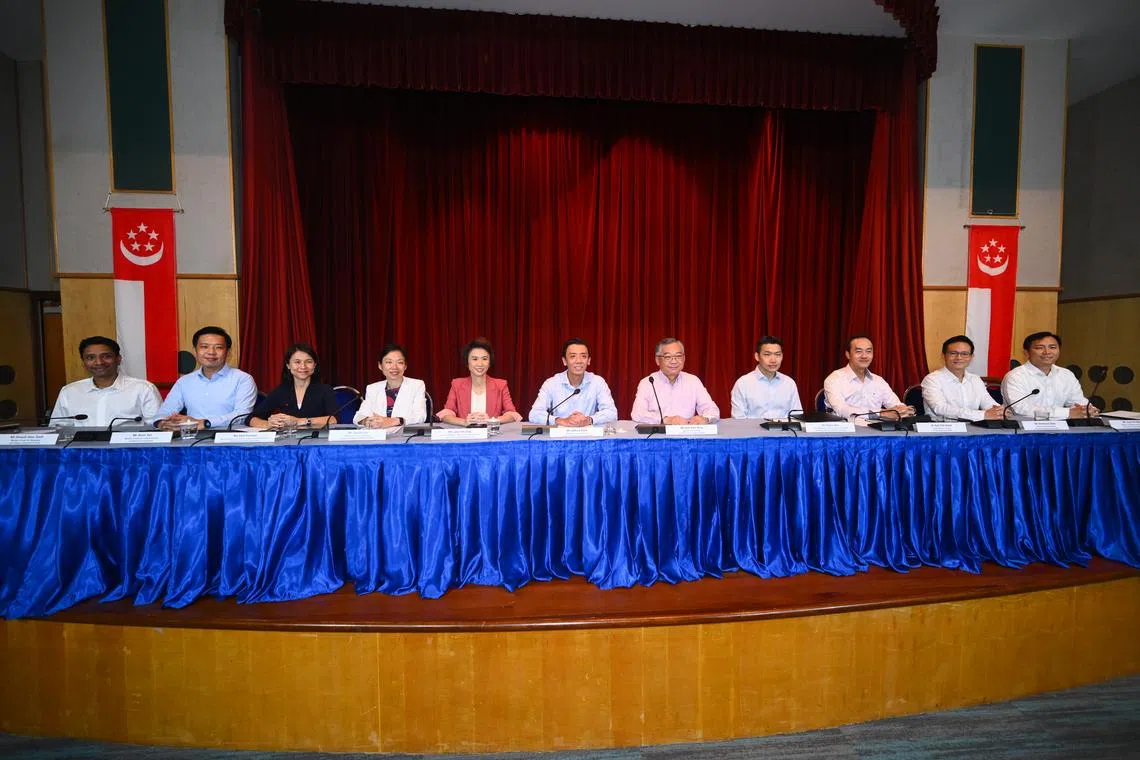
The KPMG team said that whatever happens on the tariff front, Sert’s focus may not shift even as it pivots “from crisis response to structural transformation”.
“As business confidence improves and near-term fears ease, Sert can also direct its attention to other areas where it can bolster Singapore’s long-term resilience.”
This would enhance the attractiveness of key industries such as semiconductors and pharmaceuticals, and help the country distinguish itself amid global volatility, they added.
For more of BT’s Budget 2026 coverage, go to bt.sg/budget26