

What makes a car ‘premium’? Survey suggests tech matters as EVs gain ground
A survey of premium car owners and prospective buyers suggest that technology, usability and value are becoming bigger factors in their purchase decisions

On some weekend afternoons, Albert Tayengco’s family would retreat to his parked electric vehicle (EV) in between activities.
His two-year-old son would take a nap, while his mother-in-law uses the massage function on her seat in the second row.
A built-in fridge keeps cold drinks ready. The cabin stays cool without an idling engine.
For Tayengco, a 42-year-old senior design engineer, owning a Denza D9 – an electric multi-purpose vehicle – has changed how his family spends their weekends.
“With our (previous) petrol car, we would need to go home for the toddler’s nap,” he said. “Now, we can just pop into a parking lot. The quietness gives us a bubble inside the car, where we get to relax and enjoy the experience.”
Tayengco, a Filipino who has lived in Singapore for almost 15 years, drove a pre-owned petrol-powered 1,984-cc SUV for two years. But Tayengco, who also has an eight-year-old son, felt that the interior layout was too cramped for a six-person household with two child seats.
Looking for a roomier vehicle, he replaced it in June with the D9 from Denza, Chinese carmaker BYD’s premium brand.
Denza was first launched in 2010 as a joint venture with Mercedes-Benz, before becoming a wholly owned BYD subsidiary in 2024.
“What surprised me was how complete the premium experience felt,” he said, citing ventilated seats, remote pre-cooling through an app, and cameras that make the large vehicle easier to park.
“Useful technology, comfort, and a quiet, smooth drive – these are increasingly what (I) expect from a modern luxury car,” he added.
EVs gaining ground
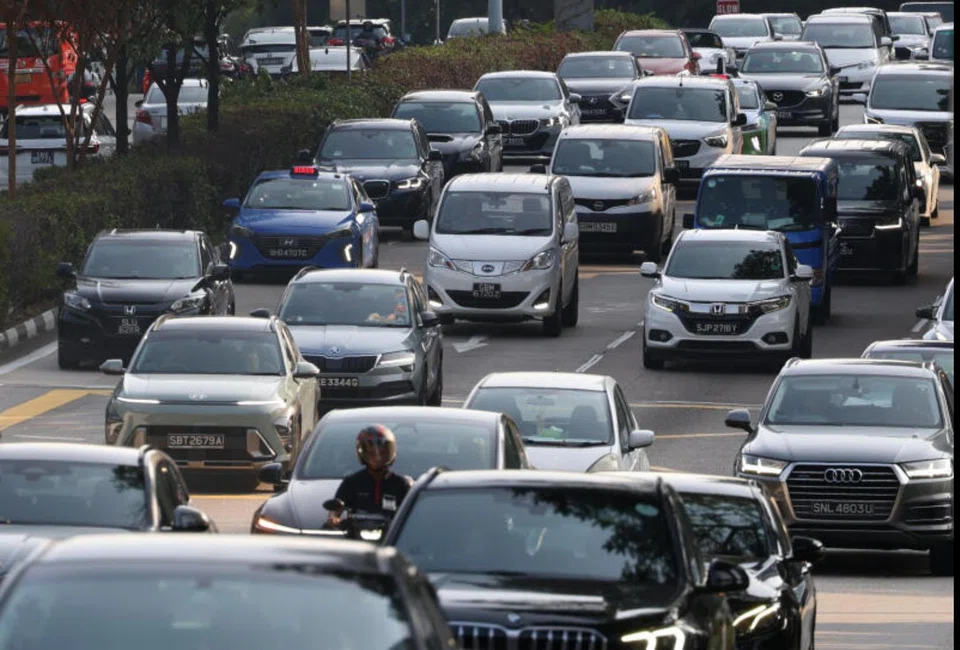
Tayengco’s experience comes as electric vehicles make inroads into Singapore’s premium car market.
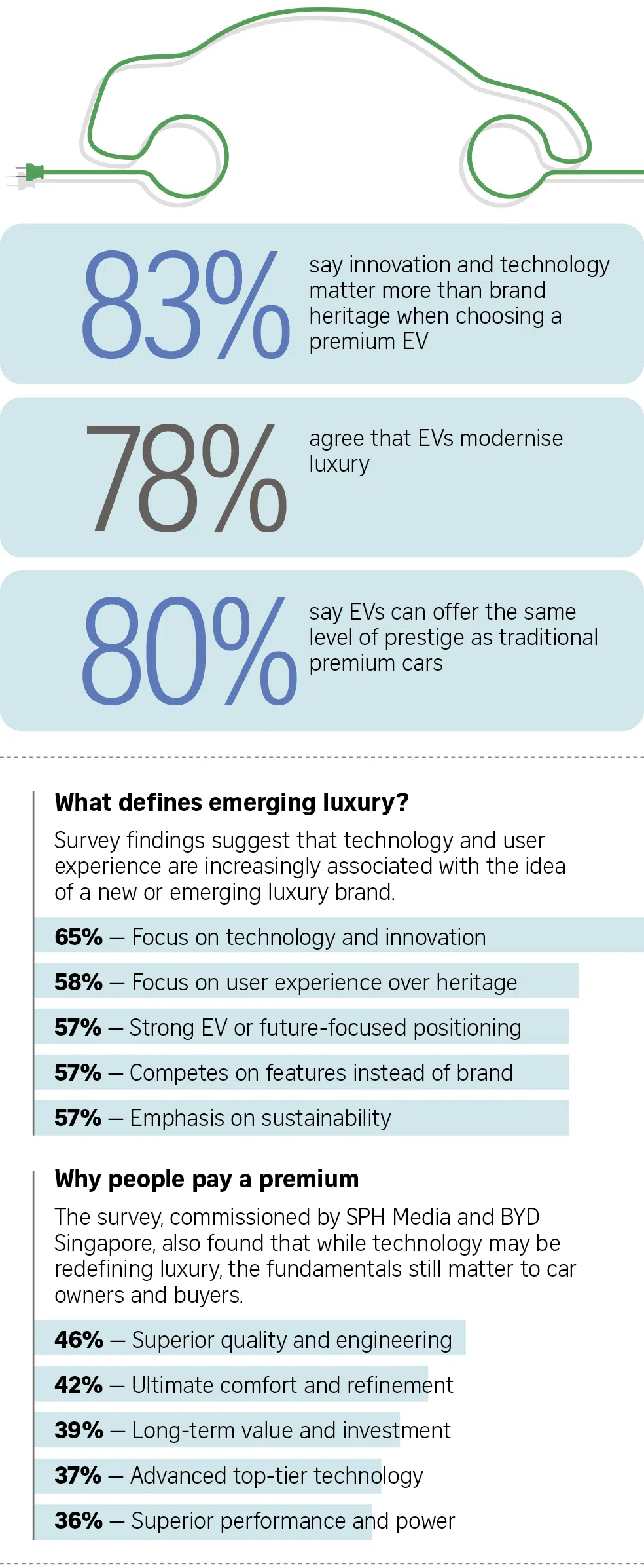
A recent survey of 300 premium and luxury car owners – defined as those who own cars worth S$300,000 and above – and prospective buyers found that 80 per cent believe EVs can offer the same level of prestige as traditional premium cars.
More than eight in 10 said innovation and technology take priority over brand heritage when they consider a premium EV purchase.
The survey was commissioned by SPH Media and BYD Singapore. Respondents were sourced through Kantar Profiles Audience Network and completed an online survey in April 2026. Kantar is an independent market research company.
Official data also points to EVs moving beyond the mass market as Singapore transitions towards cleaner-energy vehicles only by 2040.
Nearly four in 10 Category B Certificate of Entitlement (COE) registrations were EVs between January and September in 2025, according to The Straits Times’ analysis of Land Transport Authority data. This is up from 29.7 per cent in 2024 and 21.5 per cent in 2023. Category B COEs generally cover higher-powered cars, a bracket in which many premium models fall.
“EVs now offer the immediate acceleration, quiet refinement and technology-led cabin experience that many luxury buyers expect,” said Julian Kho, general manager of automotive platform Sgcarmart.
“Silence and smoothness have become part of the premium experience,” he added. “In that sense, electrification aligns well with what luxury buyers already want: refinement, effortlessness and technological superiority.”
Carmakers are responding by expanding their premium offerings, he observed. One example is BYD, which launched Denza in Singapore in 2024, the same year the carmaker became the Republic’s best-selling car brand on surging EV sales.
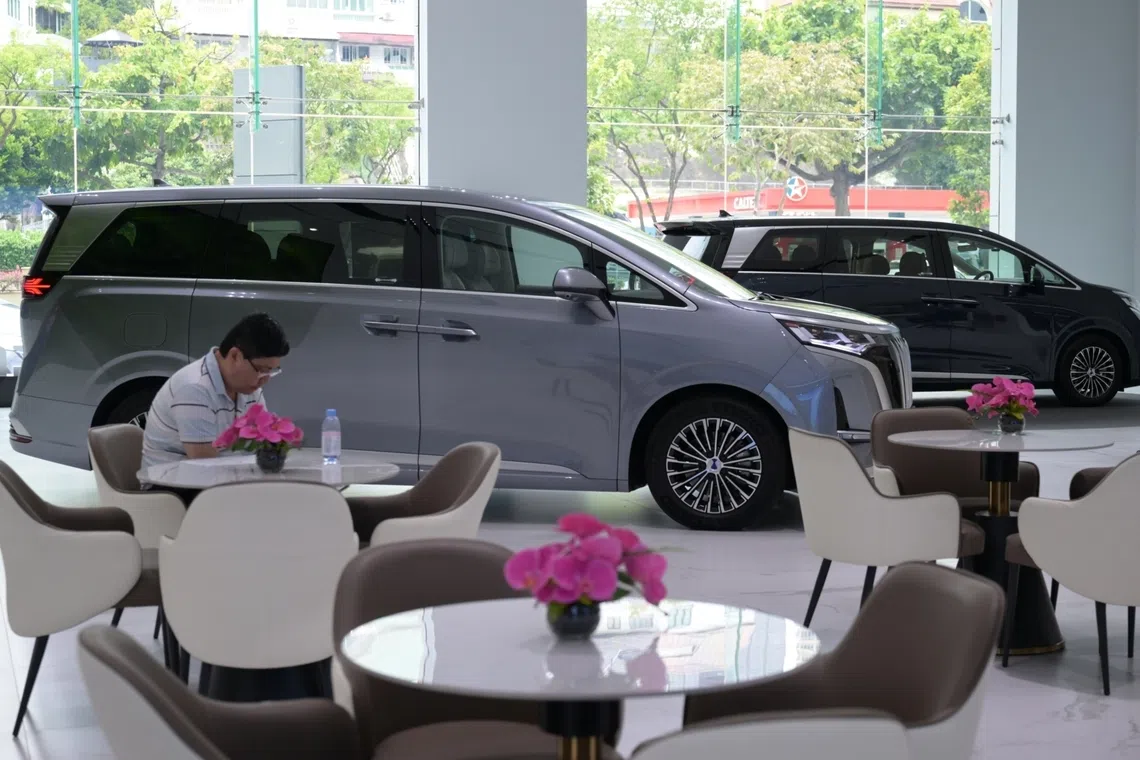
BYD Singapore’s managing director James Ng said that customer response to Denza has been “very encouraging”, with over a thousand units sold since 2024. Denza registrations are grouped under BYD in LTA data. There were 9,028 new BYD cars registered in the first eight months of 2026.
Denza’s approach is to “make practicality itself feel luxurious”, he added, instead of replicating the legacy luxury proposition.
“A feature such as a large second-row seat is practical. When that seat is ergonomically designed, electrically-adjustable, ventilated and equipped with massage functions and individual controls, practicality becomes part of the luxury experience,” he said.
“The opportunity is to bring together the qualities customers already associate with a premium vehicle, while adding a new dimension: intelligent electrification.”
For example, Denza models use versions of BYD’s DiSus suspension technology, he said. The system can adapt to driving conditions to improve comfort and stability, with some versions designed for uses such as off-road driving.
Academic and former motor trader Victor Kwan said EVs have gained ground in the premium segment, where buyers see more value in attractive designs, high-tech equipment and competitive pricing.
Acceptance is more limited at the market’s top end, where price tags punch in above S$1 million, he observed. High-end luxury buyers are willing to shell out for prestige, craftsmanship and strong resale value.
Shifting priorities
For some car owners, a legacy brand name may still carry weight, but the broader proposition of what a vehicle offers is increasingly shaping how they assess a premium car, experts said.
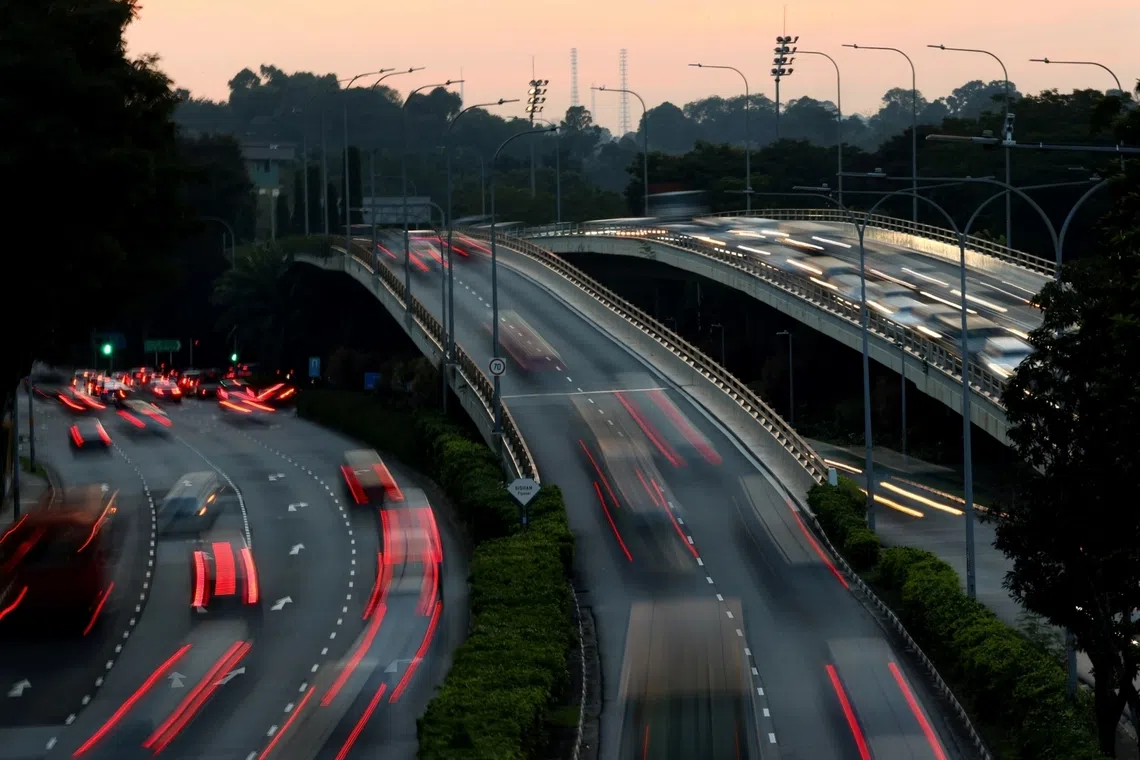
“In the past, brand heritage was built around engines, motorsport, mechanical engineering and decades of reputation,” said Sgcarmart’s Kho. “But with EVs, many of the traditional differentiators have been reset.”
Kwan agreed that buyers in the premium market are placing greater emphasis on technology and connectivity. Acceptance of Chinese car brands in the mass and premium segments is also growing, he said. “There is now a lot of trust in Chinese quality and technology.”
BYD’s Ng said the immediate focus is growing the Denza brand in Singapore, expanding products beyond the D9 and B5 models, and strengthening the ownership experience. It launched the B5 Zenith, a higher-spec version of the B5, in September, and expects to introduce more Denza models in 2027.
“For a luxury customer, value is not simply about paying less,” he added. “It is about receiving more from the product and the brand throughout the entire ownership journey.”
Pre-school owner, James Wong, who lives with his wife and three adult children, spent two years researching EV models before deciding on a Denza D9 last year to replace the family’s ageing 2,400-cc MPV.
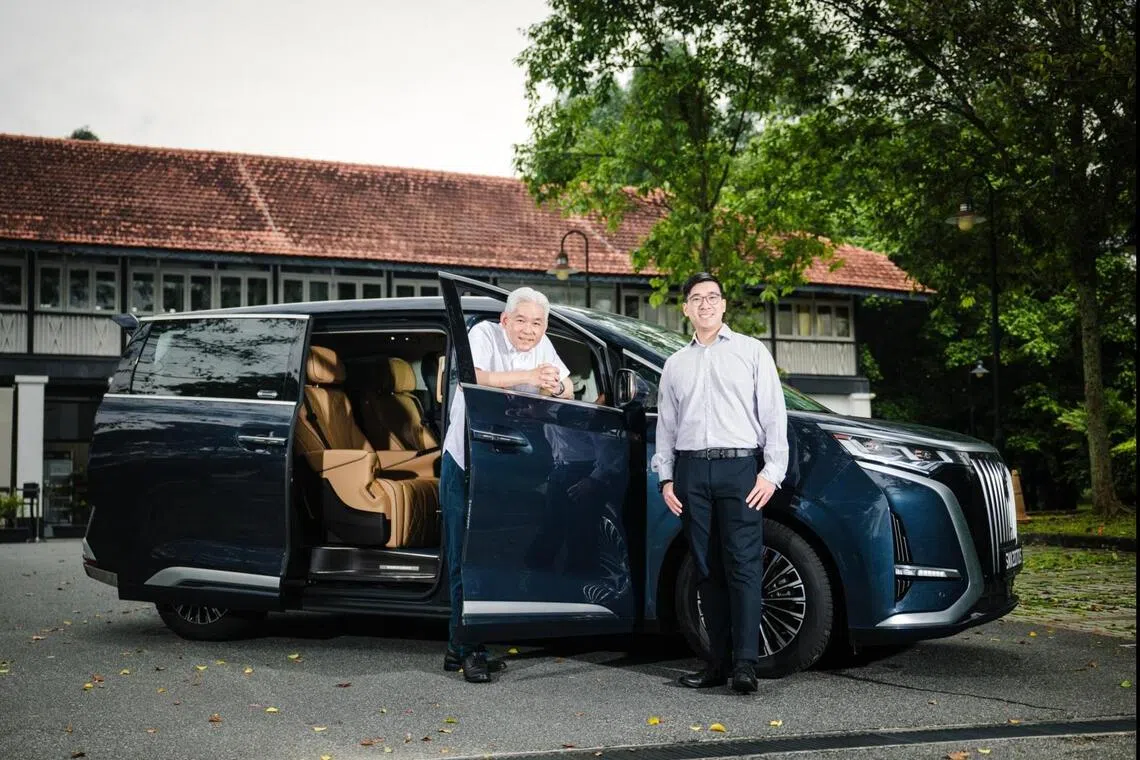
The 54-year-old, who clocks around 40,000km on his vehicle per year, was drawn by lower running costs. He previously paid around S$800 a month for petrol, but now pays just over S$200 to charge his electric car monthly using a private charger.
Depreciation – a common concern when it comes to EVs – mattered little to Wong, he said, as he drives his vehicles for around eight to nine years before switching to newer models.
In his search, Wong, who has driven Japanese cars for decades, was happy to consider new EV players alongside legacy brands.
His decision to go with a Denza was not based on one feature. Rather, after weighing everything – from the space, cabin materials to driving assistance technology and after-sales service – Wong concluded that the D9 offered “much better value, dollar-to-dollar” than its peers.
“I’m a very practical person,” he said. “For me, luxury is usability.”
- In Perspective is a research-led content programme by SPH Media that combines insight-driven storytelling with expert perspectives on key issues shaping society.
In partnership with BYD
Decoding Asia newsletter: your guide to navigating Asia in a new global order. Sign up here to get Decoding Asia newsletter. Delivered to your inbox. Free.
Share with us your feedback on BT's products and services
TRENDING NOW

GCash parent Mynt rises in market debut after South-east Asia’s top 2026 IPO

In the age of AI, what is a university education for?

Singapore to use ‘every legal and regulatory lever’ against companies linked to haze: Shanmugam

‘IPOs are not the only vehicle’: KKR heads for record exits even as firms stay private for longer

