5 Questions with quantum scientist Dr Tan Si-Hui

Sharanya Pillai
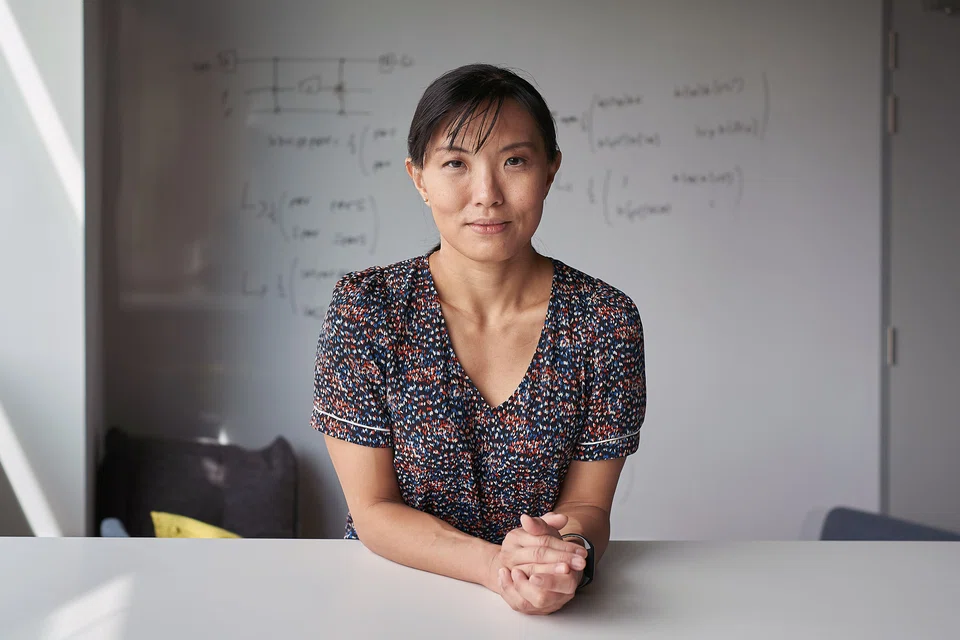
IMAGINE a future where computers can solve a problem that would have taken current machines 10,000 years to crack. That’s the possibility that quantum science startups are vying for, even as no one has built a commercial quantum computer yet.
Among the startups in this field is Singapore’s Horizon Quantum Computing, which is developing tools that could prepare us for a quantum future. Its chief science officer, Dr Tan Si-Hui, spent over 18 years diving into the great unknowns of quantum science, before taking the leap into the startup world.
She gives us a dummy-proof guide on what quantum computing is, why it matters, and how you could be part of the field even without a specialised PhD.
1. What’s quantum computing – how would you explain the concept to a seven-year-old?
Nobel Laureate Richard Feynman once said: “I think I can safely say that nobody understands quantum mechanics.” That quote always resonated with me because it mirrors my experience of learning about quantum mechanics, the branch of physics upon which quantum computers are built.
The field is full of ambiguous, open-ended questions and many unknowns. For me, Feynman’s quote illustrates how deep and wondrous quantum mechanics is. If you think you understand it, you’re fooling yourself and closing yourself off to possibilities that can lead to future discoveries.
With that in mind, let’s talk to our seven-year-old child. We’ll show her a ball that can turn either red or blue and tell her that computers are made up of millions of bits. Each bit is like the ball because it can be either red or blue. When she plays a game on a computer, she makes decisions, picking between different options. Depending on the choice she makes, the processor changes the colour of each ball to either red or blue.
Now let’s give the child a ball that has different amounts of red and blue swirling inside of it. In this case, the ball is like a quantum bit inside a quantum computer because it can be both colours at the same time. If the child is playing the game on a quantum computer, she can tell it that she wants to pursue two different options simultaneously because the computer can make the ball both red and blue at the same time.
The ability to express multiple options at the same time makes a quantum computer more powerful than a conventional computer because a user can explore a lot of different actions at once whereas a conventional computer can only explore one action at a time.
2. You were previously a research scientist at institutions including A*STAR and the Centre for Quantum Technologies. What inspired you to make the jump from academia into the startup world? What was the biggest mental barrier you had to overcome?
As I said, within the field of quantum, there’s a lot of unknowns left to discover, which means we don’t yet know how the science of today will impact our tomorrow.
During my experience in academia, I felt pigeonholed into my own expertise, which put some restrictions on how much I could contribute to furthering the technology. Moving to industry allowed me to apply what I know about this fascinating field in ways that could benefit people.
At the time I was invited to join Horizon, I had already been working with the company’s CEO, Dr Joe Fitzsimons. He had this exciting idea for a startup, and I decided to make the jump because I could contribute to the quantum revolution while working with a scientist whom I like and respect very much.
While I didn’t have a lot of mental barriers to overcome when making this decision, the transition to industry did require some adjustments. Working in academia can be isolating. Much of the work is individual research.
Working in industry requires collaborating with a lot of people on a daily basis– people with different skills and backgrounds. It’s exciting to build something meaningful with all these people, but it comes with challenges such as making sure you communicate clearly and effectively.
3. You’ve spoken out in the media against the presence of systemic biases against women in science, technology, engineering and mathematics (STEM). Why do you think these biases continue to exist?
I think a lot of these biases are rooted in social conditioning. At an early age, many girls are just as interested in maths and science as boys. However, for a variety of reasons including unconscious biases and classroom management practices, boys are allowed to dominate conversations in these subject areas.
Without room to explore these subjects, fewer girls go on to pursue them at a higher level, which in turn results in STEM fields that are male-dominated.
I went to an all-girls secondary school. I enjoyed science. I never thought about whether the subject was for girls or boys because all the subjects were for girls. By the time l got to junior college, I knew I wanted to pursue physics. I joined co-ed science clubs, and the boys obviously had a preference for displaying different behaviours than those I was accustomed to.
These behaviours were slightly off-putting but not enough for me to stop pursuing the degree. However, if I haven’t had a foundational experience where I was able to explore and excel in these subjects, I might not have pursued physics.
I think the key to correcting some of these biases is ensuring equal access to programmes for all students and working to build inclusive environments in schools and the workplace.
4. What is the best piece of advice you’ve received in your career and from whom? How is it still relevant to you today?
When I finished my PhD, I hesitated over accepting a new position: I was stressed about how the job may turn out. MIT Professor Jeffrey Shapiro, who was the co-supervisor for my PhD, told me, “Well, just give it a shot and see how it goes. Then, you can weigh your choices and change if you wish.”
He was right – many of life’s choices aren’t all-or-nothing decisions. I now apply this attitude to many things in my life, such as leaving academia to work at a startup.
For scientists, the transition from academia to industry is often perceived as a one-way leap of faith, but I believe that the pathway is more flexible than it seems, so it makes sense to try something new. By taking action, you gain more experience on which to build your future decisions.
5. Why should people consider working in the quantum industry, even if they don’t have a PhD in physics or quantum computing?
Quantum computing is a promising technology that’s just taking off. There are still a lot of unknowns when it comes to unlocking its potential, which creates a lot of opportunities, especially for people with peripheral expertise.
Electrical engineers, technicians, software developers– all of these professionals have skills that could help quantum computing reach its potential, and many parts of quantum technology have components that need to be worked on by people with these skills.
One of the challenges in recruiting these people to the field is that they aren’t aware of the part they can play in the quantum computing revolution. In general, academia can be quite siloed without cross-departmental work, so students in other disciplines don’t get exposed to quantum computing or understand the ways in which they can contribute to the field.
As we continue to build our team at Horizon, we need software engineers, front-end developers, and technicians. We also need product managers, marketers, and more. Every discipline has people who are smart and talented, and they certainly don’t all have PhDs. We’re keen to find these people and harness their skills to advance the quantum computing industry.