

AI adoption raises headcount growth among Singapore firms of all sizes: LinkedIn
Mid-sized enterprises show strongest growth in headcount, but hiring slows among Singapore businesses

[SINGAPORE] Local businesses with stronger artificial intelligence (AI) capabilities are recording higher headcount growth than their less AI-enabled peers across all company sizes, according to LinkedIn’s latest platform data released on Wednesday (Nov 18).
The advantage is most pronounced among mid-market enterprises (MMEs), where AI-enabled businesses recorded 1.8 percentage points higher headcount growth than their less AI-enabled counterparts. Among small and medium-sized businesses (SMBs), the corresponding advantage was 1.4 percentage points.
The data covers the period from September 2025 to September 2026.
Compared to nine other selected markets globally, Singapore ranked second for MME headcount growth. The city-state’s average headcount per MME rose by 2.3 per cent, behind only Germany at 3.5 per cent.
Singapore was ahead of the UK and Italy (2.2 per cent each), the Netherlands (2 per cent), the United Arab Emirates (1.7 per cent), Australia (1.6 per cent), France (1.5 per cent), the US (0.7 per cent) and Brazil (0.3 per cent).
The findings suggest AI capabilities could be an important factor associated with business growth, particularly for smaller companies that may have fewer resources than larger ones.

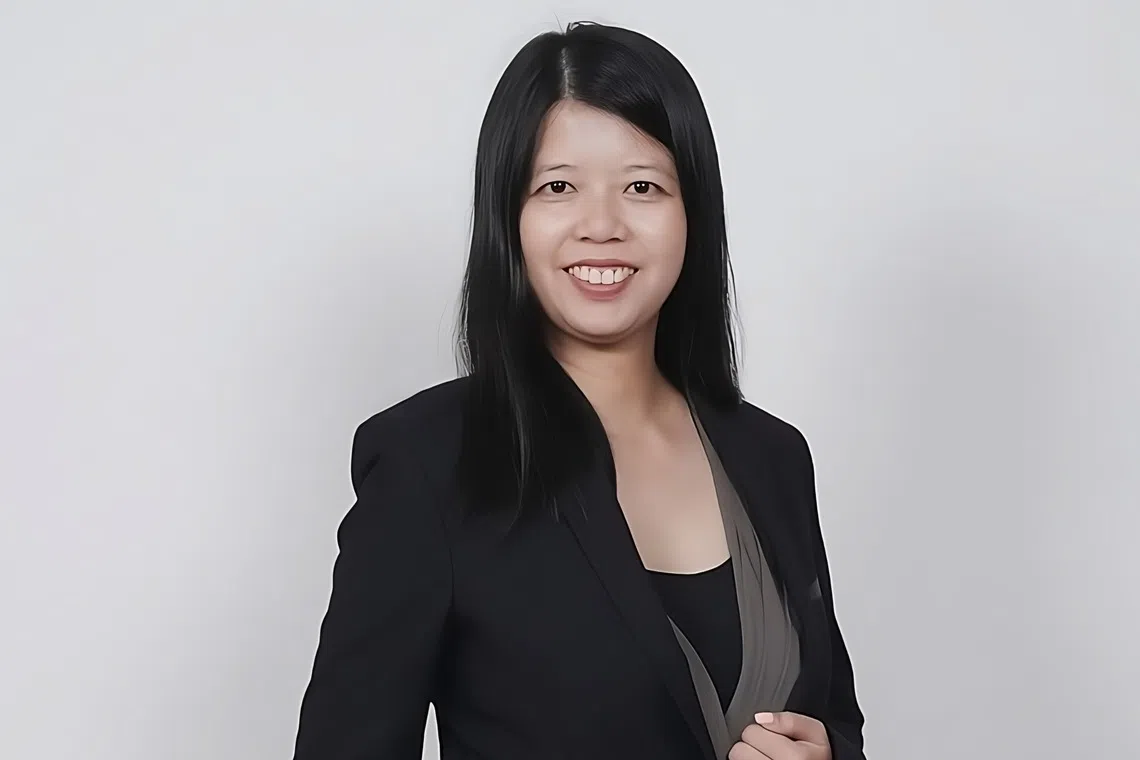
Chua Pei Ying, LinkedIn’s head economist for the Asia-Pacific, told The Business Times in an interview that by automating routine tasks, improving productivity and helping businesses make better decisions, AI frees up resources for companies to focus on growth opportunities.
“We are seeing this reflected in our data, with businesses that have stronger AI capabilities recording stronger headcount growth,” she said.
AI-enabled businesses are defined as companies where at least 5 per cent of employees have AI-related talent. The figures compare the difference in headcount growth between AI-enabled and less AI-enabled companies within each business-size category. They do not establish a causal relationship between AI adoption and workforce expansion.




AI-enabled growth potential
LinkedIn’s data suggests that Singapore’s MMEs have stronger AI engineering and AI literacy capabilities than smaller businesses. In the wider business landscape, SMBs also lag behind large enterprises in both areas.
LinkedIn classifies businesses as SMBs (fewer than 201 employees), MMEs (201 to 1,000 employees), enterprises (1,001 to 5,000 employees) and large enterprises (over 5,000 employees).
Only 12.5 per cent of SMBs have AI engineering skills, compared with 25.1 per cent in large enterprises. The gap is also evident in AI literacy, with just 3.3 per cent in SMBs possessing these skills, against 11.4 per cent in large enterprises.
The disparity between SMBs and MMEs is narrower, suggesting that smaller businesses may find it easier to close the gap with mid-sized firms.
But there are signs of progress. AI engineering skills among SMBs have increased by 3.5 percentage points annually, while AI literacy skills have risen by 1.5 percentage points.
Chua said there is an opportunity for smaller businesses to build on this momentum.
“By investing in AI skills and capabilities, they could improve productivity, make better use of their resources and find new ways to grow,” she said.
AI’s potential to drive business growth is not confined to digital-first industries. LinkedIn’s data shows that some of the largest headcount growth advantages associated with AI capabilities are emerging in traditional, operationally intensive sectors such as utilities, real estate and logistics.
In Singapore, utilities companies recorded the largest advantage, at 10 percentage points, followed by real estate and equipment rental at 7.3 percentage points, and transportation and logistics at 4.7 percentage points.
Chua said these findings highlight how AI can create opportunities for businesses beyond the technology sector.
“For example, logistics companies can use AI to plan more efficient delivery routes, while utilities companies can use it to predict when equipment needs maintenance,” she said.
Hiring patterns
Despite the stronger headcount growth associated with AI capabilities, hiring activity among Singapore’s businesses has softened.
LinkedIn’s September 2026 data showed hiring declined year-on-year among companies of all sizes. MMEs recorded a 9.4 per cent decline, and smaller businesses, a 10.5 per cent fall; large enterprises experienced an 11 per cent drop.
MMEs therefore recorded a smaller decline in hiring activity than their smaller and larger counterparts.
Yet, despite the more cautious hiring environment, MMEs continued to post the strongest average headcount growth, at 2.3 per cent.
Chua said that hiring rates reflect the pace of new employees joining a company, while headcount growth measures the net change in its workforce, taking into account both employees joining and leaving. This means a company’s hiring activity can slow, but its overall workforce can continue to expand.
Hiring tends to fluctuate through the year and global economic uncertainty has also made businesses more cautious about when and where they recruit, noted Chua.
LinkedIn’s data over the past decade shows a distinct seasonal pattern in Singapore’s hiring activity. The strongest activity happens in May and January, averaging about 45 per cent and 35 per cent above the annual average, respectively.
December and February tend to be the quietest months, with hiring activity averaging about 35 per cent and 30 per cent below the annual average, respectively.
LinkedIn’s data also highlighted the strong performance of Singapore’s MMEs, which are leading in both business expansion and workforce growth.
Between 2025 and 2026, the number of MMEs in Singapore grew by 7 per cent, the second-highest growth rate after the UAE’s 9.2 per cent.
Smaller businesses also grew, with their numbers rising by 6.7 per cent over the same period. However, their average headcount grew by a more modest 1.1 per cent.
Chua attributed the stronger performance of Singapore’s mid-market businesses, in part, to Singapore’s position as a highly connected regional business hub.
“Singapore is often a launch pad for businesses looking beyond our borders for growth opportunities,” she said, adding that MMEs are particularly well-positioned to pursue these opportunities.
Decoding Asia newsletter: your guide to navigating Asia in a new global order. Sign up here to get Decoding Asia newsletter. Delivered to your inbox. Free.
Copyright SPH Media. All rights reserved.
TRENDING NOW

South-east Asia has lost Nvidia’s best salesman

‘If there’s a price to be paid, so be it’: George Yeo says Singapore must safeguard its reputation

Demand, tech capabilities position Apac and AI as Skyscanner’s next growth frontiers: CEO Bryan Batista
CapitaLand, Far East, Sing Holdings team up for S$1.82 billion bid for Jurong Lake District site

