

Bezos and Gates back Synchron in drive for brain implant breakthrough
 Add BT as a preferred source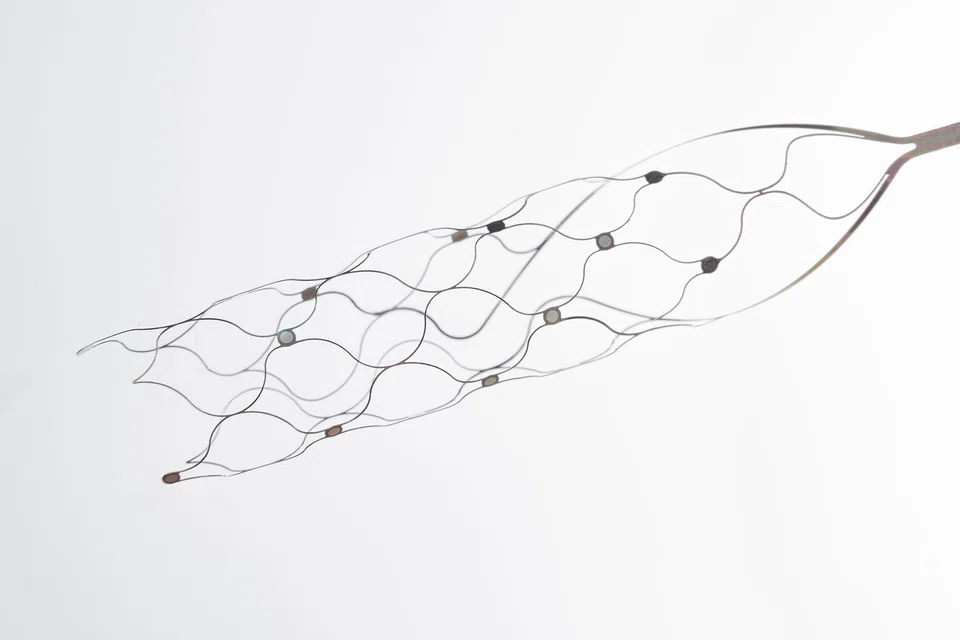
LAST March, brain-computing interface expert Tom Oxley sat down to dinner with Amazon.com founder Jeff Bezos to talk about Oxley’s nascent company, Synchron That meal in Ojai, Calif, ended with something better than dessert: Bezos told Oxley that he wanted to invest in the business.
Synchron said on Thursday (Dec 15) it completed a US$75 million funding round, part of it from Bezos Expeditions.
The financing was led by ARCH Venture Partners, and includes a cheque from Gates Frontier, the venture investment arm of Microsoft co-founder Bill Gates, and others. Existing investors also participated, including Khosla Ventures – whose founder, Vinod Khosla, introduced Oxley to Gates.
Brain-computer interfaces, known as BCIs, can interpret and stimulate parts of the brain and are seen as a possible treatment for brain injuries. New investors approached Synchron “through the lens of making an impact in neurology in an area of need,” Oxley said in an interview. They “saw BCI as a future therapeutic.” About 100 million people globally have upper limb impairment, he said, and could benefit from the technology.
The cash brings Synchron’s total funding to US$145 million. That places it behind Elon Musk’s Neuralink and Max Hodak’s Science on fundraising, according to research firm Pitchbook, but far ahead of most other BCI companies. It’s an important ranking, given the expense of advancing BCIs through the US Food and Drug Administration (FDA) approval process.
Synchron’s Switch device aims to help paralysed people, such as those with amyotrophic lateral sclerosis (ALS), communicate by controlling computer cursors with their minds.
The company has already enrolled three patients in a six-person US feasibility trial and implanted the device in two of them. Oxley expects the remaining patients to enrol and receive their implants in the next few months.
Doctors will observe them for a year and report findings to the FDA. Two years ago, the agency gave Synchron “breakthrough” status, allowing it to undergo a relatively streamlined approval process.
The founder’s next big goal is launching an FDA pivotal trial, a necessary step for the Switch to be eligible for Medicare and insurance coverage. Winning that eligibility would put the company on a path towards future revenue.
Investors had a burst of enthusiasm for BCI startups in 2021, with some 49 deals attracting US$568 million of investment, according to Pitchbook. That tailed off this year to 37 deals at US$263 million of funding through Nov 28, but that’s still the second-highest since 2015.
Unlike the devices proposed by many other BCI companies, which typically involve various types of brain surgery, Synchron’s system gets implanted into the jugular vein in a process similar to inserting a coronary stent. From there, its tiny electrode-studded stentrode travels through the bloodstream into the brain’s motor cortex.
The implant works by communicating via a tiny wire with a second implant in the chest. A transmitter then sends signals to a computer outside the body, near the patient.
Ari Nowacek, a principal at ARCH Venture Partners, will join Synchron’s board of directors, while ARCH managing director Robert Nelsen will join as a board observer. BLOOMBERG
Decoding Asia newsletter: your guide to navigating Asia in a new global order. Sign up here to get Decoding Asia newsletter. Delivered to your inbox. Free.
Share with us your feedback on BT's products and services
TRENDING NOW
ComfortDelGro’s Zig to buy S$10 million worth of BYD cars for private-hire fleet

Singapore telco price war squeezes earnings, strengthens case for StarHub-M1 deal, say analysts
Sats slides 13.6% as investors dump shares on profit-margin squeeze

When every phone becomes a satellite phone, what happens to Asia’s telcos?

