Japan startup raises 4 billion yen to build space robot workforce
 Add BT as a preferred source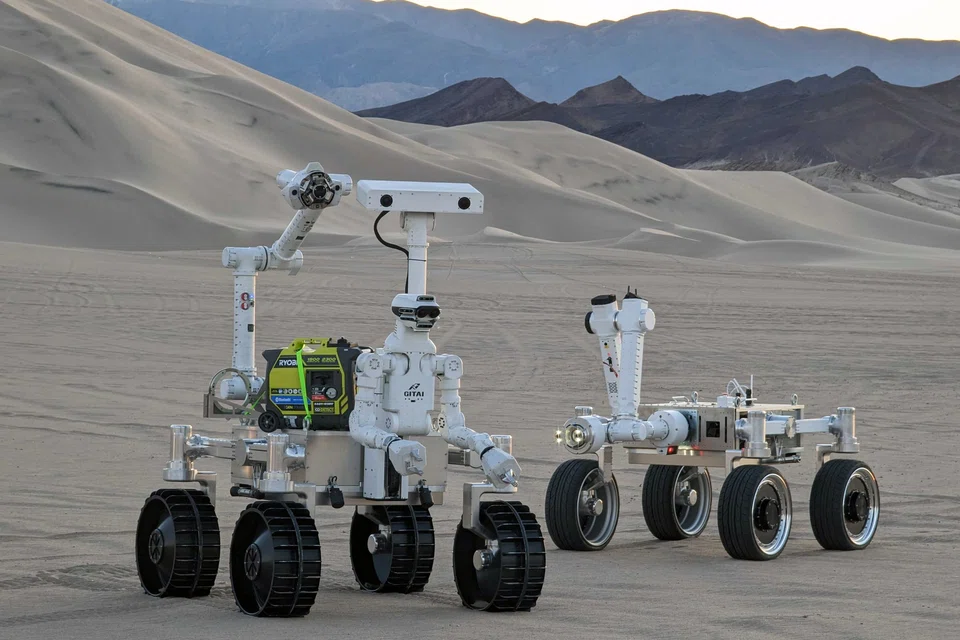
THE Japanese startup Gitai, fresh off raising a new round of funding, is expanding in the US as it seeks to create a robot workforce that will reduce the costs and risks of operating in space.
While Elon Musk and Jeff Bezos are working on rockets and the challenges of getting to space, Gitai chief executive officer Sho Nakanose is focused on labour costs. He believes it’s too risky and impractical for humans to assemble and inspect machinery in space, while equipment now used is far too expensive.
“The bottleneck of the space industry has been changing rapidly,” Nakanose said in an interview on Bloomberg TV on Monday (May 29). “Huge space companies such as SpaceX and BlueOrigin are solving the space transportation problem, and now the bottleneck has changed from transportation costs to operational costs.”
He envisions space robots that can handle routine work on the moon or Mars at a fraction of the cost of existing options, much like Musk’s SpaceX has brought down the expense of sending rockets into space. Gitai’s robot arms and rovers would provide safe and affordable labour and reduce operational costs “by 100 times”, he said.
Tokyo-based Gitai just closed a 4 billion yen (S$38.48 million) funding round to accelerate development of the remotely-controlled robots. The company will use the money to staff up in the US, where it’s expanding to recruit engineers and prepare its robots for work in space, Nakanose said.
The seven-year-old startup’s robotic arms and rovers can remotely perform routine construction work ranging from solar panel installation to welding, as well as inspect equipment and conduct maintenance and assembly tasks. But to succeed in space, they would need to also withstand and mitigate radiation exposure and work as efficiently as possible.
“We design and manufacture space robots, such as inchworm and robotic arms, and lunar robotic rovers,” Nakanose said. “We have successfully conducted our first tech demo inside the International Space Station (ISS) in 2021. And we are conducting the next tech demo – this time outside the ISS – within this year.”
Space startups around the world are flocking to the US, drawn by Nasa contracts now pouring into private companies. Nasa hopes that the money will form the building blocks of what will one day become a lunar economy – a future where spacecraft carries people and scientific equipment to the lunar surface, and mine the moon for rare metals and data.
“The Japanese space market is limited,” said Nakanose, speaking from his new base in Los Angeles. “We decided to expand our business in the US.”

Gitai’s investors include affiliates of Global Brain, Mitsubishi UFJ Financial Group and Yamato Holdings. BLOOMBERG
Decoding Asia newsletter: your guide to navigating Asia in a new global order. Sign up here to get Decoding Asia newsletter. Delivered to your inbox. Free.
Share with us your feedback on BT's products and services