Singapore biotech startup Lucence expands across Asia, US as demand grows for preventive health tests
It aims to make its tests for the detection of cancer and other diseases more accessible

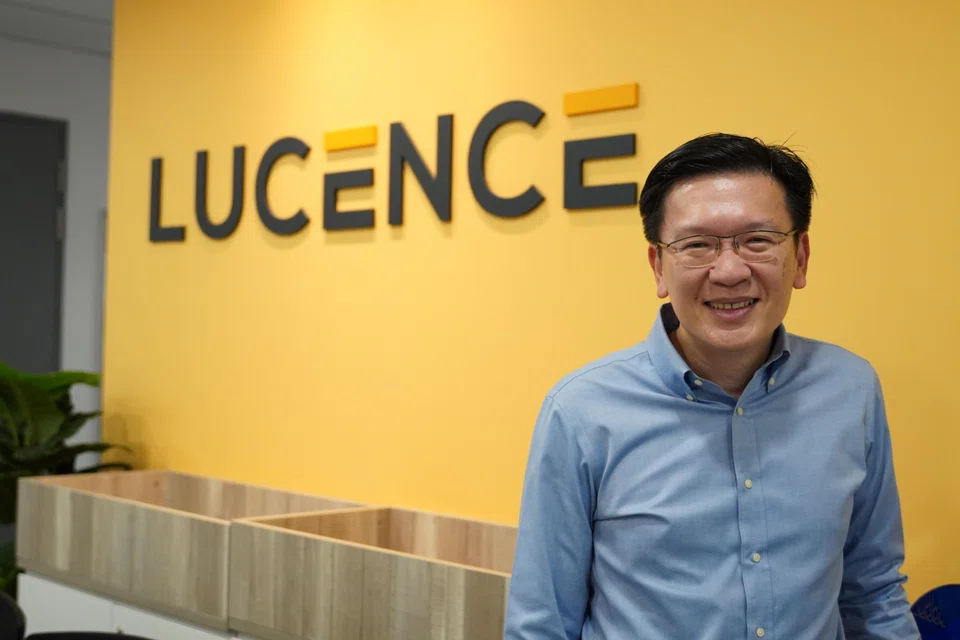
[SINGAPORE] Singapore biotech startup Lucence is expanding across Asia and the US as it rides a growing wave of demand for preventive healthcare. At the forefront of its offerings are its liquid biopsy tests that can screen for up to 50 types of cancer, combining both DNA and RNA testing.
Lucence has obtained regulatory approval for these tests in the US; and Medicare, a government-funded health insurance programme in America, approved them for its beneficiaries in 2023.
Now the Mayo Clinic, one of the largest US healthcare groups, has partnered it to distribute the tests across the country, said Dr Tan Min-Han, Lucence’s founder and CEO.
Its liquid biopsy tests are already being distributed across South-east Asia. The startup, which was founded in 2016, has also expanded into the Philippines. In Singapore, it is looking to tap the government’s investment of S$37 billion over five years from April 2026 to boost research, innovation and enterprise.
“The company continues to expand and solve the problems around cancer screening and care for people across a much wider scale,” Dr Tan told The Business Times.
“If we are going to be a successful hub, we must be able to export this to help (everyone), not just in Singapore, but (also) the rest of the world. So this market expansion into the US, South-east Asia is a very logical part of that.”
Lucence is a spin-off from the Agency for Science, Technology and Research (A*Star), and raised a US$20 million Series A round back in 2019 led by IHH Healthcare. Notable investors in the round included SGInnovate, Temasek’s Heliconia Capital, and early Razer investors Koh Boon Hwee and Lim Kaling. Tan Min-Liang, the CEO of Razer, is Dr Tan’s brother.
New research
Lucence is not sitting still on the research front either. Early findings from a study with the Singapore General Hospital and the Diagnostics Development Hub, an A*Star platform, show that its urine-based liquid biopsy test holds promise in being able to detect stage I and II urological cancers.
“Cancer testing should be easier, less invasive and more useful for doctors and patients. These findings are encouraging because they show that a simple urine sample could help pick up signals of urological cancers,” said Dr Tan.
Lucence has also leveraged its liquid biopsy tests to detect cardiovascular disease. This capability was always available, he added, and the test CardioHemeRisk was launched earlier this year.
The test has been mentioned positively and used by Dr Eric Topol, a noted US cardiologist, in his book Super Agers, said Dr Tan.
“This all happened in the last few months. Our technology that underpins all our liquid biopsy tests is sensitive to the mutations that arise from both cancers and other diseases of ageing.”
Broadening accessibility
Dr Tan seeks to make the technology more accurate and accessible, in alignment with Lucence’s core mission. The startup has launched tests that cover cancers that cause the deaths of more than 50 per cent of the patients who have them, and is looking to launch a broader range of tests.
“Our essential test that we believe to be accessible right now is available for S$600. There is the opportunity for the earlier detection of cancer,” he said, noting that such threats are usually silent.
Ageing is the No 1 risk factor for cancer, he pointed out. With Singapore projected to become a “super-aged” society this year, with more than one in five who will be 65 or older, Dr Tan believes that it is important for people to be able to access knowledge about their own risks in a simple and affordable way.
Lucence is working with the National University of Singapore and A*Star to build technology that can bring the price down further. The startup’s CEO expects the tests to be available for under S$100 and, coupled with artificial intelligence, give a better understanding of the link between cancer and a person’s age.
AI and opportunities
AI is strengthening Lucence’s efforts in the area of preventive health, said Dr Tan. With it, longitudinal molecular intelligence, or the modelling of biological data across time, is possible, which can make healthcare proactive rather than reactive, he noted.
Also, complex data that Lucence gathers from its tests can be converted into useful information more quickly and effectively with AI.
“It’s about two things: speeding up that report and also making sure that the information is accessible and straightforward, and not just in the lab. We want to empower both people and physicians.”
He noted that in an AI-empowered future, knowledge would be democratised, which can help doctors and patients better understand cancer risks, the benefits of early detection and healthy ageing.
But current healthcare models and mindsets are a challenge for Lucence, as healthcare spending is geared towards reactionary rather than preventive care, said Dr Tan. It will take time for healthcare systems to move towards the early detection of cancer and other age-related diseases, he added.
People, too, will need to realise that prevention is better than cure, with hard conversations about it needed as the world ages, he pointed out.
“Singapore has a chance to be a hub for precision health, (and) to export these capabilities,” he said, referring to the healthcare approach that takes into account a person’s genes, environment and lifestyle.
This, he added, will benefit not just Singaporeans, but also the rest of the world.