

AI unlikely to lead to ‘jobs apocalypse’, OpenAI CEO Altman says
An irreplaceable ‘human part’ of work remains even as AI expands across industries, Altman believes
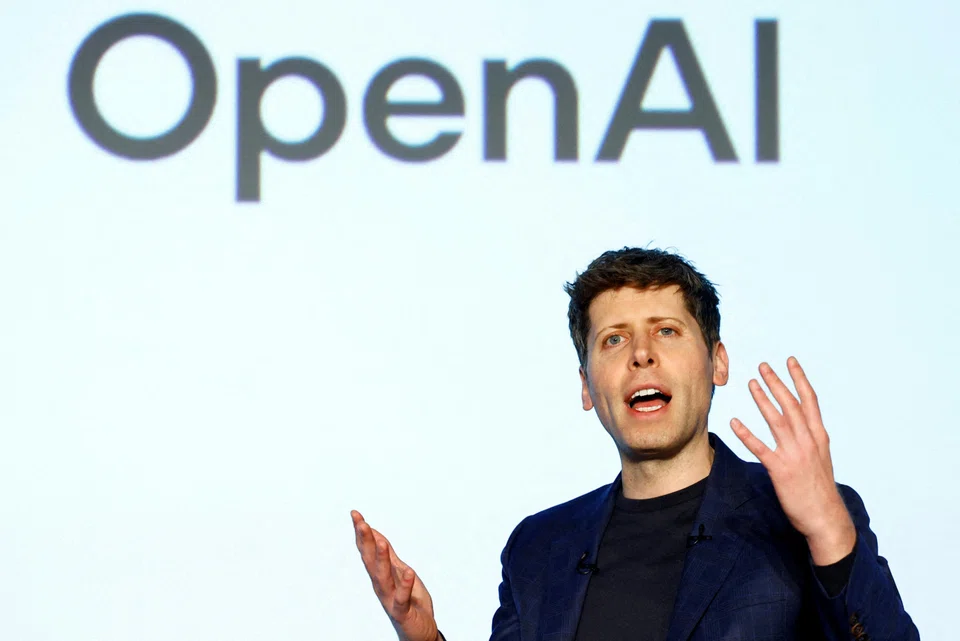
[SYDNEY] OpenAI CEO Sam Altman said on Tuesday (May 26) the rapid development and adoption of AI would not lead to a global “jobs apocalypse” and the technology had not claimed as many white-collar jobs as he had feared.
Speaking virtually at a Commonwealth Bank of Australia (CBA) conference in Sydney, Altman said he was initially concerned about the impact AI would have on global employment levels.
He said he and his executives had been “roughly right” on the technological predictions made by OpenAI when it launched ChatGPT in 2022. But he said they were “pretty wrong” on the social and economic implications.
“I’m delighted to be wrong about this, I thought there would have been more impact on entry-level white-collar jobs being eliminated by now than has actually happened,” Altman told CBA chief executive Matt Comyn in an interview.
“I now think I understand more about why it hasn’t, and I’m obviously grateful but that is an area where my intuitions were just off.
“People are like ‘oh you could have saved the world a lot of fear mongering and a lot of doom and gloom’ but at the time I was like ‘I see this is a real risk we should probably talk about it’ and it still may.”
Altman did not cite any jobs numbers on Tuesday but has previously talked about potential industry-wide job cuts due to AI’s advancement.
A growing number of global companies, including HSBC, Amazon, Standard Chartered and CBA have announced some jobs within their companies were being replaced by AI.
OpenAI is preparing to confidentially file for a US initial public offering in the coming weeks, Reuters reported last week, citing a source familiar with the matter. The company could be aiming for a US$1 trillion valuation and raising at least US$60 billion, Reuters reported in October.
SEE ALSO




‘Human part’ of employment irreplaceable
Altman said he had realised that even though AI was taking on an increasingly active role in many industries and jobs, there was still a ‘human part’ of employment that could not be replaced.
He said he had been using AI to respond to Slack and email messages but had reverted to answering some himself.
“I had it reply to messages, saying ‘this is Sam’s AI’ and it was an amazing example to me of we really do care about people,” he said.
“We really do care about our interactions with people and this thing, which is a huge amount of my time, is not something that I can imagine myself outsourcing to an AI anytime soon.”
That realisation, he said, had made him believe the human interaction required in many jobs would not be replaced by AI.
“It really, in both positive and negative ways, updated me to thinking that the jobs picture is likely to be very different than we thought,” he said.
“I don’t think we’re going to have the kind of jobs apocalypse that some of the companies in our space advocate or talk about.” REUTERS
Decoding Asia newsletter: your guide to navigating Asia in a new global order. Sign up here to get Decoding Asia newsletter. Delivered to your inbox. Free.
Share with us your feedback on BT's products and services
TRENDING NOW

DBS, OCBC, UOB rout lops billions off STI as inflation, rate concerns spook investors

Grab CEO’s wife Chloe Tong on life with Anthony Tan and finding her purpose

OCBC sheds S$8 billion in value as shares close nearly 6% down; analysts cautious on banks

Deal between tycoon friends sparks scrutiny of Philippine power sector

