Singapore’s deep-tech push requires ‘calculated bets’, stronger ecosystem: NUS Enterprise’s Benjamin Tee
Such ventures are not about moving from ‘zero to one’, but about scaling breakthroughs to impact millions, he says
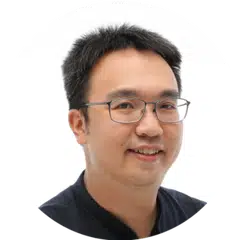
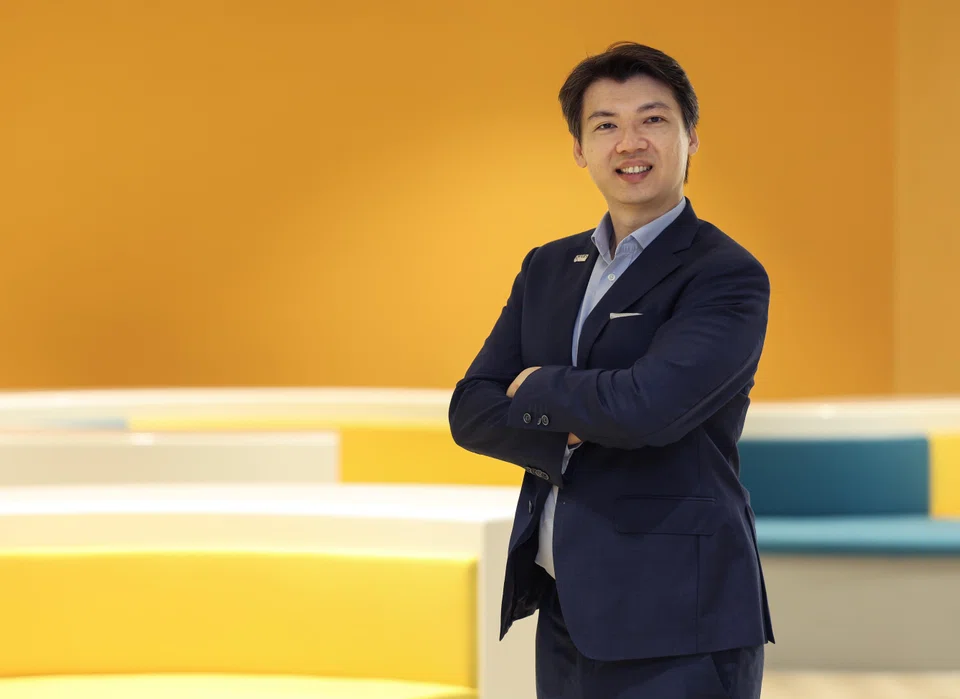
[SINGAPORE] Singapore’s deep-tech push will hinge on “calculated bets” and building a stronger ecosystem to support it, said Professor Benjamin Tee, vice-president of innovation and enterprise at NUS Enterprise.
While Singapore has been able to support and foster idea development through research and development (R&D) and minimum viable products via early-stage funding, the next phase requires a shift in mindset, said Tee.
Deep-tech ventures are not about moving from “zero to one”, but about scaling breakthroughs to impact millions – or even billions – of lives, he added.
“We are now at the stage where we’re thinking about moving zero-to-one as no longer the end-point, but really to 10 or 100,” Prof Tee told The Business Times.
To have a shot at success, deep-tech startups here will require more growth-stage capital.
On that front, NUS Enterprise has committed S$150 million in venture capital funding for deep-tech startups. This is in line with the Singapore government’s S$1 billion top-up to the Startup SG Equity programmes, which will now cover growth-stage funding for deep-tech startups.
That said, these deep-tech startups will take time to make a dent in the market, Prof Tee cautioned. For instance, TSMC took over 30 years to get to its market-leading position today.
Moving to targeted bets
Rather than the “spray and pray” approach that characterised the early startup ecosystem, where large numbers of ventures were seeded with relatively less selectivity, Singapore needs to place more deliberate bets on those with strong potential, even if it means accepting that not all will succeed.
“We have to have many shots at goal in order to score, but you can’t be completely off, you have to have a narrow range of shots that give you a high enough chance,” said Tee.
Singapore has the talent and resources for deep tech to take off, but there must be a willingness to take calculated risks, he added.
He pointed out that even for startups that “failed”, the people trained in the process can still go on to do “great things”.
Talent will be critical in growing and sustaining a deep-tech ecosystem. Programmes such as the NUS Overseas Colleges (NOC), which sends students to startup hubs including Silicon Valley, New York, Shanghai and Munich, have helped to build entrepreneurial exposure.
Prof Tee noted that NOC participants now hail from different faculties, from business and computer science to engineering and design, and even the humanities. While NOC is good for fostering the startup ecosystem, building up deep-tech expertise will have to come from graduate programmes, he said.
“We are designing special programmes to allow them to get a PhD and also build products,” said Tee.
NOC has traditionally sent students to intern at more consumer-facing startups, but NUS is now trying to move entrepreneurial students towards deep tech, which Prof Tee describes as having a bigger moat and longevity compared with app development, for instance.
Deep tech is a long game and will require the whole ecosystem for support, he pointed out. Again citing TSMC, Prof Tee noted that it would have failed without the support of Taiwanese authorities and the ecosystem, with a multi-decade horizon before it found success.
Singapore, he added, has already demonstrated early success in areas such as quantum technologies, where long-term investment is beginning to yield commercially-viable companies.
“We have seen some shoots of success, so it will be a very exciting decade ahead if we go down the path,” he said, adding that this is a multi-decade journey, instead of one completed in a short sprint.
Operator and builder
Prof Tee has taken a slightly different path to becoming an entrepreneur, having done a PhD in electrical engineering at Stanford. It was after obtaining his PhD that he thought it would be a waste if the patents and technology developed were not licensed or used.
Prof Tee had a desire to build products and technology to change the world and needed to figure out how to transform his ideas into products, which set him on the path to becoming a serial entrepreneur.
This led to his first startup, Privi Medical, a medtech company which produced a drug-free product to reduce haemorrhoids. Prof Tee founded the startup with two other co-founders he met at the Stanford Mussallem Center for Biodesign.
In building the startup, Prof Tee had to license out his own patent as well, learning the importance of having the right technology to have a faster path to market. Back then, the startup ecosystem was still nascent, and timelines from meeting investors to receiving the first cheque took a year.
Even after exiting Privi Medical, Prof Tee continued to build startups. His second one was also in health – Hannah Life Technologies was the company behind the home insemination kit provider twoplus. Hannah Life Technologies also received backing from prominent US venture capital firm Y Combinator.
“I realised that building a big company takes a lot of energy, and you need the right people; and I’m actually thankful that this ecosystem itself has really grown, attracting a lot of talent back,” said Prof Tee.
This has allowed him to build his third startup, TacnIQ AI. Its product – Backy – detects risky movements that might lead to back injury, and corrects them immediately via sensors and haptic feedback. This stemmed from the idea that back pain is the bigger problem to solve, compared with augmenting human labour with robotics.
Back pain is a “billion-people” problem, said Prof Tee, pointing out that logistics companies often told him that their workers injure their backs frequently, with no way to understand how it happened.
Having a problem actually articulated by companies helps in taking calculated risks to solve it, he noted. “Because when there’s an articulated problem, there usually is some insight that you can uncover.”