Ex-PropertyGuru execs bet big on rent-to-own in Indonesia
Yvonne Poh YS &
Jofie Yordan
CAN a minnow succeed where a whale failed?
In August 2023, PropertyGuru exited Indonesia after shutting down its Rumah marketplace. The company said it had “tried a number of different business models” in the country but none worked out well.
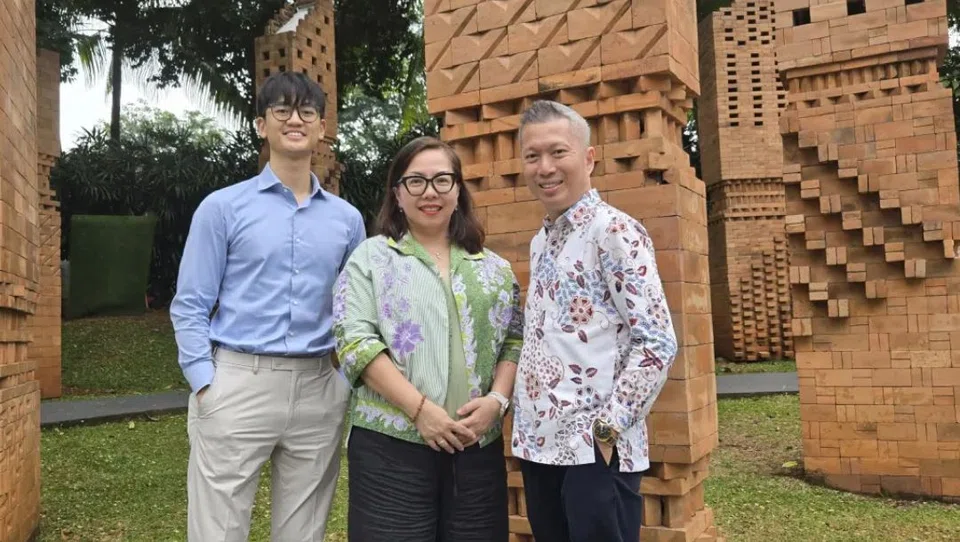
Now, two former PropertyGuru executives – Winston Lee and Marine Novita – want to have another crack at Indonesia.
Together with Lau Xin Yuan, they founded a new proptech company called MilikiRumah, which means “Owning Home” in Bahasa Indonesia.
Launched in September 2024, MilikiRumah has closed its seed round at S$2 million. Apart from Singapore-based family office Ruifeng Wealth, angel investors including PropertyGuru co-founder Jani Rautiainen, PropertyGuru Singapore country head Tan Tee Khoon, and serial entrepreneur Yvone Lim also joined the fundraise.
Lee, who serves as MilikiRumah’s CEO, is convinced that the company’s business model is superior to the marketplace platform. This “last lap” of his and Novita’s career will also allow them to “do something that is meaningful,” he adds.
A different model
Unlike Rumah, MilikiRumah employs a rent-to-own model and aims to address the issue of home ownership in Indonesia.
In Jakarta, for instance, only 56 per cent of households own their own homes – much lower than home ownership rates in other South-east Asian cities such as Singapore, Kuala Lumpur and Bangkok, according to Lee.
In an interview with Tech in Asia, Lee – who was director of special projects and worked at PropertyGuru for nine years – and Novita – who spent seven years at the company and served as country head of Rumah – also expressed confidence that their experience in the proptech industry would be a significant advantage in running MilikiRumah.
Novita, for example, has an established network of developers, banks, associations and brokers in Indonesia from her time at Rumah.
Rautiainen is also more than just an investor – he shaped PropertyGuru’s product and tech in its early days as its co-founder. He will support MilikiRumah in terms of product and tech strategy.
“People who invest in us are people who have worked with us,” Lee says. “It shows that they are confident in our ability to deliver.”
The CEO explained that MilikiRumah’s rent-to-own model is inspired by the success of Singapore’s Housing and Development Board and Central Provident Fund. These government programmes have helped Singapore achieve one of the highest home ownership rates globally.
MilikiRumah partners housing developers in Greater Jakarta (Bogor, Tangerang, Bekasi and Depok), offering landed properties priced between 200 million rupiah (S$16,642) and 600 million rupiah.
With this model, the company is targeting consumers typically rejected by banks when applying for mortgages: those with non-fixed incomes such as freelancers or gig workers, people with high debt-to-income ratios, or individuals with poor credit histories.
This is large pool of Indonesians. According to the country’s Central Statistics Agency, 83 million people or 58 per cent of the workforce were employed in the informal sector as at August 2024.
“A lot of consumers, especially (those) in the informal sector, don’t have strong verifiable data to prove to the bank that they have the ability to pay,” Lee explains.
To address this, MilikiRumah has developed its own credit scoring system, which is supported by in-house data and artificial intelligence. MilikiRumah acquires the house on a consumer’s behalf if they meet the company’s risk assessment criteria. Consumers, in turn, pay monthly instalments to the firm.
This instalment phase helps consumers build their credit profiles and prove to banks that they have the ability to repay. MilikiRumah also partners banks for this process.
“After a year, this profile can help them secure bank financing, effectively transitioning them from unbankable to bankable,” Lee adds.
MilikiRumah will use its freshly raised funds for property acquisition, tech and product development, and operation expenses. It is also looking to set up its legal framework and infrastructure.
To support its capital needs, the company operates a rent-to-own fund similar to a private equity fund and acts as its general partner. MilikiRumah says it has secured US$10 million for the fund from limited partner investors.
Eye on profit
In a world of more expensive capital, MilikiRumah has already designed its path to profitability. Lee says the company wants to become profitable in its first year of operation, which is 2025.
MilikiRumah intends to launch its first two projects with two developers in the first quarter, aiming to onboard at least 500 families. However, if the company completes fundraising for its rent-to-own fund, it could potentially onboard more than 1,000 families by the end of this year, according to Lee.
MilikiRumah will have two revenue streams. First, it plans to charge a renter rate higher than a typical bank instalment amount because it wants to show banks that the consumer has strong financial ability.
Second, MilikiRumah will earn revenue from each property transaction completed by consumers who transition to a mortgage. The company gains a margin from the process.
The rent-to-own model has a huge potential to drive profitability for companies, says Edmund Carulli, head of investment at BNI Ventures. This is due to its multiple revenue sources and opportunities for upselling, such as offering bundled sales with home renovation services.
The lack of major competitors is also beneficial for MilikiRumah. While CicilSewa offers the same model, the proptech player does not focus solely on rent-to-own.
Potential issues
Carulli of BNI Ventures contends that several factors make the rent-to-own model highly promising in Indonesia.
First, home ownership is prohibitive for most people, especially for Gen Z. The country ranks fourth globally among countries with the most expensive property prices relative to income levels.
Second, the housing backlog in Indonesia has reached 12.7 million homes.
Third, there is no dominant player in the proptech industry outside the listing platform sector.
Yet MilikiRumah shouldn’t expect a walk in the park, either. The target market for the rent-to-own model is often young people – a segment that may lack strong buying power. While the model aligns well with Indonesia’s primary challenges, Carulli believes companies must make some adjustments in execution to meet customer needs and comply with regulations.
Despite Indonesia’s status as South-east Asia’s largest economy, the country’s proptech sector has yet to prove its potential. It contributed just under 2 per cent of PropertyGuru’s total revenue in 2022.
Proptech firms in other countries also have players that have adopted the rent-to-own model, such as Homebase in Vietnam and Divvy Homes in the US.
However, Divvy Homes reportedly sold its operations after struggling since 2022. It faced challenges due to rising interest rates, making it difficult for the company to purchase homes and profit from them.
While the problems faced by Divvy Homes serve as a cautionary tale for MilikiRumah, the situation in Indonesia seems more favourable.
The country’s central bank lowered interest rates to 5.75 per cent in January, which may improve the mortgage non-performing loan ratio this year. The rate is also expected to decrease again later this year.
Nonetheless, MilikiRumah has an unproven model: Rent-to-own is relatively uncommon in Indonesia. While introducing something new to a challenging market is exciting, how it executes its plans in its first year will be crucial for the company. TECH IN ASIA
TRENDING NOW
Grab CEO’s wife Chloe Tong on life with Anthony Tan and finding her purpose
Singapore-based Ryde accused of pump-and-dump fraud in class action lawsuit
Malaysia’s F1 return: A low-cost second chance, possible Singapore boost
Canada is upping oil flows to Asia, but South-east Asia’s refineries aren’t ready to handle them yet