From shopping to gaming: ShopBack sees over 30% growth in FY 2026

This uptick in revenue marks a departure from the flat numbers the company has seen in the past two years
Summarise
    • Singapore-headquartered ShopBack allows users to earn cashback when they shop or buy vouchers at partner merchants.
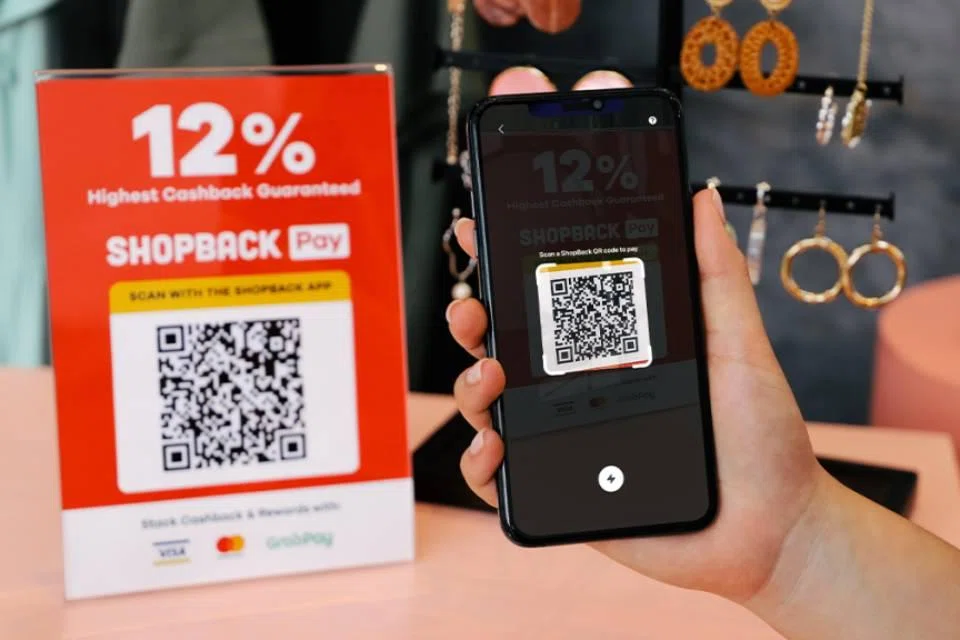
    • Singapore-headquartered ShopBack allows users to earn cashback when they shop or buy vouchers at partner merchants. PHOTO: SHOPBACK
    Published Thu, Apr 9, 2026 · 11:22 AM

    SHOPBACK may be most known for letting its customers earn cashback on their shopping, but the firm is increasingly leaning into other non-transactional use cases like allowing users to earn rewards by playing mobile games.

    This feature, called ShopBack Play, marks the company’s entry into a “play-to-earn” ecosystem, the firm said in April. In Hong Kong, the feature has given back over HK$5 million (S$813,133) to users since its launch.

    ShopBack Play was released in six markets in January last year.

    In the 12 months ending March 2026 (FY 2026), the firm saw over 30 per cent in revenue growth, powered by its expansion to higher frequency use cases and its increasing use of artificial intelligence to drive personalisation and other cost savings, its acting CFO and chief of staff Huang Huanmin told Tech in Asia.

    The firm also achieved adjusted earnings before interest, taxes, depreciation, and amortisation profitability for the past six successive quarters, the latest being the January to March 2026 period.

    This uptick in revenue marks a departure from the flat numbers the company has seen in the past two years. ShopBack’s latest audited financial statements for the 12 months ending March 2025 (FY 2025) showed a revenue of S$129.4 million, compared with US$99.6 million the year prior.

    The firm also posted a profit before tax of S$208.9 million, swinging from a loss of US$48.5 million in FY 2024.

    Huang explained, though, that this rise was driven by non-operating movements, “not a change in underlying business performance”.

    As the firm looks beyond Asia-Pacific to markets like North America and weighs a potential IPO, it is doing so as a leaner entity that could make it more attractive to investors

    Reducing cash burn

    Singapore-headquartered ShopBack allows users to earn cashback when they shop or buy vouchers at partner merchants. Users can also make payments via its native payments service ShopBack Pay. It works with over 20,000 merchants in 13 markets.

    The company operates on an affiliate marketing model, meaning its partner merchants pay a commission for sales that occur via ShopBack – a portion of which is then shared directly with the consumer.

    In August 2025, ShopBack’s co-founder Joel Leong said its merchant partners, which include brands such as Nike and H&M, saw US$1.2 billion in sales driven by ShopBack in the first quarter of its FY 2026.

    Its FY 2025 financial statements showed that an increase in finance income from S$7 million from the year prior to S$183.7 million led to the firm’s large profit that year.

    Since finance income is a non-operating metric, Huang instead pointed to the company’s significantly reduced cash burn in FY 2025 as a better indicator of the firm’s improved operating performance.

    ShopBack’s key expenses dropped to S$113.5 million in FY 2025 from S$143.9 million in the prior financial year, largely a result of a decrease in employee benefits expenses.

    In March 2024, the company laid off 195 employees – 24 per cent of its workforce – as it pushed to become more lean and self-sustainable.

    Huang explained that the cost reductions in FY2025 were due to these layoffs, along with “tighter operational discipline” being applied across the business.

    ShopBack also cut its IT maintenance and subscription costs during the same period, a result of optimising its tech stack, rationalising tools and subscriptions, and tightening vendor management, Huang explained.

    Meanwhile, he attributes the company’s lower revenue to an accounting classification change in FY 2025, rather than weakening consumer demand.

    The firm shifted a portion of its voucher business from a principal model, where revenue is recognised at the full voucher value, to a consignment model, where only the commission is recognised.

    According to Huang, this improved cash flows. It also made for lower figures for reported revenue but had no effect on the company’s gross profit, he added.

    ShopBack ended FY 2025 with S$141.4 million in cash and cash equivalents. Cash used in operating activities decreased by 72 per cent year-on-year to S$6.9 million during the period.

    Adding new business lines to cart

    Following the discontinuation of its buy now, pay later service in 2024, ShopBack has doubled down on its core payments product, ShopBack Pay.

    A big milestone was securing a Major Payment Institution license from the Monetary Authority of Singapore in July 2025.

    With the license, ShopBack can now sign up vendors more quickly than before and more efficiently manage payment processing, Huang said.

    ShopBack has also begun looking beyond the Asia-Pacific market.

    Last May, the company made its entry into North America, making its cashback services available at over 2,000 merchants – including Amazon, Uber, and DoorDash.

    Huang said North America represents a market with “significant long-term potential,” though Asia-Pacific remains a key region.

    New additions to the company’s board of directors, including former Ogilvy Singapore group managing director Chong Ee Rong and Meta’s former vice-president for Asia-Pacific Dan Neary, will also drive the firm’s “public-ready governance”, the firm said in a LinkedIn post in February.

    Last month, the Australian Financial Review reported that ShopBack is weighing an IPO in Australia by early 2027, citing sources.

    Looking ahead, the firm is aiming to embed AI across its products, scale offline touchpoints, and introduce new lifestyle categories. One example is the company’s Creative Hub, which streamlines its key visual efforts for marketing.

    With these initiatives, the firm is betting that AI-driven efficiencies, non-payment features, and a stronger payment product will be its biggest assets as it navigates both Asia and the West, as well as the public market. TECH IN ASIA