

Singapore now home to one of the world's largest floating solar farms
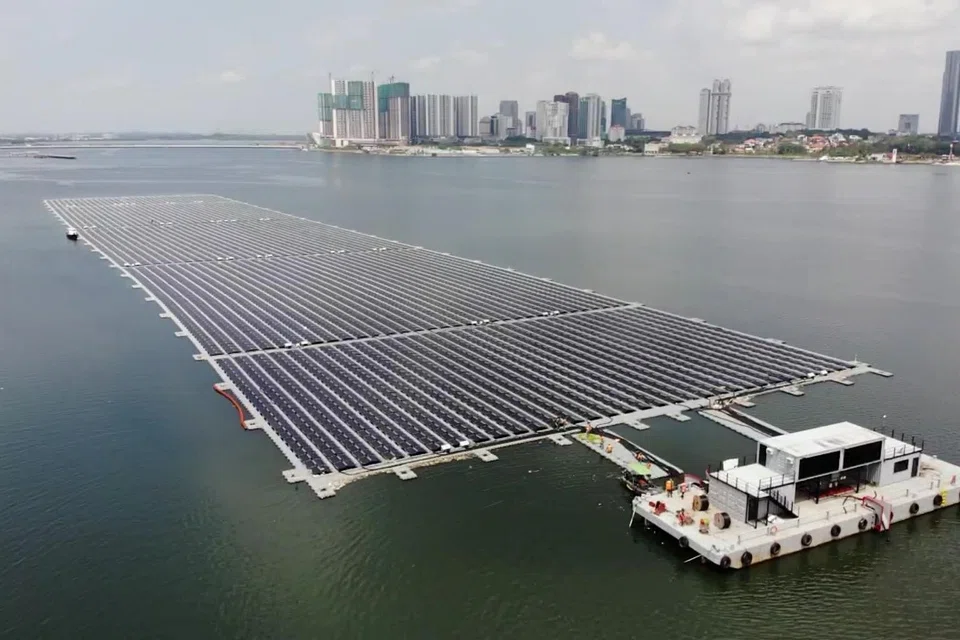
[SINGAPORE] Singapore is now home to one of the world's largest floating solar farms, which is capable of potentially offsetting more than 4,000 tonnes of carbon dioxide per year.
This is roughly equivalent to the greenhouse gas emissions from more than 900 passenger vehicles a year.
Sustainable energy provider Sunseap Group on Tuesday (March 23) said it took close to a year to set up the solar farm in sea water in the Strait of Johor off Woodlands, given the restrictions during the Covid-19 lockdown.
It involved a total of 13,312 panels, 40 inverters and more than 30,000 floats.
The 5MW-peak system installation is expected to produce an estimated 6 million kilowatt hours of energy per year. It can potentially offset an estimated 4,258 tonnes of carbon dioxide, bringing the country closer to decarbonisation.
In land-scarce Singapore, the success of such a a sea-based floating system could lead the way for more such projects to tap energy from the sun here and in the region.
The solar farm is equipped with electrical panels, control systems and a 22 kilovolttransformer.
It is also a landing point for the subsea cable that transmits the generated power to the national grid. The floating system is designed to withstand changing weather conditions, keeping the platform and all of the operational equipment on board steady.
There is also an air-conditioned second deck that doubles up as a visitor centre and viewing gallery.
Mr Frank Phuan, co-founder and chief executive officer of Sunseap Group, said: "This is an important milestone for Sunseap as we believe that offshore space like the sea, reservoirs, lakes... offers exciting opportunities for land-scarce and densely populated cities to tap solar energy. They are places that are unobscured from the sun and with low risks of vandalism or theft." The project was more challenging compared to other land-based or rooftop installations due to the unpredictable nature of the open sea, the need to avoid shipping routes and the presence of barnacles, Sunseap said.
Marine expertise was also required for mooring installation and system design.
The Covid-19 lockdown last year posed an additional challenge as foreign workers hired by Sunseap's contractor were unable to leave their dormitories."I am so thankful to many members of our team who rolled up their sleeves to fill in the gap during this period. Their professionalism and esprit de corps were key to the successful completion of the project in the face of the numerous challenges," Mr Phuan said.
A key part of protecting the planet from global warming involves shifting from the use of fossil fuels to renewable energy.
Singapore is committed to reducing carbon emissions intensity by 36 per cent from 2005 levels by 2030, and the country's high levels of solar exposure make solar power a viable option.
Decoding Asia newsletter: your guide to navigating Asia in a new global order. Sign up here to get Decoding Asia newsletter. Delivered to your inbox. Free.
Share with us your feedback on BT's products and services
TRENDING NOW

He built the Vingroup empire. Now South-east Asia’s richest man is handing some key roles to his sons
Developers rush to build homes on Vietnam’s breathtaking coast, testing a new urban model
US dollar falters after Iran’s offer to reopen Hormuz sends oil lower

Tokyo reverses baby bust with AI matchmaking and generous subsidies

