

Tariff risks vs AI boom: S-E Asia’s semiconductor stocks diverge but upside ahead
Investors mull over a mix of factors, but analysts cite target prices that are mostly higher

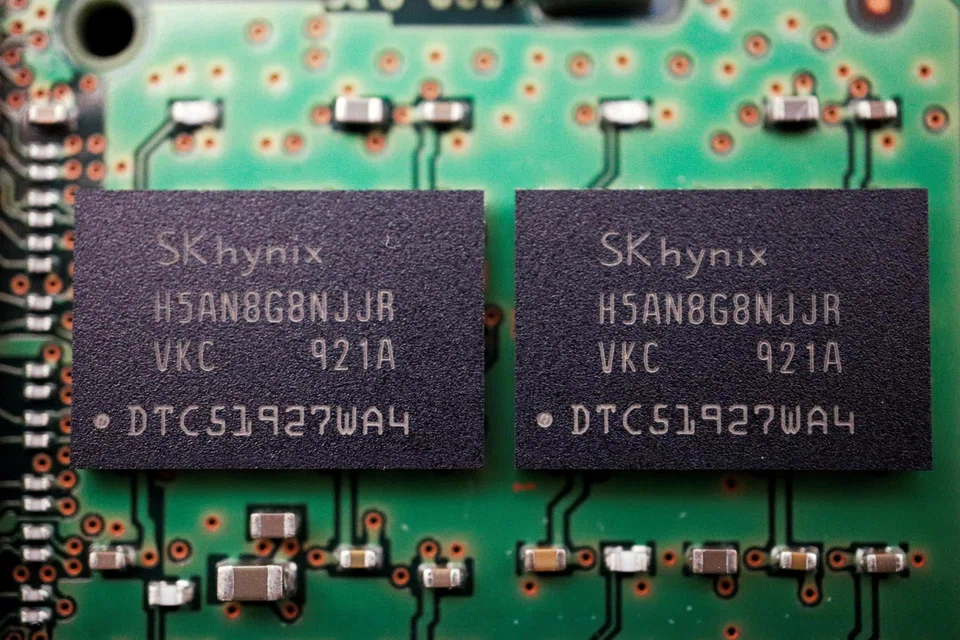
[SINGAPORE] It has been a disparate picture for semiconductor stocks in the region in the past few months and beyond, including Singapore, as investors mull over a variety of factors, including new chip tariffs, the memory chip shortage and the artificial intelligence (AI) boom.
Some semiconductor stocks have slumped this past week and investors shorted some stocks after US President Donald Trump imposed tariffs aimed at AI chips. Yet, other names rose on a mix of drivers.
Trump has imposed a 25 per cent tariff on specific high-performance artificial intelligence chips, including the Nvidia H200 and AMD MI325X, following a nine-month investigation under Section 232 of the Trade Expansion Act.
The move targets high-end semiconductors and the devices containing them as part of a strategic effort to reduce American reliance on foreign supply chains and incentivise the manufacturing of these critical components within the United States.
Shares of AEM, Frencken and UMS are in negative territory since Trump’s announcement on Jan 14, while Venture was flat.
Outside of Singapore, Nvidia pared its losses in the past week since the tariffs were announced, AMD has also bounced back.
Intel dropped 17 per cent in a single day after it issued weak guidance, while ASML rose on strong outlook from key customer TSMC.
In Malaysia, Inari Amertron was down after major customer Broadcom did not follow a broader US recovery after being hit by a Chinese regulatory directive to stop using foreign software solutions. Shares of Coraza were slightly down.
Meanwhile, Delta Electronics in Thailand, a key data centre component supplier, was up about 10 per cent in the past week as HBM and data centre demand stayed high.
The divergence indicated that investors in the very diverse semiconductor supply chain could be prioritising specific customer exposure over general tariff fears. Some are holding faith in the so-called “TACO” trade – an acronym for “Trump Always Chickens Out” – betting that the threats will de-escalate. However, that belief was tested earlier in the week following a broad sell-off on Tuesday.
AEM tracked the recovery of its key client Intel, which had initially soared in the past week on strong expected demand for data centre chips. Meanwhile, the shares of Innotek – which in October clinched a deal to supply equipment to support Nvidia’s AI efforts – spiked over the past week.
Despite the steep levy, these latest semiconductor tariffs will have a “minimal impact” on Singapore, said the Republic’s Ministry of Trade and Industry on Tuesday. The tariffs only apply to a “narrow category of semiconductors not currently manufactured in Singapore”, said the ministry, which arrived at its preliminary assessment after consultation with the local semiconductor industry.
Still, there’s a potential overhang in the future that investors will be watching. In the same announcement, the White House said that in the “near future”, Trump may impose broader tariffs on imports of semiconductors and “their derivative products”.
Analysts positive even as investors go short
Sentiment remains cautious. Together with the decline in certain stocks, both UMS and AEM were two of the five most shorted Singapore stocks as at Jan 16, S&P Global Market Intelligence said.
But analysts are positive. Macquarie Equity Research on Monday initiated coverage on Frencken with an “outperform” rating and a target price of S$1.76. The equities platform said it expects a second-half 2026 pickup in semiconductor orders for Frencken.
Frencken customer ASML, which holds a near-monopoly on the advanced lithography machines used to produce high-end AI chips, could be receiving bigger orders for those machines – a rise from 47 to 54 units, with shipments to be backloaded, said its analysts.
“We expect this to translate to more orders for Frencken, as ASML demands more parts to fulfil its order backlog,” they added.
Ahead of the latest tariffs, DBS on Jan 9 reiterated a constructive stance on Singapore technology, citing an extended semiconductor upcycle and state-led market reforms.
The bank favoured Frencken, with a target price of S$1.92, for its diversified semiconductor exposure, alongside UMS, with a target price of S$1.85, which it said should capitalise on AI-driven production ramps and double-digit industry growth.
Global chip stocks also soared on Thursday after Nvidia chief executive officer Jensen Huang said in Davos that the global AI buildout will require trillions of dollars of investment – reinforcing investor enthusiasm.
The memory effect
Beyond the limited direct impact of tariffs, Singapore’s manufacturing sector is expected to benefit from the sustained global shortage of dynamic random-access memory (DRAM) chips. The scarcity is expected to last for at least another year, having been spurred by Micron’s exit from the consumer DRAM market.
Both UMS and Frencken are beneficiaries of the global shortage, DBS said.
Micron produces 98 per cent of its top-end flash memory chips in Singapore and plans to start operations at its upcoming high-bandwidth memory (HBM) manufacturing plant in Singapore later this year. HBM is used for high-performance tasks such as training AI models.
Reflecting this demand, shares of US-listed Micron have risen about 66 per cent since the company’s announcement on Dec 3 and continued to rally in 2026, climbing about 16 per cent since the latest tariffs were announced as HBM demand continues to rise.
Analysts contend that the accretion of value in upstream semiconductor manufacturing will likely eclipse broader downstream cost pressures, presenting a potential strategic upside for major production hubs like Singapore.
Decoding Asia newsletter: your guide to navigating Asia in a new global order. Sign up here to get Decoding Asia newsletter. Delivered to your inbox. Free.
Copyright SPH Media. All rights reserved.






