

Asian shares pare gains, US stock futures slip after tariff increase kicks in
 Add BT as a preferred source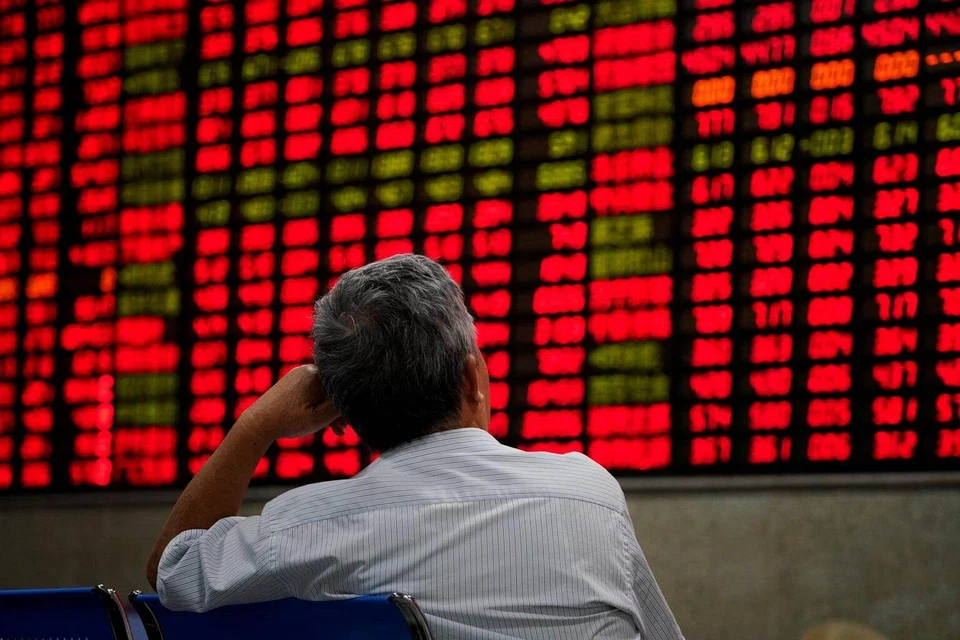
DeeperDive is a beta AI feature. Refer to full articles for the facts.
[TOKYO] US stock futures fell and Asian shares pared gains on Friday after US President Donald Trump's tariff increase on US$200 billion worth of Chinese goods took effect, ratcheting up tensions between the world's two biggest economies.
E-mini futures for US S&P500 slipped after the higher tariffs kicked in, and were last down 0.5 per cent in volatile trade.
The White House has said the two sides would resume negotiations on Friday morning in Washington after concluding the first of two days of talks on Thursday to try to rescue a trade deal that is close to collapsing.
That has encouraged some investors to cling to hopes that the US administration could revoke the new tariff hike once a deal is reached, though investors are far from convinced.
Mr Trump also said on Thursday he was taking steps to authorise new tariffs on US$325 billion in Chinese imports.
"Should tensions escalate significantly in coming days, we expect a pronounced market reaction. There is the potential for a 15 per cent-plus correction in Chinese and emerging market (EM) stocks, and around 5-7 per cent falls in global equities, in our opinion," said analysts at Lombard Odier Investment Managers in a note.
Navigate Asia in
a new global order
Get the insights delivered to your inbox.
MSCI's broadest index of Asia-Pacific shares outside Japan was up 0.3 per cent, led by gains in Chinese shares.
China markets were on midday break when the higher tariffs took effect. The Shanghai composite rose as much as 3.1 per cent early on Friday before paring much of that gain, leaving it up 1.5 per cent.
Japan's Nikkei fell 0.7 per cent.
US shares cut losses late on Thursday after Mr Trump said he had received a "beautiful letter" from Chinese President Xi Jinping, stoking hopes of a deal.
Still, on the week, most markets were down on fears about Sino-US. tensions.
The S&P 500 futures were down 2.8 per cent, the Shanghai index down 6.0 per cent, the Nikkei 4.3 per cent and ex-Japan Asia MSCI 4.3 per cent.
Rising geopolitical tensions are not helping.
North Korea fired what appeared to be two short-range missiles on Thursday in its second such test in less than a week and the United States said it had seized a North Korean cargo ship.
On Iran, Trump said he could not rule out a military confrontation after Tehran relaxed restrictions on its nuclear programme in response to US sanctions imposed following Trump's withdrawal of the United States from the accord with a year ago.
The 10-year US Treasuries yield stood at 2.449 per cent near its lowest levels since late March.
It stood less than three basis points above the three-month bill yields.
In the currency market, the yen is favoured, with the dollar changing hands at 109.83 yen, having hit a three-month low of 109.47 on Thursday.
The euro firmed slightly to US$1.1226 while the Chinese yuan perked at 6.837 per US dollar having hit a four-month low of 6.8638 to the dollar the previous day.
MSCI's emerging market currency index also tumbled to a four-month low.
Oil prices erased much of gains that were made after Mr Trump's comments on Xi's letter raised hopes for a deal.
Brent rose 0.2 per cent to US$70.51 a barrel while U.S. West Texas Intermediate (WTI) crude gained 0.4 per cent to US$61.96.
REUTERS
Share with us your feedback on BT's products and services
TRENDING NOW

Autobahn Rent A Car directors declared bankrupt over S$50 million each owed to DBS

Amazon’s MGM Studios gains creative control over ‘James Bond’ franchise
UOB’s Wee Ee Cheong says S$4.9 billion Citi deal ‘paying off’ as Asean push accelerates
In taxing wealth, how far can Singapore push property owners?

