
Yes chef: Four hawkers share what it’s like behind the counter

Straight to your inbox. Money, career and life hacks to help young adults stay ahead.
[SINGAPORE] When it comes to career aspirations among young Singaporeans, being a hawker likely ranks below more familiar career ambitions such as law, medicine, or a corporate career.
That’s hardly surprising given the nature of the work: standing for long hours and juggling kitchen operations, all while enduring Singapore’s less-than-forgiving heat in a small kitchen.
There is also the perennial concern that hawker culture may soon dissipate as first-generation hawkers struggle to find successors to inherit their recipes and businesses.
So imagine my surprise when a quick search on TikTok for “young hawkers” generated a stream of videos featuring fresh-faced hawkers serving everything from local favourites to international fare.
Still, while social media paints a rosy picture of positive reception for these young hawkers, some stalls have since shuttered, revealing the realities of opening a hawker stall in Singapore.
But despite the challenges of the trade, some young adults are still choosing to don the apron and pick up the wok.
Facing the stigma
When Shanice Lim decided to open So Lemak in 2023, her prices drew comparisons to older businesses selling similar fare for less.
The 28-year-old runs her nasi lemak stall from a unit in a coffee shop at Bedok North, where she sells her signature nasi lemak paired with har cheong gai.
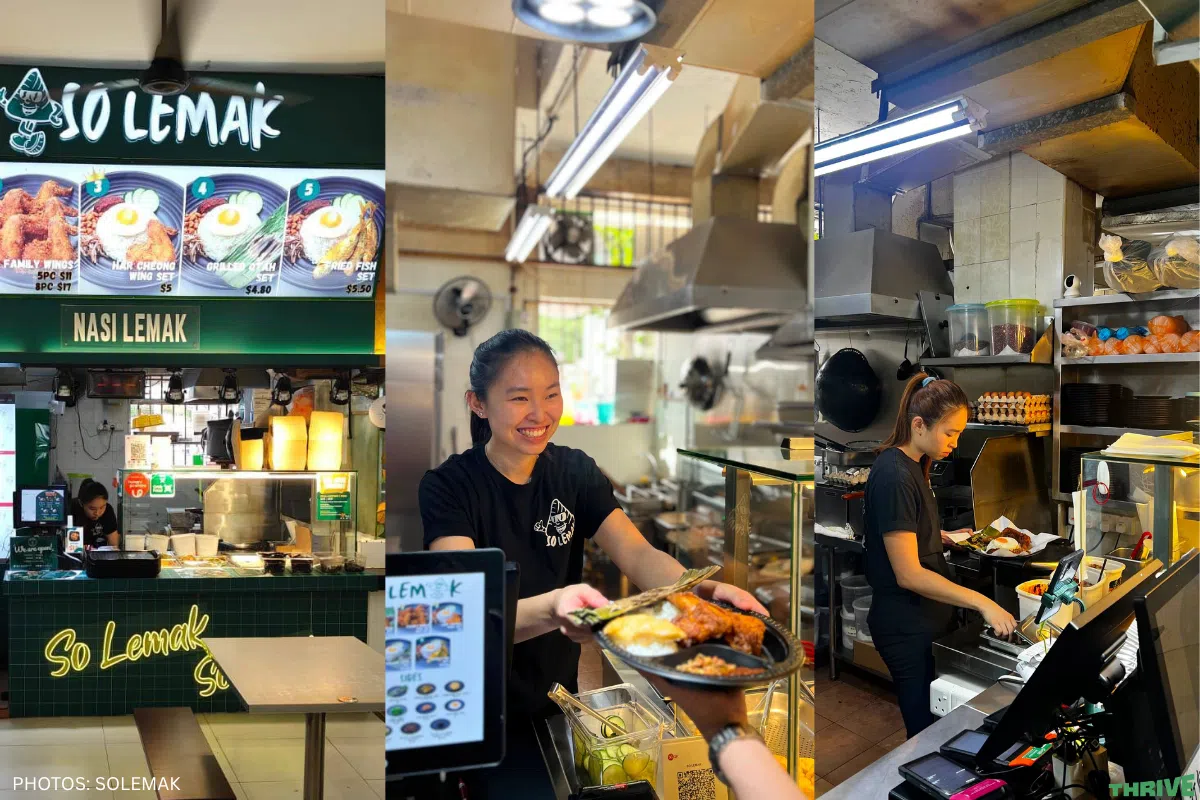
The set items on her menu are roughly priced between S$5 and S$8, a range that has led some patrons to compare it to nearby stalls where similar dishes go for S$3 to S$4.



Beyond price, her youth and choice to sell a traditional dish like nasi lemak have also triggered scepticism about the “authenticity” of her food.
“Once, an uncle came to my shop and ordered a S$5.20 set meal. Then he complained about the price and quantity to a customer queuing behind him. But I’m used to these kinds of comments,” she says.
However, not every young hawker has experienced the same degree of scrutiny.
In 2023, sisters Serene and Danielle Tan opened Butter Town, a shio pan hawker stall at Holland Drive Market.
Serene, 34, recalls turning to neighbouring hawkers for advice when she struggled to cook Butter Town’s curry rice.
Likewise, Jiak Mee co-founder Kelvin Ching had a positive experience running his stall. The 23-year-old has run a mee hoon kueh stall at a Bishan coffee shop with his two friends since 2024.
The stall is an offshoot of a hawker chain owned by Ching’s parents which also sells traditional mee hoon kueh.
“There were a lot of customers who gave us feedback and said things like ‘so young come out to work’... stuff like that which is heartwarming and makes your tiring day better,” he says.
Learning curves of the job
Even though the Tan sisters had braced themselves for the physical demands of the job, their first month running Butter Town still took them by surprise.
Danielle, who oversees the kitchen, would arrive at 4 am to begin preparations – seven hours before the stall’s official opening time.
The stall typically sold out around 1 pm. However, the sisters would stay behind to wash equipment and prepare ingredients for the next day, making for about 13 to 14 hours in a compact stall.
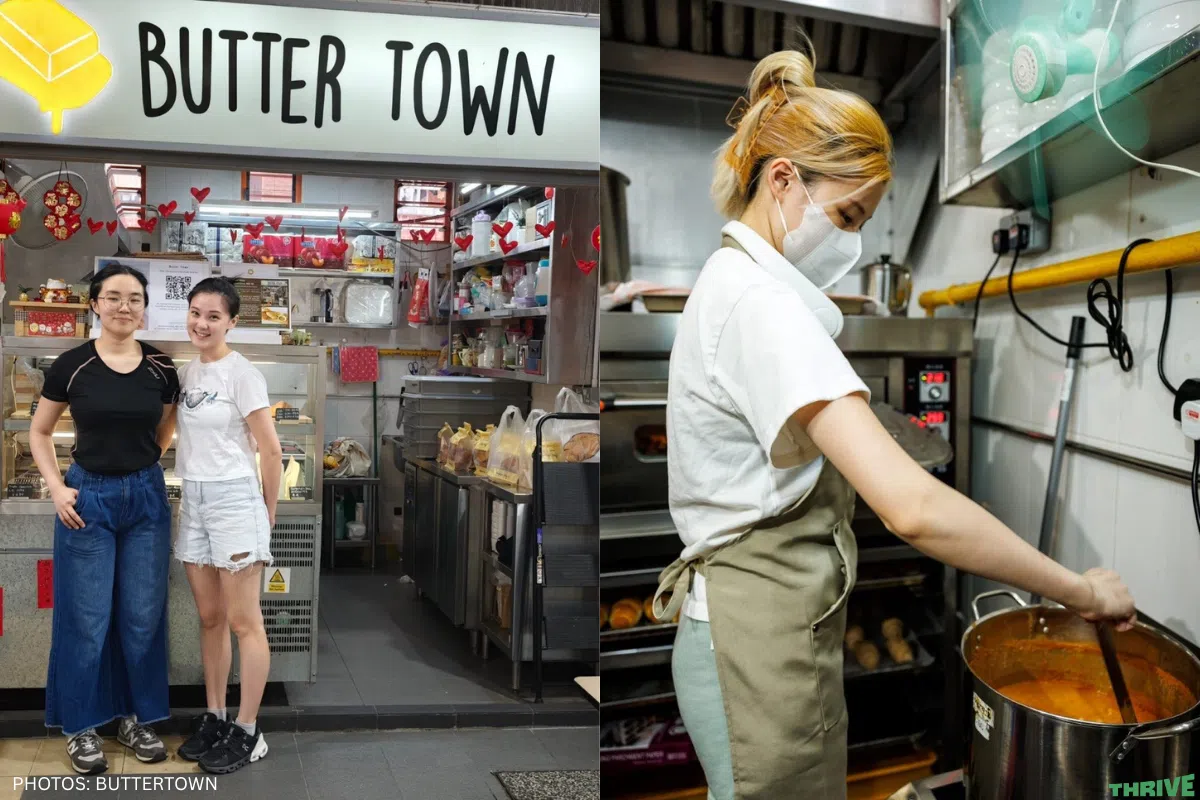
“We were questioning our decisions in life, like why did we choose this? We could have cushy nine-to-five jobs, but why were we doing this to ourselves?” Serene says.
For Lim, her challenge as a hawker was learning to cook at scale. Ingredients cannot simply be increased in direct proportion to the amount of food being prepared, she explains.
For example, strong aromatics such as ginger and lemongrass can easily overpower a dish when added too generously.
She also recalls throwing away about five kilograms of rice when her first batches kept turning mushy after adding too much water.
Beyond the technical know-how, young hawkers also have to stand out in Singapore’s crowded F&B scene by being tech-savvy.
So Lemak, for instance, saw a surge in sales from online reviews and media coverage during its first year. But when sales dipped over the next two years, Lim realised that occasional publicity was not enough.
“It’s been three years and the social media space is getting competitive,” she says. “When I first started (posting on social media), I was just following trends like lip-syncing to music.”
Now, Lim creates videos that focus more on her personal story and the work behind So Lemak, picking up video-editing skills along the way.
Support for young hawkers
Although young Singaporeans remain wary of the challenges of running a hawker business, its relatively low start-up costs can still appeal to aspiring entrepreneurs with limited capital.
To encourage younger entrants into the trade, the National Environment Agency (NEA) has introduced several programmes and initiatives.
These programmes apply to hawkers operating in NEA-managed hawker centres, rather than those running stalls in privately operated coffee shops.
One such initiative is the Incubation Stall Programme which offers pre-fitted stalls at subsidised rent for 15 months to successful applicants, instead of requiring them to secure a stall through the usual bidding process.
Butter Town was among the businesses that benefited from the programme.
There is also the Hawkers Succession Scheme which matches retiring veteran hawkers with aspiring successors.
Before taking the leap
For Lim, the best preparation for aspiring hawkers is to get a taste of the industry before committing to a full-time business.
Before launching So Lemak, she worked as a chef at the three-Michelin-starred restaurant Zen, where she picked up practical skills such as planning a kitchen’s workflow and managing supplier relationships.
Ching also stressed the importance of securing the right location, particularly for new entrants who are still building a solid customer base.
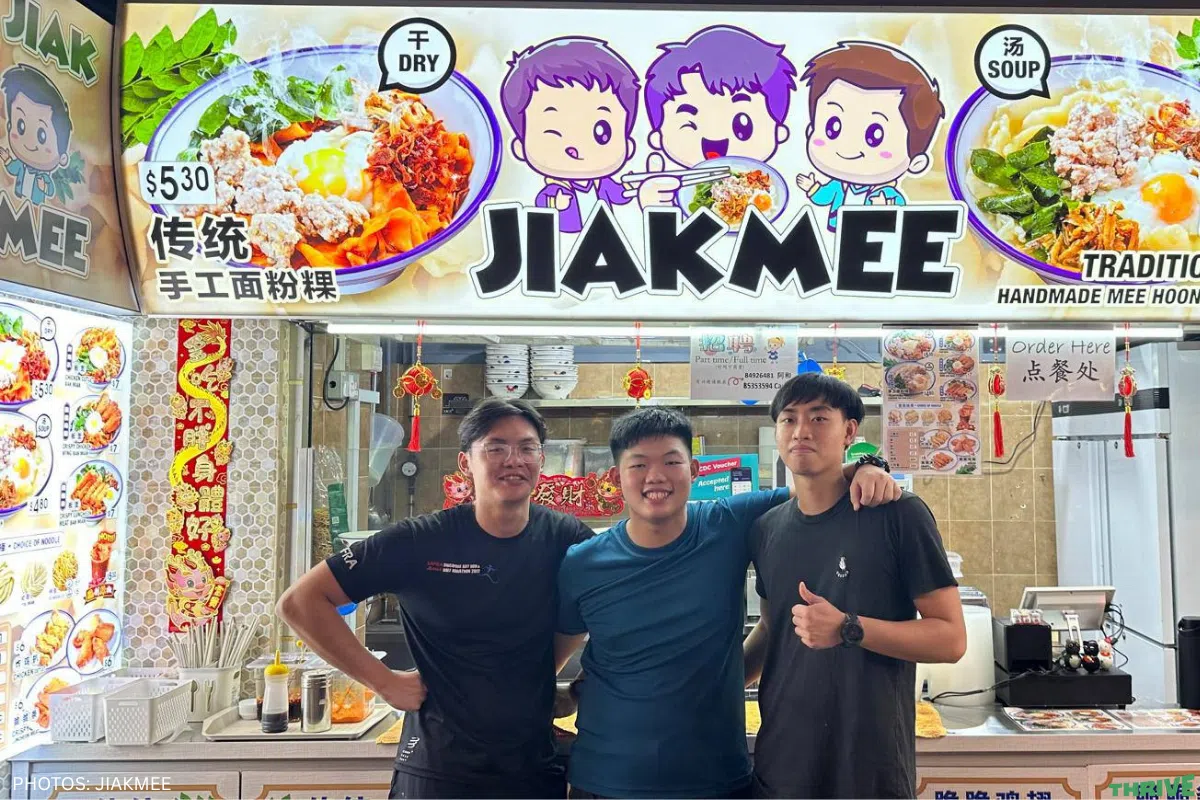
“Even if a store is the perfect size for you, if the location is not good, don’t go into it,” he says. “If it’s your first store, the first (location) you choose needs to be a good one so you can be motivated to continue.”
Serene Tan of Butter Town cautions aspiring entrepreneurs to weigh the cost of the job seriously: “You need to think about the heat, the long standing hours, and the laborious work. Can you persevere (through it)?”
Although the hawker trade has its challenges, newer hawker brands have still found room to grow. Butter Town, for instance, has grown beyond its original stall with a second outlet that does only takeaway, a cafe featuring an expanded menu, and even a series of shio pan vending machines.
Even so, the sisters often look back on their origins as a humble hawker stall.
“We are here because of what we have done in the past. We started from scratch and know how hard the work is,” Serene says.
“Now, I think we are more understanding of our (expanded staff) because we experienced the groundwork ourselves.”
Decoding Asia newsletter: your guide to navigating Asia in a new global order. Sign up here to get Decoding Asia newsletter. Delivered to your inbox. Free.
Copyright SPH Media. All rights reserved.
TRENDING NOW

Singapore Airlines faces some bleak choices as it lays trapped in Air India’s money pit

NDR 2026: Singapore to create new Western island to support 'new generation of industries'

Singapore police raid Radiant World office as probe widens

Singapore’s new data centres must use renewables. Can they overcome the hurdles?


