Private banks 'neutral' on equities amid turmoil, but favour Asia ex-Japan stocks
Strategists recommend hedges - such as energy stocks and gold - against risk of protracted war between Russia and Ukraine

Singapore
PRIVATE banks have dialled down equity weightings to "neutral" at best, from "overweight" at the start of 2022, as escalating oil prices dim the outlook for global growth and raise fears of stagflation.
Strategists have also recommended a slew of hedges - such as energy stocks and gold - against the risk of a protracted war between Russia and Ukraine
With equities on a neutral weighting, strategists appear mindful to ensure that clients stay engaged, as the memory of last year's market trajectory remains fresh. Stocks plunged sharply in March 2021, but this was followed by a sharp and sustained rally through the year.
John Woods, Credit Suisse chief investment officer, said that a scenario of a short-lived conflict is more likely than a protracted war between Ukraine and Russia. "Hence, we keep portfolios positioned for above-trend growth with elevated inflation and central-bank tightening. We remain 'neutral' equities and 'underweight' government bonds.
"We acknowledge that the current market weakness and risk-off environment may extend further. However, markets can violently swing back and we would take neither an 'overweight' nor an 'underweight' exposure during these volatile times."
On Wednesday (Mar 9), global stocks rebounded sharply as news emerged that Ukraine's president may be open to discussing Russia's demand for neutrality. Oil fell more than 10 per cent but it has since bounced back. Major stock indexes such as the S&P 500 are still in the red, year to date.
Kelvin Tay, regional chief investment officer of UBS Global Wealth Management, said that amid uncertainty over issues such as the extent of future sanctions, military outcomes, inflation and global growth, "we believe it is currently hard for investors to attach high confidence in any individual market outcome materialising". UBS also has a "neutral" call on equities.
He added: "But we also note that historically geopolitical events, even those that have changed the course of history, have rarely left a lasting mark on markets."
Standard Chartered Wealth Management's chief investment office said in a note: "It is normal for equity markets to recover strongly from geopolitical-related sell-offs within the ensuing 6 to 12 months. Therefore, history suggests the best course for investors is to stay invested in a diversified allocation and to hedge near-term risks."
DBS chief investment officer Hou Wey Fook said investors typically assume that military conflicts are devastating for markets. But data since 1990s suggest otherwise. Global equities have on average rallied 38 per cent during military conflicts, with the largest rally during the Afghanistan and Iraq war. Rising uncertainties also triggered average gains of 138 per cent for gold and 89 per cent for crude oil. The bigger threat, he noted, arises from commodities. "Global supply chain disruption has already triggered a sharp spike in global inflation and surging energy prices will only exacerbate the situation. Stagflation - the combination of high inflation and slower growth - should not be ruled out."
DBS' CIO barbell strategy currently has a 33 per cent weight in technology; 5 per cent healthcare; 7 per cent energy and 10 per cent gold securities. It also has a 9 per cent weight in Singapore Reits/banks/China large banks which collectively pay dividends of 5 to 7 per cent, and are insulated from events in Europe.
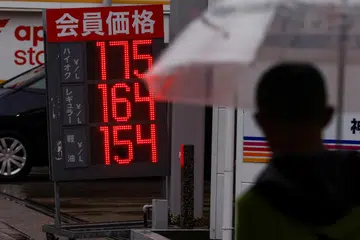
Bank of Singapore (BOS) said the explicit targeting of Russia's energy exports "moves us firmly into the downside scenario for global growth and risk assets as energy prices spike". BOS expects Brent crude prices to trade in an elevated range of US$110 to US$170 a barrel over the next 3 months. Its 3-month forecast is for US$140 a barrel, far above the US$80 level seen at the start of the year.
While global growth is expected to slow more sharply, BOS does not expect a recession. "We are adapting a more defensive stance in our asset-allocation strategy by downgrading European equities from 'neutral' to 'underweight'. We remain 'overweight' in Asia ex-Japan equities, where we see better risk-reward beyond the near-term turbulence."
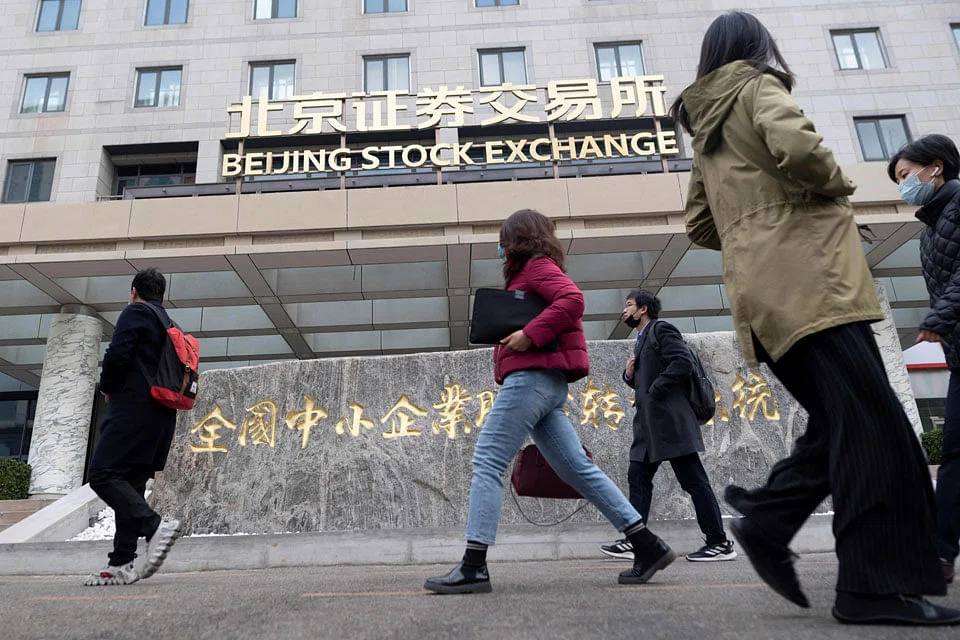
A number of other strategists also call for an overweight on Asia ex-Japan equities, among which China is in favour. UBS' Tay said: "We like Chinese equities relative to other markets in Asia and see the market as well-positioned for the current environment. After underperforming last year, China is attractively valued, is likely to see accelerating growth through 2022, and should be boosted by loosening fiscal and monetary policy."
In terms of hedges, Woods of Credit Suisse favours energy stocks which would benefit regardless of the duration of the conflict; and global diversified financials which benefit in a rising rate environment. He also points to Chinese government bonds as "true diversifiers" as they are not exposed to inflation or the monetary tightening headwinds in developed and emerging government bonds. But the bank is neutral on China equities, "given regulatory risks and the fact that they are not immune to a correction in global equities".
More reports on Ukraine conflict:
- Government monitoring petrol prices to ensure there is no profiteering: Tan See Leng
- Petrol hikes spark criticism in the Philippines
- Ukraine conflict may impact food security: World Bank
- Oil recovers with market gripped by huge price swings
- Credit Suisse flags 848m francs Russia net credit exposure
- China bars mainland brokers from promoting SPAC deals in HK: sources
- Emerging markets in Asia are escaping from yield curve inversion
- Ukraine and Russia fail to make progress in talks to end war
- UK imposes asset freezes on Abramovich, Rosneft's Sechin
- Japan's Fast Retailing to suspend Russia operations