

Core positioning for 2025 – and preparing for surprises
Three convictions for the year: Favour cash-rich companies and financials, profit from increased M&A activity, and benefit from private equity’s revival
AS 2025 begins, the world is on the cusp of a new era. The US economy is in a healthy position, supported by cyclical and structural tailwinds and a Federal Reserve in easing mode.
Although we expect a slowdown in the US, our base case is for growth to remain solid – a recession appears unlikely. Europe and China, by contrast, face headwinds with their manufacturing and domestic economic woes, compounded in Europe’s case by political uncertainty.
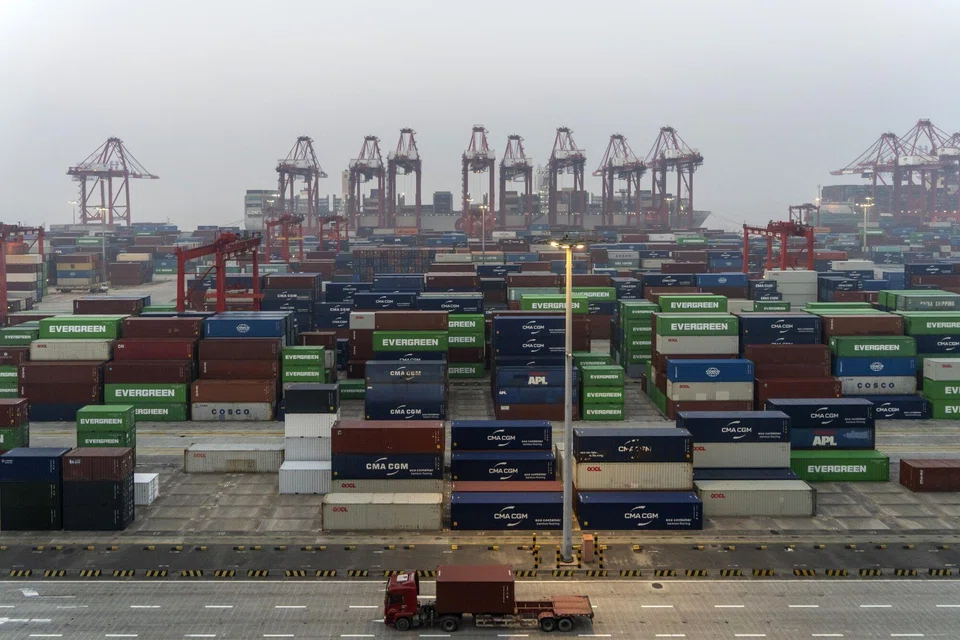
An “America first” policy in the US – with President Donald Trump’s plans for bumper tariffs, tax cuts, deregulation, government efficiency and the “largest deportation” in the country’s history – could exacerbate the divergence. This may boost US growth at least in the short term, while trade tariffs hit Europe and China.
Yet, positive surprises are entirely possible – for instace, if the euro area proves more politically stable, with German elections in February a potential catalyst for a reset, or US policies have a more limited impact on the deficit than expected.
On the other hand, a negative and radical outcome could unfold in the case of, for example, a trade war, with a consequential hit to global growth.
In a highly unpredictable and divided world, the core positioning is crucial for portfolio resilience and generating additional value based on strong convictions around specific markets and segments.
Moreover, retaining some flexibility would give investors scope to react to surprises, be they positive or negative.
Structural tailwinds for global growth
In the US, we expect slowing but solid growth in 2025 with a projected gross domestic product growth of 2.3 per cent. Tariffs will hurt growth later, but fiscal policy should offset the drag.
Core inflation of 2.5 per cent is expected, depending on tariff implementation, which could be very inflationary if the scope is geographically broad.
In the euro area, we foresee another year of modest expansion with a GDP growth forecast of 1 per cent. Fiscal tightening and trade uncertainty are major headwinds.
Core inflation is expected to gradually converge to 2 per cent by the end of the year, with modest upward inflation pressure from trade tensions with the US. But the outlook remains highly uncertain.
In China, we project GDP growth of 4.5 per cent in our baseline scenario of additional 20 per cent tariffs. If there is an additional 60 per cent tariff, growth may be closer to 4 per cent.
Tariffs could hit Chinese exports significantly, although the impact may be partially mitigated through export re-routing, and offset by stimulus measures. However, an additional 60 per cent tariff would be too costly to offset. China can, in any case, be expected to retaliate against US trade tariffs.
Asset class impact: Cash no longer king
Yields on cash were falling faster than on corporate bonds even before the November elections, highlighting the changing investment landscape.
Euro area investment-grade corporate bonds are well-placed to benefit from significant falls in overnight rates in the region this year.
In contrast, the prospect of rate increases in Japan and reduced central bank purchases of government debt mean we remain sceptical about Japanese bonds’ potential.
Benign macro backdrop for equities
The continued strength of the US dollar, superior growth metrics, and the prospect of tax cuts and deregulation mean US risk assets look more enticing.
Valuations in the US, particularly in the tech sector, look high but can be justified by substantial free cash flow.
We firmly believe in remaining selective, focusing on companies that are cash-rich and have robust balance sheets and minimal debt exposure, with proven ability to generate substantial free cash flow.
The prospect of a lighter-touch approach to regulation, more investment banking revenue, and a steepening of the yield curve could help US financial stocks in particular.
Japanese equities should be lifted by the improvement in GDP growth this year. In addition, forecasts for earnings growth in Japan look reasonable and valuations are close to their long-term average. A rise in Japanese bond yields could continue to help financial stocks.
In contrast, tariff uncertainties, continued US dollar strength, and consensus earnings expectations that look optimistic make us cautious on emerging market equities.
Asia ex-Japan equities outlook
Moderation in growth and Trump’s tariff threat will likely weigh on Asia excluding Japan equities in 2025.
But thanks to still-robust earnings growth, mainly driven by Taiwan and India, Asia ex-Japan could deliver a price return of about 10 per cent in US dollar terms by the end of the year. This is despite some moderate reduction in valuations.
Among the major regional markets, Taiwan will likely continue to benefit from the boom in artificial intelligence (AI) investments. China and India are expected to perform largely in line with the region as a whole, but the uncertainties around China are high.
South Korea and Asean tend to be the most sensitive to US interest rates and the strength of the US dollar, and will likely see muted upside this year.
South Korea is also likely to underperform due to moderation in non-AI tech demand and political instability, which could prolong the so-called “Korean discount”.
Core positioning crucial
Core positioning is crucial to ensure portfolio resilience over the medium to long term. Our three core convictions for 2025 are: Favour cash-rich companies and financials; profit from increased mergers-and-acquisitions (M&A) activity; and benefit from private equity’s revival.
On cash-rich companies, being selective is key. The potential for US corporate tax cuts is enticing, but it is important to remember that to benefit from the cuts, companies must first generate profits.
Moreover, in an environment of relatively high interest rates, heavily indebted companies may face significant challenges as high borrowing costs could impact their financial stability.
We are also particularly interested in US financial companies due to the potential deregulation and their strong ties to the domestic economy.
On M&As, favourable economic conditions, strong earnings growth and CEOs’ positive outlooks due to expected reductions in regulatory uncertainty are expected to revive M&A activity, which has been stagnant since 2021.
The overall volume of mergers is projected to increase significantly, as high stock valuations extend the possibility of financing transactions using equity. But a selective approach is crucial to identify companies that are potential acquisition targets.
Investors stand to benefit from private equity’s (PE) revival. In an environment marked by solid economic and earnings growth, coupled with favourable regulatory changes and increased access to private markets, PE is expected to regain significant appeal among investors.
Deregulation has the potential to greatly benefit small and medium-sized businesses, which are the largest segment within the PE asset class.
As the impact of policies is difficult to predict, PE’s ability to adapt to changing rules and market conditions can be a way for investors to capitalise on opportunities and mitigate risks.
Prepare for surprises
It is worth allocating a slice of portfolios to surprise scenarios that may yet unfold given the highly unpredictable economic and market environment.
To prepare for negative surprises, we favour safe havens such as gold and the Swiss franc.
For positive surprises – should Europe’s prospects improve or fiscal prudence prevail in the US, for example – it is worth incorporating some optionality on European equities and US Treasuries.
The writer is chief Asia strategist and head of Asia research at Pictet Wealth Management
TRENDING NOW

Once staunchly pro-China, Malaysian Chinese businesses are now distancing themselves from Beijing

Stocks to watch: HPL, Aims Apac Reit, Zico, Advanced Systems Automation, ComfortDelGro

‘How many will survive?’: Bubble fears arise as China’s humanoid robotics face reality check

Smaller board lots can’t fix a market run by three banks

