

Floating assets: The rise of yachts as an investment
Tax treatment makes Singapore an attractive ownership base in Asia-Pacific

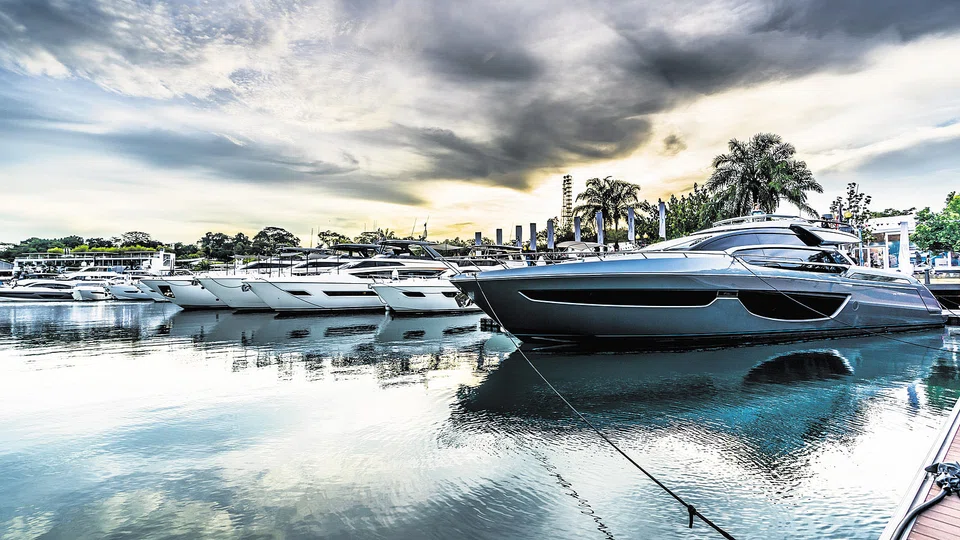
[SINGAPORE] In April this year, the Singapore Yachting Festival held at ONE°15 Marina Sentosa Cove drew a record 14,280 visitors and 211 exhibiting brands. JPMorgan Private Bank was the event’s official bank partner for a second consecutive year.
Such a partnership is not coincidental. Wealth managers are increasingly treating yachts less as a passion purchase and more as a lifestyle asset that can be part of a client’s broader wealth conversation.
In an interview with The Business Times, Wyn James, head of asset owners for Asia-Pacific at global investor services group IQ-EQ, noted that the interest of experience-led assets surged between 2020 and 2022, when many luxury assets delivered strong returns.
Family offices now allocate more than 40 per cent of their portfolios to alternatives, creating more room for niche asset classes such as luxury holdings, which are often held for cultural and emotional value as well as potential returns, said James.
Younger clients, he pointed out, have an interest in experience-led ownership, including explorer yachts that provide access to remote destinations while retaining high-end comfort. However, with higher interest rates and tighter liquidity, buyers have become more careful and demand has shifted towards more deliberate and strategic allocation, he added.
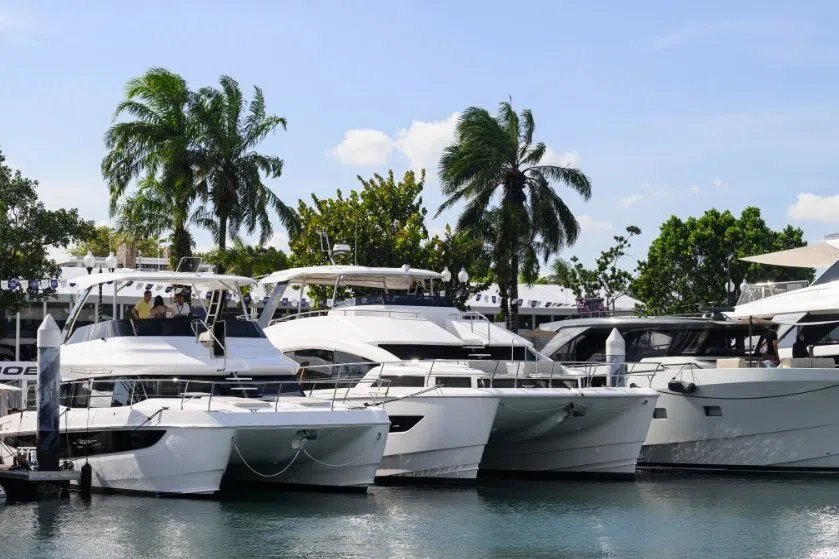
Market research firm 6Wresearch projected that the broader Singapore yacht market could grow at an approximate compound annual growth rate of 5.6 per cent through 2026, due to rising affluence.
Within the region, IQ-EQ noted that Singapore is an attractive destination since pleasure yachts are exempted from import duty. There is also goods and services tax relief granted for qualifying vessels used solely for private pleasure purposes.
This is more favourable treatment compared with other countries in Asia. Indonesia layers a 30 per cent luxury tax on top of value-added tax (VAT) and import duty, while China has duties up to 10.5 per cent plus 17 per cent VAT.
Another reason why Singapore is attractive, said James, is its stability as a jurisdiction for trust planning – where yachts can be a significant part of the portfolio.

Gaining traction
The most common brands based on the number of current listings on YachtWorld in Singapore are Princess, Ferretti, Azimut, Beneteau and Sunseeker. Others include Sanlorenzo and Custom Line, based on global digital marketplace Yatco’s Singapore listings.
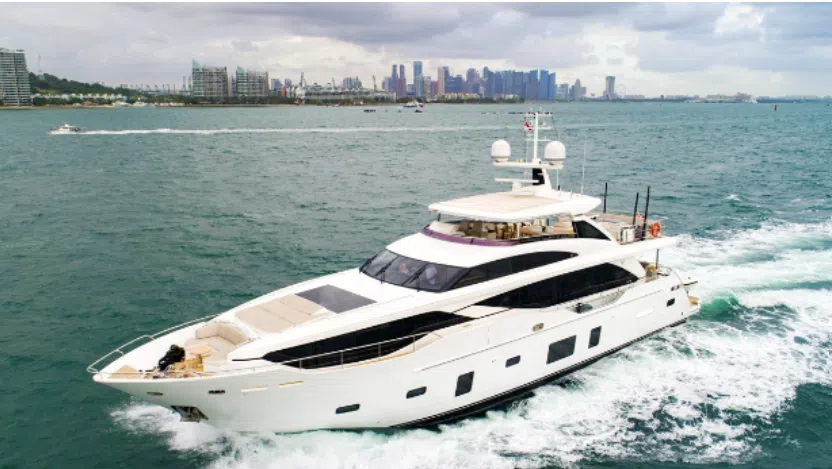
“All the main brokers and producers and the brands… are in Singapore, Hong Kong and Phuket,” said James. “(They) will play a part in terms of leasing and maintenance.”
According to dealer Simpson Marine, Sanlorenzo and Bluegame are gaining traction among sustainability-minded buyers.
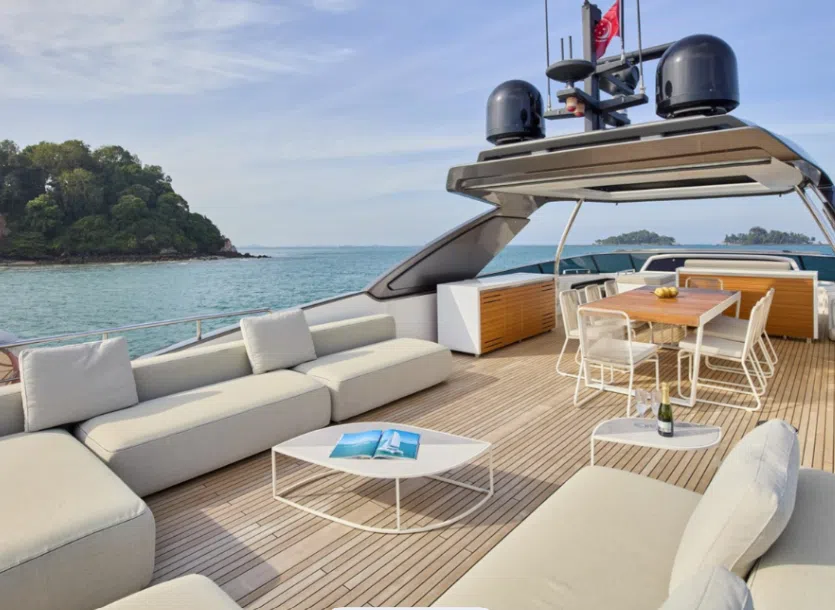
As at mid-August, there were more than 130 listings of motor yachts, while there were only around a dozen for sailboats based on Singapore listings on YachtWorld.
IQ-EQ noted that this speaks to the local lifestyle preference for speed and entertaining over long-distance cruising, though this ratio could shift over time.
Prices for current listings range from around US$550,000 for entry models to US$28 million, as seen on Yatco.
Costs of maintenance
Annual maintenance and operating costs, IQ-EQ noted, run to between 10 and 25 per cent of the purchase price, with superyacht owners typically budgeting around 10 to 12 per cent.
This translates to costs of US$80,000 to US$250,000 a year to maintain a 50 to 60-foot luxury yacht, while costs for a yacht over 80 ft can exceed US$500,000 annually.
Locally, berthing costs range from S$480 to S$1,500 a month depending on size, said Simpson Marine. Zenith Yacht Charters said that these depend on whether the owner holds a club membership, which is around S$16,000 to S$25,000 for a lifetime membership (* See amendment note).
Brokerages estimate that berthing costs form about 20 to 40 per cent of the annual costs of owning a yacht in premium hubs such as Singapore, Miami and Monaco. In addition, owners will have to shell out for a major overhaul every two years, which includes hull and engine work.
Supporting portfolio resilience
With the move towards more illiquid and managed assets, IQ-EQ’s James noted that clients are seeing luxury assets as a longer-term investment, viewing it more like a financial asset.
IQ-EQ has worked on luxury yacht ownership with clients, which includes tax planning, administration of owning the yacht and running it from different parts of the world.
“Certainly, in Asia-Pacific, (a yacht) has become not just a toy, but an asset people are actually looking to buy. Clearly, they need to look at (its) actual ownership structure,” said James.
“Before, people were opportunistic – they just wanted to make money. Now, they are more interested in governance… liquidity, and how these things fit in for the next generation,” he explained. “However, (these) require rigorous due diligence and specialist expertise.”
James added that investors are increasingly emphasising the importance of luxury assets, with lifestyle and experience driving commercial behaviour. “When carefully integrated, luxury assets can support portfolio resilience and provide exposure to long-term trends where quality and scarcity underpin value.”
*Amendment note: An earlier version of this article stated that a club membership with Zenith Yacht Charters costs around S$16,000 to S$25,000 a year. This has been corrected to reflect that the amount covers a lifetime membership, not an annual fee.
Decoding Asia newsletter: your guide to navigating Asia in a new global order. Sign up here to get Decoding Asia newsletter. Delivered to your inbox. Free.
Copyright SPH Media. All rights reserved.






