Traders overwhelmed by Iran news are turning to AI for help
As the conflict continues, artificial intelligence tools seem to have become more entrenched in workflows
AS MAXENCE Visseau spent the first few days of the Iran war trying to make sense of what the conflict would mean for markets, he put artificial intelligence (AI) at the heart of his investment process.
Large language models enabled Visseau, the founder of investment firm Arkevium, to cut the time he spent on research by about 80 per cent. He used Anthropic’s Claude to stress-test multiple scenarios in parallel, compare historical precedents and map out potential ripple effects across asset classes.
“I was up for almost 48 hours straight, monitoring the interceptions in the United Arab Emirates while simultaneously running scenarios and preparing for the market open,” said Visseau, who is based in Dubai and specialises in macro trading strategies. “That’s precisely the kind of moment where AI becomes indispensable.”
While Visseau said the technology isn’t a reliable substitute for human judgment, he views the time-saving benefits of AI as increasingly essential for navigating markets whipsawed by a war that has upended energy supplies and left at least 4,000 dead.
Interviews with investors and strategists across the globe suggest the conflict has led AI tools to become more entrenched in workflows, even as several flagged pitfalls, including sloppy prompts and inaccurate results.
“We are witnessing history,” said Nick Twidale, chief market analyst at AT Global Markets in Sydney. The 25-year veteran of trading markets explained that this is “the first major conflict where AI is being used to fight and where traders rely on AI to map out the war in ways that have never been done before”.
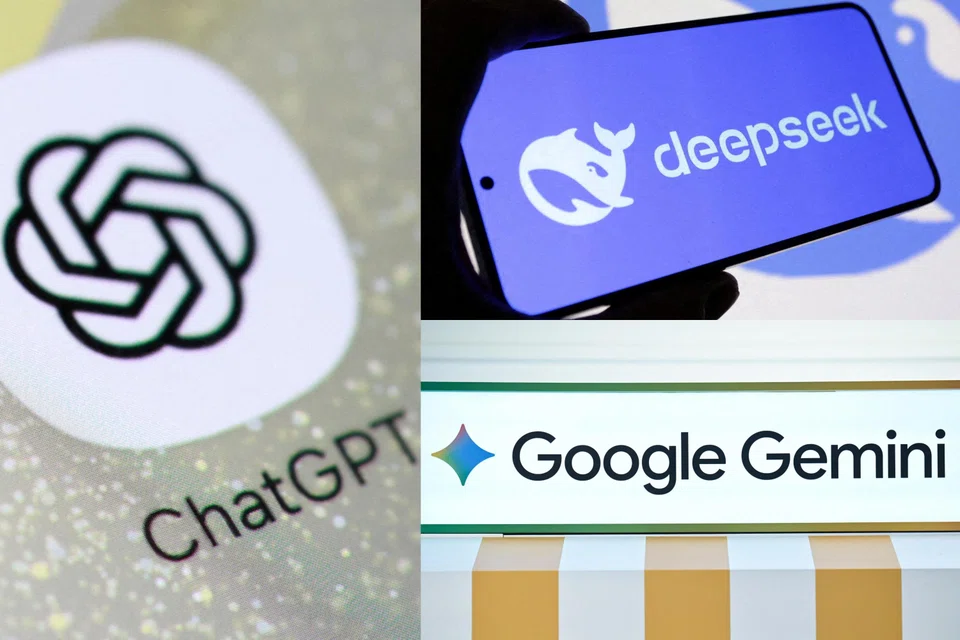
One of the advantages of using AI tools, such as OpenAI’s ChatGPT, Google’s Gemini and China’s DeepSeek, is a dramatic improvement in time management.
Jian Shi Cortesi said that she previously may have spent half an hour reading different sources to catch up on the news; now, the Zurich-based fund manager at GAM Investment Management can get a summary of the latest developments in the war in seconds.
Gathering information about a particular company takes a day or less, down from multiple days previously.
SEE ALSO


“In the past, (it was) like digging a hole with a shovel. Now you’re digging dirt with these massive excavators,” Cortesi said. “The speed has probably increased by five times.”
Another plus point is being able to mine history near instantaneously for insights and context on what may happen next, especially given the volatility in markets. Brent crude surged as much as 11 per cent to top US$119 a barrel on Thursday (Mar 19), on concern over the risk of escalating tit-for-tat attacks on key energy facilities in the Middle East, before giving up most of its gains. It last traded at US$108.
Deep search
Anna Wu, a cross-asset strategist at Van Eck Associates in Sydney, used ChatGPT and Claude to go back 100 years to track every war-driven oil breakout and find out what asset classes outperformed in each occurrence. To improve the utility of the answers, she asked AI to cross-reference other data points, such as the median inflation and global economic growth.
“It definitely has brought in more efficiency,” she said. “A lot of the historical analysis right now has become a lot less time-consuming because before it would be me searching to the end of Google.”
For Gustavo Pessoa, AI tools provide instant access to information that previously might have been hard to get, at a time when calculating the impact of the virtual closure of the Strait of Hormuz is becoming more essential to investing.
“We use it for everything, from understanding the types of ships to analysing the elasticity of oil demand to prices and even estimating how many barrels will be needed to stabilise flows,” said Pessoa, who is a founding partner at Sao Paulo-based hedge fund Legacy Capital Gestora de Recursos.
AI is not perfect, nor is it a replacement for human experience and decision-making. The technology has made mistakes in everything from gaming development to news content representation. A Bank of England policymaker warned that AI adoption in trading may amplify market shocks and herd-like behaviour.
Arkevium’s Visseau said the answers needs to be constantly tested for accuracy.
“It’s an iterative process; I’ll challenge the output, refine assumptions, introduce new data points,” he said.
Junior analysts
Knowledge is vital to being able to make the most out of AI, said Michael Brown, senior research strategist at Pepperstone Group in London, adding that the technology isn’t a “silver bullet”.
“Participants still need a deep understanding of the situation themselves in order to make that final trading call and (be) able to gauge if the AI models are throwing out spurious information, which we all know can sometimes be the case,” he said.
Yet, the growing effectiveness of the tools means positions such as entry-level research analysts could be at risk.
Cortesi said she could do without junior analysts, describing AI as her “best” research assistant.
“I can ask AI: Use a Warren Buffett approach to give me the key points of this company, and the AI will do it right away,” she said. “But if you ask a junior, the junior may not know what a Warren Buffett approach is.”
When it comes to such complex requests, AI “does much better”, she added. “Also, AI does it so much faster.”
How long AI remains in this ancillary role is uncertain. Before the Iran war started, investor paranoia over which industries would be ravaged by the displacing efficiency of AI spurred sell-offs in the shares of software companies to food delivery services.
Global banks could eliminate as many as 200,000 positions in the next three to five years as AI encroaches on tasks currently carried out by people, according to a Bloomberg Intelligence report last year.
John Foo, founder of Valverde Investment Partners in Singapore, said the technology is far from replicating the human thought process – for now.
“AI is an additional resource that complements the human research effort,” he said. “I say complement and not replace, as there is still an element of good judgment and experience that goes into decision making that AI at this stage – maybe the next two to three years – still cannot fathom. After that, it will be anyone’s guess.” BLOOMBERG
Decoding Asia newsletter: your guide to navigating Asia in a new global order. Sign up here to get Decoding Asia newsletter. Delivered to your inbox. Free.
Share with us your feedback on BT's products and services