Ageing in Asia: Huge potential for the consumer economy
Healthcare, travel and tourism are the top 2 spending sectors for those aged 60 and above by 2030

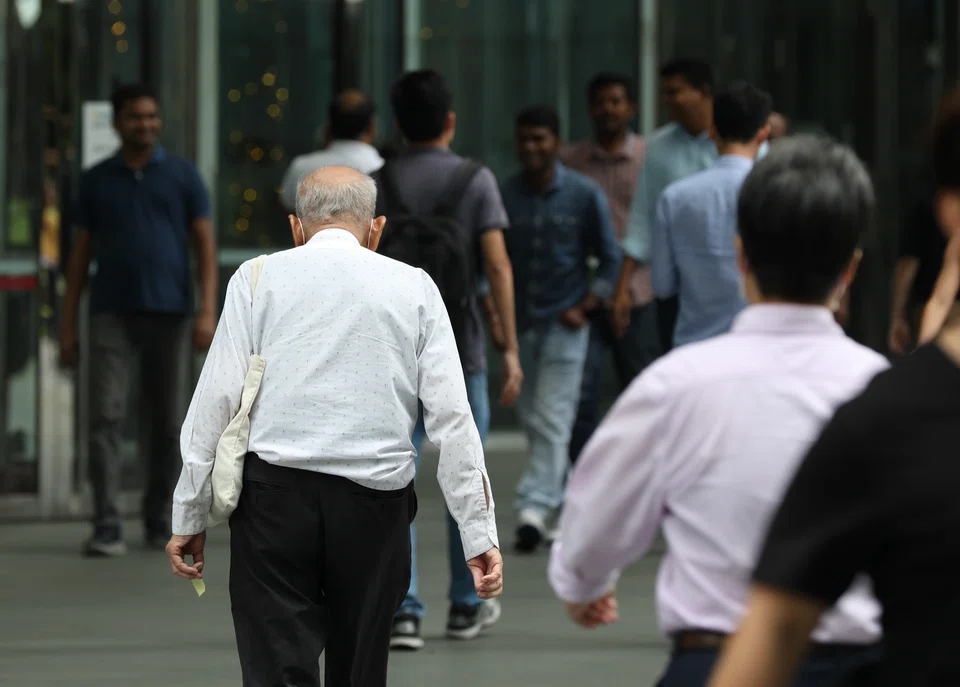
[SINGAPORE] By 2030, across 14 Asia-Pacific markets, there will be 733 million people aged 60 and above, holding US$7.1 trillion in savings, a recent report has estimated.
“How long we live and how long we live well is at once the region’s largest humanitarian challenge and its largest commercial opportunity,” the report’s lead author and founder of Ageing Asia Janice Chia wrote.
The 5th edition of Asia Pacific Silver Economy Business Opportunities 2026-2030: Building the longevity ecosystem, was released in August. Industry alliance Ageing Asia collaborated with the Singapore Management University (SMU) on the report.
Part of the report features a state of the industry survey involving 110 industry leaders across 15 countries and territories. These included inventors, clinicians, academics, operators and policymakers.
One of the key findings from the survey is that the traditional ageing industry is in fact two markets.
The first market is well-established, and the report calls it the “care economy”. This refers to the areas of healthcare, home care, assisted living and dementia services which serve those aged 75 and above.
However, beyond the “care economy” lie untapped market opportunities. The survey found that healthcare along with travel and tourism are the top two spending sectors for those aged 60 and above by 2030. This is a sign that the silver economy extends beyond care.
It suggests that there is a second market, termed the “consumer economy” which covers areas including travel, wellness, lifestyle, experiential services and silver tourism. Those aged 60 to 75 have time, health and money.
Current players in the ageing sector are not looking at the consumer economy, the report said. This means that the 60-75 year old market is being left to hospitality, travel and lifestyle brands who may not think of themselves as “silver economy” players.
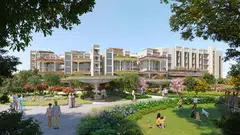
The report argues that those businesses who can bridge both markets, serving active older adults with lifestyle services and subsequently transitioning them into care services when their needs evolve will have the longest customer lifetime value and the most defensible market position in the Asia-Pacific.
Another key finding from the report indicates that “the winning business model” is not one particular service but an “integrated operating system”.
This means single-vertical operators are not likely to succeed, the report suggested. Integrated ecosystem builders are the way to go. Innovations that will stand the test of time are those that “blur the boundaries between housing, health, community and economic participation”.
Businesses that can offer these elements on a platform that can be deployed across residential settings will own the dominant business model of the silver economy.
Another key finding says that middle-income affordability is a market priority. Many older adults earn too much to qualify for subsidised care but cannot sustain the private-pay tiers, especially over the long term. The gap is not to be closed by cheaper care, the report said, but more by financing innovations.
The report says that operators who can pair care delivery models with a financing mechanism – such as long-term care insurance, reverse mortgages, employer-linked eldercare benefits and means-tested co-payment – will have a structural advantage over operators who only deliver services.
Overall, the survey respondents were positive about the silver economy. Most of the respondents (85 per cent) project either strong or steady growth for the silver economy in the Asia-Pacific between 2026 and 2030.
However, for current service delivery, the result was a weighted average adequacy score of just 2.8 out of five. With such a gap between demand confidence and supply satisfaction, Ageing Asia’s Chia said that this spells a defining commercial opportunity.
Closing the gap requires operational infrastructure, capital investment, workforce development and business model innovation. Awareness or intention will not be sufficient, the report said.
In the Asia-Pacific, the report groups Singapore, Japan, Hong Kong, Australia and New Zealand as markets that have deep capital, mature operators and exportable models.
For technologically advanced economies such as South Korea and Taiwan, the market opportunities come from care robotics, wearables, smart-home sensors and digital health hardware.
In a section on Singapore, Dr Cheong Wei Yang, interim co-director of Longevity Societies and Economies Institute at SMU, which worked with Ageing Asia, said the institute envisages a society where older people have fulfilling pursuits and are willing to spend on their own health and well-being in a thriving silver economy.
This is one where ageing persons feel “that they are still contributing, never that they are a burden to society or their loved ones”, he added.
Decoding Asia newsletter: your guide to navigating Asia in a new global order. Sign up here to get Decoding Asia newsletter. Delivered to your inbox. Free.
Copyright SPH Media. All rights reserved.