

Asia’s once-in-a-generation industrial investment cycle
A confluence of structural factors are combining to create a broader, stronger and longer cycle
CONSENSUS expectations are for Asia’s potential gross domestic product growth to slow meaningfully as soft demographic trends weaken workforce growth.
However, we see a once-in-a-generation industrial investment cycle under way that will lift productivity, offset the demographic drag, and help sustain the region’s economic growth.
We project Asia’s annual capital spending will rise from US$11 trillion in 2025 to US$16 trillion by 2030.
Unlike past cycles, which were driven mainly by cyclical factors, we see a confluence of structural factors combining to create a broader, stronger and longer cycle.
We expect that the structural drivers of capital spending in the industrial sector and on energy, AI and related digital infrastructure, and defence will collectively grow at a compounded annual rate of 10 per cent between 2025 and 2030. This would drive 70 per cent of the overall incremental gains in capex in Asia over the same period.
Cycles are driven by trends, while super-cycles are shaped by megatrends. Three forces are coming together to power this investment cycle: geopolitics creates the urgency; technology creates the opportunity; and policy accelerates the investment.
Geopolitical fragmentation is changing how governments view industrial capacity. Elevated geopolitical and trade tensions have made technological sovereignty, energy security and defence strategic priorities.
Policymakers are encouraging investment in capabilities they consider essential to economic resilience and national security.
Technological advances are opening up new opportunities to invest. In this cycle, we first saw that in the energy transition, and now, in AI.
Over the course of 200 years of economic history and starting from the First Industrial Revolution, technological advances have generally led to stronger capex and industrial activity, particularly when new technologies are being more widely adopted.
Industrial policy is helping translate these priorities to investment decisions.
Across Asia, governments are strategically using incentives and other forms of support to encourage private companies to accelerate spending, particularly in emerging and critical industries, rather than leaving it to the private sector to make such choices on its own.
Broader, stronger, longer
The end result is a cycle that will be broader, stronger and longer.
This cycle is broader because it is being supported by more than just AI alone. We estimate that AI and semiconductor capex (even after accounting for the rise in industrial and energy capex that is linked to AI) will account for only around 20 per cent of the annual incremental capex from 2025 to 2030.
Instead, industrial investment is the largest component of Asia’s projected increase in capital spending.
The resulting breadth distinguishes Asia from the US, where the investment story is more concentrated in AI and related digital infrastructure.
This cycle is stronger, as evident in indicators such as industrial production, purchasing managers’ indices and exports, and imports of capital goods, suggesting that capex and industrial growth in Asia is already at its strongest since the early 2000s.
The strength emerges as Asia is enjoying the best of both worlds, in terms of simultaneously producing and investing. When the world raises capex, Asia produces more. And when Asia itself raises capex, it produces even more.
Asia is the world’s largest industrial powerhouse, accounting for 46 per cent of global industrial value-added as at 2025. It is therefore the No 1 beneficiary of the ongoing upswing in global capex momentum.
There are also reasons to expect a longer cycle. Geopolitics, technological change and energy security are lasting priorities whose influence is unlikely to dissipate quickly.
Investment driven by these needs should be less susceptible to short-term headwinds than spending dependent mainly on the usual business cycle.
Moreover, six years into this expansion, corporate balance sheets are generally healthy and are more consistent with an early rather than late-cycle stage.
Corporates were deleveraging until Q2 of 2026, and their debt-to-GDP ratios are still lower than pre-Covid levels, which is why this capex cycle has not been as sensitive to interest rate hikes as were previous cycles.
We expect these forces to lift Asia’s investment-to-GDP ratio to a new high of 32 per cent by 2030. More capital and wider technological adoption should also raise output per worker, helping counter slower workforce growth.
Hence, we expect these gains to sustain Asia’s potential GDP growth at around 4.5 per cent, even with working age population growth slowing by 40 to 50 basis points between 2025 and 2030.
Key risks
The key risk would be a mini down-cycle, especially amid a combination of higher oil prices, higher rates and a potential slowdown in AI capex.
Individually, these factors would pose modest headwinds. But if they were to combine, they could pose meaningful downside risks.
Sustained oil prices above US$120 a barrel would force domestic fuel price increases, push inflation above target, and prompt larger-than-expected rate hikes.
Meanwhile, funding, regulatory and other constraints could lower AI capex in 2027 relative to 2026. This combination could tighten financial conditions and weigh heavily on corporate sentiment and lead to a slower and delayed capex build-out.
But in our view, with balance sheets healthy, this would still not mark the end of the capex super-cycle.
Chetan Ahya is chief Asia economist and Derrick Kam is Asia economist, Morgan Stanley
TRENDING NOW

‘If there’s a price to be paid, so be it’: George Yeo says Singapore must safeguard its reputation

South-east Asia has lost Nvidia’s best salesman
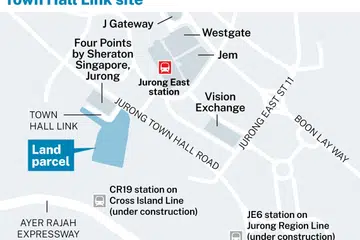
CapitaLand, Far East, Sing Holdings team up for S$1.8 billion bid at S$910 psf ppr for Jurong Lake District site

Beyond the greenback, Vietnam’s big borrowers turn to Asian-currency bonds

