Can you trust family-run businesses with your money?
When sizing up one, ask: What will this family give up to protect the company?
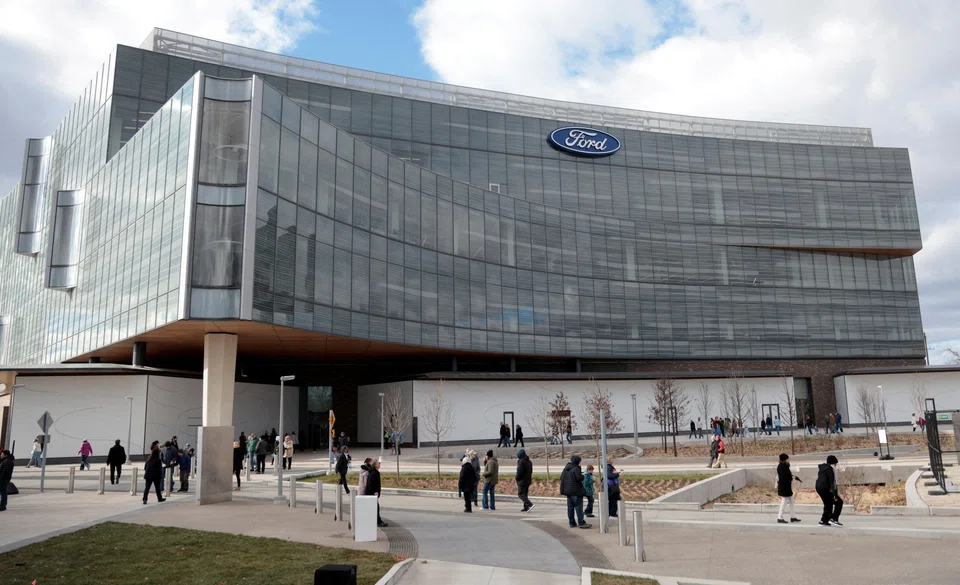
IN DECEMBER 2006, one of America’s most storied families mortgaged its own name.
Ford Motor Company pledged virtually all of its US assets, including factories, trademarks and even the famous Blue Oval logo, to raise US$23.5 billion in financing.
Imagine that: Bill Ford, the great-grandson of founder Henry Ford, handing the family crest to a group of bankers as collateral.
Critics called it an act of desperation. As it turns out, it was anything but.
To see why, we need to talk about family businesses – and the uncomfortable questions they raise for investors.
Two sides of the same coin
Family-owned businesses are common in Asia; so are their problems.
Within these firms, resentment can fester when family members are handed key positions based on bloodline rather than performance. Then there is the succession question: The family scion is not always the best person to lead.
Yet, for every cautionary tale, there is a counterexample.
A CEO who bears the family name enjoys job security and with it, freedom from the tyranny of quarterly earnings targets. He or she can focus on what is best for the business over the long term.
Better still, the family’s wealth and reputation are tied up in the firm – skin in the game that no hired hand can match.
So, which is it? Are family businesses a blessing or a curse?
The tale of Ford Motor offers both sides of the story, just not in the tidy way you may expect.
Trial by fire
In January 1999, Bill Ford became chairman of the carmaker. Less than three years later, in October 2001, he took on the CEO role as well, stepping in after the board ousted its embattled chief executive amid a tyre-safety crisis and mounting losses.
His timing could hardly have been worse. The US economy was in recession, and the Sep 11 attacks had shaken the country just weeks before.
To his credit, Bill Ford steadied the ship, taking Ford from a US$5.5 billion loss in 2001 to three straight years of profitability. But the reprieve did not last.
Squeezed by foreign competitors and a consumer shift away from its profitable trucks, Ford racked up a net loss of US$7 billion in the first nine months of 2006 alone.
The full year would end with a US$12.7 billion loss, the worst in the company’s century-long history. The family business was staring into the abyss.
Bill Ford bore the family name, but he was unable to implement his long-term reforms at Ford Motor. A change was needed.
When the chips were down
It is here that Bill Ford showed the difference a family member can make – twice.
His first act: He fired himself. In September 2006, he stepped aside as CEO and hired Alan Mulally, a Boeing veteran with a track record in turnarounds.
Bill Ford recognised that the company needed a steady hand that was experienced in turnarounds. It was a tacit acknowledgement that he was not the right person for the job.
Stop and think about that for a moment. How many CEOs are willing to admit their own shortcomings and hand the keys to an outsider? Now consider how much harder it is when your name is on the building.
In my view, Bill Ford saw what the company needed and set aside his ego to protect the family business. Where lesser men would have dug in, he let go.
His second act came three months later: the all-in bet. That US$23.5 billion in financing was raised with virtually every US asset pledged as collateral, right down to the Blue Oval itself.
Mulally would later joke that it was the world’s biggest home improvement loan. The critics were less charitable. With the economy still healthy, mortgaging the company’s crown jewels looked reckless, even desperate.
Then came the Great Recession. As US vehicle sales collapsed in 2008 and 2009, Ford’s crosstown rivals General Motors and Chrysler were forced to borrow US$17.4 billion from the US government.
Both would end up filing for bankruptcy. Ford, cushioned by its war chest, did not take a dime of taxpayer money. It survived the worst of the storm and came out stronger on the other side.
The final act arrived in May 2012, when Moody’s restored Ford’s credit rating to investment grade, releasing the pledged assets back to the company. The Blue Oval was back in the family’s hands.
Mortgaging the logo, Bill Ford said, was not just mortgaging an asset – it was mortgaging the family’s heritage. Getting it back, he added, was almost indescribable.
Shades of grey
Here is where my resident sceptic, Mr Critic, clears his throat. “One heartwarming story does not redeem family businesses,” he says. “For every Bill Ford, there is a scion who ran the family firm into the ground.”
Mr Critic is right, of course. But that is precisely the point. In investing, few things can be painted as black or white. Family businesses are no different.
As investors, we have to learn to live with shades of grey. The question is not whether family control is good or bad. The question is what the family does with it.
On that front, the Ford saga leaves us with three useful markers. First, watch for candour. Bill Ford did not paper over the company’s troubles, or his own limits.
Stepping aside was a public admission that he was not the right person for the job. Leaders who admit hard truths early tend to fix problems early.
Second, look for skin in the game. The Ford family did not protect itself at the company’s expense; it put the family’s most prized possession on the line to fund the turnaround.
Third, favour families that think in decades, not quarters. The money raised went into fixing the business – new products and restructured plants – not into propping up short-term results.
None of these guarantee success. But together, they tilt the odds in your favour.
Get smart: the name on the door
Warren Buffett has long preferred buying businesses from owners who care more about the company than the money. The reason is simple: A hired CEO can walk away from a failure. A family cannot walk away from its name.
Mind you, that cuts both ways. Pride can keep a scion clinging to power long after he should let go. But love for a legacy can also drive the rare, ego-swallowing decisions that save a company.
Bill Ford mortgaged his great-grandfather’s name to save his great-grandfather’s company – and earned it back.
So, the next time you size up a family business, do not stop at the name on the door. Ask instead: What would this family give up to protect the business?
The answer will tell you more than any balance sheet.
The writer does not own shares of the companies mentioned. He is co-founder of The Smart Investor, a website that aims to help people invest smartly by providing investor education, stock commentary and market coverage.