

Creative, Razer, Secretlab – What’s the playbook for building a global brand from Singapore?
For founders who know how to use the right levers, Singapore arguably offers a manufacturing story that few other locations in the world can replicate
THERE is a quiet pattern hiding in plain sight.
Creative Technology’s Sound Blaster set the PC audio standard for the world in 1989, growing the company from US$5.4 million to US$1.2 billion in revenue within six years.
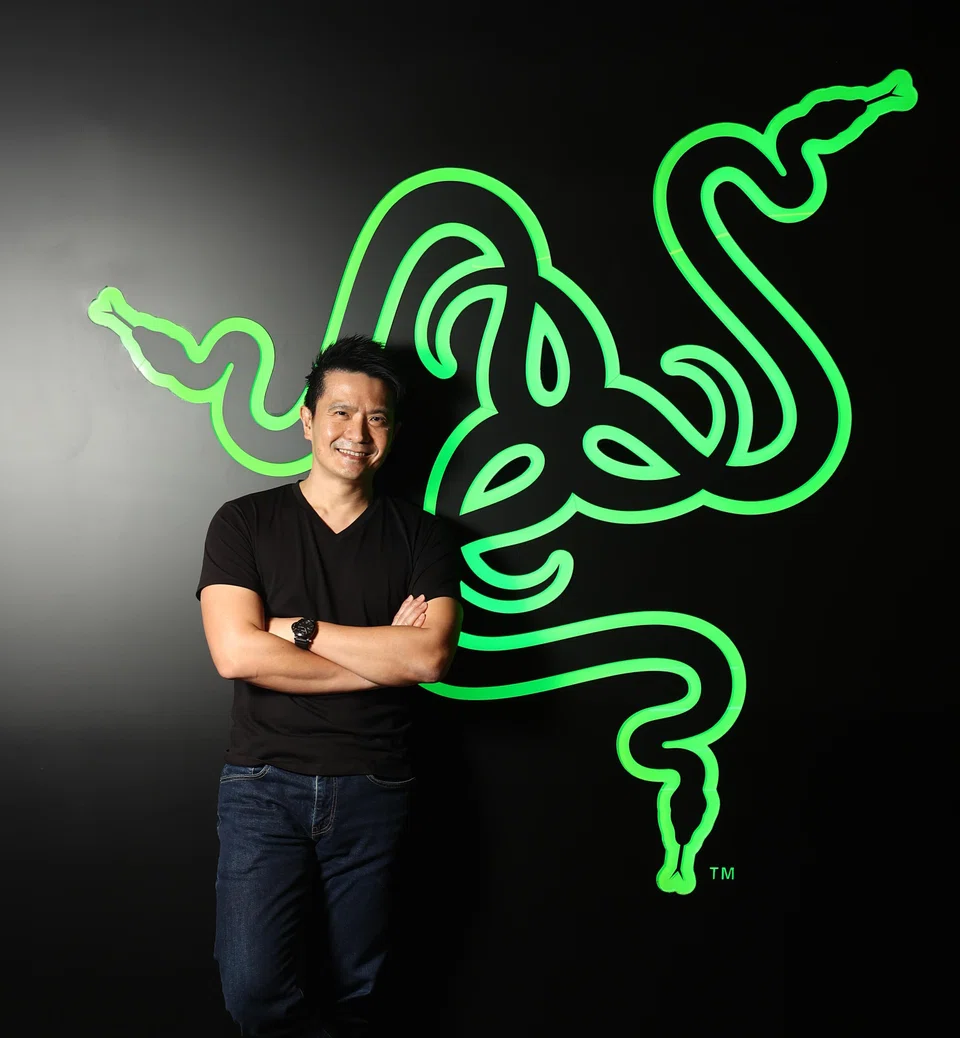
Razer, dual-headquartered in Singapore and California, is now one of the world’s leading gaming peripheral brands by revenue.
Secretlab, started by two 20-something e-sports veterans with S$50,000 in savings, sold its millionth chair in 2020. It now ships to more than 60 countries, with North America alone responsible for more than half its sales, while Singapore accounts for just 5 per cent.
The pattern? Each is a Singapore product company that thought globally from day one, building for high-GDP markets while leveraging the structural advantages of this region.
This is not a coincidence. It looks, to us, like a repeatable playbook and one that remains surprisingly underutilised.
A deceptively simple recipe
The formula tends to start with thoughtful product design anchored in Singapore, leveraging talent density and a regionally competitive cost structure, while selling almost entirely to Western consumers.
Singapore appears to punch far above its weight as a headquarters for this model. It offers C-suite and product leadership talent; world-class intellectual property protection; and, critically, a highly exacting consumer base that serves as a natural forcing function for zero-to-one product development.
A demanding local customer who will reject anything mediocre is, in many ways, worth more than a forgiving one in a larger market.


A structural edge that is widening, not narrowing
Several forces are widening the region’s advantage, some faster than most founders appreciate.
The tariff environment has quietly made “Made in Singapore” a more compelling proposition.
Singapore plays two distinct and complementary manufacturing roles. The first is last-mile assembly. As a trusted, treaty-connected hub, Singapore offers a credible and friction-free final assembly point for products destined for US and European markets – at a time when supply chain provenance has never mattered more.
The second is advanced manufacturing. Figures from the Economic Develpment Board in 2025 indicated that Singapore contributed more than 10 per cent of global semiconductor output and 20 per cent of global semiconductor equipment production. This is backed by substantial government grants and R&D support that can meaningfully de-risk the capital requirements of building hardware here.
For founders who know how to use both levers, Singapore arguably offers a manufacturing story that few other locations in the world can replicate.
The regional talent arbitrage also appears to be real. Engineering support in Vietnam; customer success and sales in the Philippines; back-office functions in Malaysia and Johor – a well-structured South-east Asia team can, in our view, deliver a globally competitive cost base without sacrificing quality.
Chinese product and manufacturing expertise, whether via partnerships or direct talent access, remains largely unrivalled and tends to be more accessible to Singapore-headquartered companies than to Western brands trying to replicate the same model.
The catch – and it matters
None of this is a moat in itself. Three hard truths deserve more candour than they typically receive.
First, product moats in hardware tend to be more perceived than real; and faster to erode than founders expect.
The Secretlab story was never about defending a patent wall. It was about relentlessly iterating on a customer love loop. What tends not to erode is a brand built on genuine community loyalty, paired with a distribution machine that consistently gets the product in front of the right customer at the right time.
Second, the serviceable market is almost always smaller than it looks. Hardware brands with niche positioning – which is where the strongest early customer love tends to live – can face a painful ceiling.
Crossing from an early revenue base to a sustained scale appears to require not just a better product, but a fundamentally different go-to-market architecture. Many brands, in our experience, do not survive that transition.
Third, inventory management can undo much of what has been built. The years 2022 and 2023 had global large-scale inventory write-offs. For capital-light South-east Asian hardware companies operating lean, this remains a meaningful risk if growth is pursued ahead of cash cycle discipline.
A framework for what comes next
Across the companies in this space that have built durably, the journey tends to follow a consistent sequencing logic. What earns you the right to advance changes meaningfully at each stage.
In the early stage, the only measure that matters is whether customers genuinely love the product.
A small but fervent customer base is, in our experience, worth far more than broad but shallow awareness. The goal is depth, not reach. The brands we have seen succeed here are those that found a niche where their product felt genuinely indispensable, and resisted the temptation to optimise for anything else too soon.
In the growth stage, the battleground tends to shift towards distribution.
Having a product that customers love increasingly becomes table stakes. The brands we have seen stall at this point often did so not because the product failed, but because the go-to-market strategy never evolved to match the ambition.
Channel architecture, regional sales presence and supply chain efficiency arguably need to be built with the same rigour that was once applied to the product itself – while keeping unit economics intact throughout.
In the scale stage, our observation is that neither product nor distribution remains the primary defensibility lever.
Brand equity tends to take over. At this point, the most durable brands appear to compete less on features or availability, and more on what the brand means to a customer and how deeply that meaning is embedded in their identity and habits.
The brands that seem to reach this stage and stay there are often the ones that made that emotional investment early – long before the revenue made it feel necessary.
Two of our portfolio companies bring this to life. Montigo is not a name that gets much airtime in regional tech circles. The drinkware brand, built by RPG Commerce out of Kuala Lumpur, grew its revenue sixfold over the last three years while staying net profit positive for six consecutive quarters. The company has more than 70 retail stores across Malaysia, Singapore, Indonesia, Thailand and Middle East that average a six-month capital expenditure payback. It is a quiet outcome, built quietly. Which is rather the point.
More recently, this same thesis led us to lead myFirst’s US$8 million Series A. The Singapore-based kids’ tech company builds purpose-designed devices, a family safety platform, and a kids-first social network, thoughtfully crafted for a global audience of parents and children, with a regionally competitive cost structure and retail and telco partners already including Walmart and Best Buy. They are running the same playbook.
Going back to first principles
South-east Asia has produced global product champions before. It is worth noting that Vertex’s own history with this thesis stretches back to an early investment in Creative Technology, the company that first put Singapore on the global tech map with the Sound Blaster.
The conditions to produce the next generation of global brands appear to be better today than they have been in a long time.
Tariff tailwinds; manufacturing optionality across Vietnam and Thailand; Chinese supply chain access; and Singapore’s increasingly valuable role as a high-trust node in the global tech stack – the structural advantages are real and, we believe, compounding.
The region has answered the question of whether it can build products for the world. Creative Technology answered it in 1989.
What remains open is whether the next generation of founders here will have the sequencing discipline and the patience to build the way those companies did.
The writer is senior executive director, Vertex Ventures South-east Asia and India
Decoding Asia newsletter: your guide to navigating Asia in a new global order. Sign up here to get Decoding Asia newsletter. Delivered to your inbox. Free.
Share with us your feedback on BT's products and services
TRENDING NOW

DBS, OCBC, UOB rout lops billions off STI as inflation, rate concerns spook investors

Grab CEO’s wife Chloe Tong on life with Anthony Tan and finding her purpose

OCBC sheds S$8 billion in value as shares close nearly 6% down; analysts cautious on banks

Deal between tycoon friends sparks scrutiny of Philippine power sector

